


“My opinion of Christian Zionists? They’re scum. But don’t tell them that. We need all the useful idiots we can get right now.”---Benjamin “Bibi” Netanyahu, Prime Minister of Israel. Present in New York City on 9/11 and London during the 7/7 subway bombings.
The term “useful idiot” describes a specific type of political actor: someone who advances an agenda they do not fully understand, often believing they serve noble ends while actually functioning as an instrument for forces antithetical to their stated values. This phenomenon has shaped political movements, intelligence operations, and public discourse for over a century. Understanding its mechanics requires examining both the historical record and the psychological architecture that makes such manipulation possible.
The concept operates on a fundamental asymmetry of information and intent. The manipulated party possesses sincere convictions. The manipulating party possesses strategic objectives. Where these intersect—where genuine belief can be channeled toward hidden ends—the useful idiot emerges. This dynamic has proven remarkably durable across political systems, technological eras, and cultural contexts.
Historical Foundations and Documentary Evidence
Pre-Soviet Origins
Contrary to widespread belief, the phrase “useful idiot” predates its association with Soviet propaganda by several decades. The earliest documented English usage appears in an 1864 edition of The Saturday Review, a British publication. The context involved French electoral politics, describing a voter as “one of those useful idiots who are furnished in the nick of time by every constituency in every country.” This 19th-century application carried no ideological freight beyond the basic observation that political systems regularly produce individuals whose credulity serves the purposes of more sophisticated operators.
This early usage establishes an important baseline. The phenomenon of exploitable naivety in politics was recognized well before Lenin, Stalin, or the Cold War provided its most famous illustrations. The concept reflects something persistent in political organization: the gap between those who understand power’s actual operations and those who accept its public justifications at face value.
The Lenin Attribution Problem
The most commonly cited attribution—that Vladimir Lenin coined the phrase—lacks documentary support. Extensive searches of Lenin’s collected works, correspondence, and archival materials have failed to locate any instance of him using the phrase “useful idiot” or its Russian equivalent “poleznye idioty.” The same applies to Stalin’s writings and speeches.
This matters because the false attribution has itself become a form of propaganda. By claiming Soviet leadership explicitly labeled their Western sympathizers as idiots, anti-communist rhetoricians added authority to their accusations. The legend served political purposes regardless of its accuracy.
What Lenin did say, however, illuminates the concept’s operational reality. He described certain nominal socialists as “simpletons” who unwittingly served the czarist or capitalist cause. He characterized some socialist opponents as “servile accomplices” of the Whiteguard forces. The famous prediction—that Western capitalists would “close their eyes” to reality and “toil to prepare their own suicide”—captures the essential dynamic even without the specific phrase.
The distinction between what Lenin actually said and what he allegedly said matters for methodological reasons. Claims about the term’s origin should rest on verifiable evidence rather than convenient attribution. This standard applies equally to evaluating claims about who qualifies as a useful idiot and who makes such accusations.
Cold War Codification
The term entered mainstream English usage through events in post-World War II Europe. Yugoslavia’s communist consolidation under Marshal Tito produced the phrase “korisne budale” (useful innocents) for genuine democrats who collaborated with the communist coalition. Yugoslav dissident Bogdan Raditsa, writing in 1946, warned fellow democrats not to become “Koristne Budale”—not to be useful innocents for a movement that would discard them once power was secured.
Italy’s 1948 elections provided the first widely reported English-language application. Interior Minister Mario Scelba described a left-wing Socialist leader aligned with Communists as the “No. 1 useful idiot assisting Communist aspirations to control Italy.” This statement, carried by international press, introduced the term to American and British readers.
The phrase spread rapidly through Cold War discourse. A Delaware newspaper editorial explained that “fellow-traveling allies are called ‘useful idiots’ by an Italian publication,” adding the grim observation that wherever Communists gained power, they “persecuted or killed the useful idiots” once those individuals had served their purpose. This warning—that the manipulated would ultimately be destroyed by those who manipulated them—became central to the term’s cautionary power.
Soviet Defector Testimony: The View from Inside
Yuri Bezmenov’s Account
Among the most detailed accounts of useful-idiot operations comes from Yuri Alexander Bezmenov, a former KGB operative who defected to the West. In a 1985 video interview conducted by G. Edward Griffin, Bezmenov described the systematic cultivation and ultimate disposal of sympathetic Western voices.
Bezmenov recounted the Vietnam War execution operations as an illustration of intelligence methodology. When Vietcong forces captured a South Vietnamese city for only two days, several thousand individuals were executed in a single night. American intelligence puzzled over how Communist forces could identify each target, locate their residence, and arrest them within four hours before dawn. The answer, according to Bezmenov, was straightforward: long before military occupation, an extensive network of informers—local Vietnamese citizens including barbers and taxi drivers—had catalogued everyone instrumental in public opinion, everyone sympathetic to the United States.
The same systematic approach, Bezmenov explained, guided Soviet Embassy operations in Hanoi and his own work in New Delhi. The methodology produced what he described as a personal horror: discovering that files of people marked for execution included names of pro-Soviet journalists with whom he was personally friendly.
These individuals were idealistically minded leftists who had made several visits to the USSR. Yet KGB planners had determined that in the event of revolution or drastic political change in India, they would have to be eliminated. The reasoning was precise: they knew too much. Useful idiots who become disillusioned transform into the most dangerous enemies of the cause they once served. Their knowledge of the gap between propaganda and reality makes them potent critics.
This led to a specific operational principle, which Bezmenov described as receiving explicit instruction from his KGB trainers: never bother with leftists. The sincere believers were useful for propaganda purposes but represented long-term liabilities. Those who believed in the beauty of the Soviet system—who approached it idealistically rather than cynically—were marked for disposal once their utility ended.
Operational Categories
Soviet intelligence maintained distinct classifications for Western sympathizers:
Agents of Influence: Individuals who knowingly promoted Soviet interests, whether for payment, ideology, or blackmail leverage.
Fellow Travelers: Those who consistently supported Soviet positions without formal recruitment, often motivated by genuine ideological sympathy.
Useful Idiots: The unwitting category—those who amplified Soviet narratives while believing themselves to be serving independent moral or political purposes.
The third category required no recruitment, payment, or direct coordination. Their sincerity was the operational asset. They could not be exposed as agents because they were not agents in any conscious sense. They believed their own advocacy, which made that advocacy far more persuasive than obvious propaganda.
The Psychology of Susceptibility
Understanding why intelligent, educated individuals become useful idiots requires examining the psychological mechanisms that override critical evaluation.
Moral Vanity
The individual derives satisfaction from perceived moral superiority. This pleasure creates resistance to information that would complicate the moral picture. Questioning the deeper systems benefiting from one’s stance threatens the psychological reward of righteousness. The result is selective engagement with evidence—accepting information that confirms moral standing, dismissing or avoiding information that would require uncomfortable reassessment.
Information Filtering
Exposure to selective narratives, particularly those carrying emotional weight, progressively disables skepticism. When information arrives packaged with moral urgency—when hesitation appears as complicity with evil—the normal processes of verification and source evaluation become obstacles to be overcome rather than safeguards to be maintained.
This filtering intensifies through repeated exposure. The first encounter with a narrative may trigger appropriate skepticism. The hundredth encounter, especially if most of one’s social contacts share the narrative, transforms it from claim to background assumption. What requires evidence on first hearing becomes obvious truth through sheer repetition.
Tribal Loyalty
Social belonging substitutes for independent verification. When the choice appears as between maintaining community standing and questioning community assumptions, the psychological cost of skepticism becomes prohibitive. The individual may technically retain the capacity for independent judgment while practically surrendering it to group consensus.
This dynamic operates across political orientations. The conservative who cannot question claims popular in conservative circles and the progressive who cannot question claims popular in progressive circles exhibit identical psychological mechanics despite opposite political conclusions.
Cognitive Overconfidence
Educational or institutional status creates overestimation of one’s discernment. The person with advanced degrees, prestigious affiliations, or professional recognition assumes these credentials translate into propaganda immunity. This assumption is precisely wrong. Sophistication in one domain does not confer resistance to manipulation; it may actually increase vulnerability by reducing perceived need for caution.
The useful idiots of the Cold War were disproportionately drawn from intellectual elites—professors, journalists, artists, public intellectuals. Their education did not protect them. In many cases, it provided the vocabulary and the platforms that made their advocacy more effective for those exploiting it.
The Propaganda Feedback Loop
In behavioral terms, useful idiocy functions as a propaganda feedback loop where the target becomes their own propagandist. Initial manipulation seeds beliefs. Those beliefs generate advocacy. Advocacy reinforces the original beliefs through the commitment mechanism—having publicly stated a position, the individual becomes invested in defending it. The external manipulation becomes internalized, self-sustaining, and resistant to correction.
Case Studies in Historical Useful Idiocy
George Bernard Shaw and the Soviet Romance
Irish playwright George Bernard Shaw visited the Soviet Union in the 1930s and returned with glowing assessments. He dined with Stalin. He praised the Soviet experiment in terms that required sustained blindness to available evidence of mass terror, forced collectivization, and political purges.
Shaw kept a portrait of Stalin on his mantelpiece as he lay on his deathbed in 1950. His admiration survived decades of mounting evidence regarding the nature of the regime he championed. This represents the fully developed useful-idiot pattern: not mere initial credulity but sustained refusal to integrate contradictory information.
What makes Shaw’s case particularly instructive is his undoubted intelligence and literary accomplishment. He was not stupid in any conventional sense. His useful idiocy operated through the psychological mechanisms described above—moral vanity (supporting the workers’ revolution confirmed his self-image as a progressive), information filtering (dismissing reports of atrocity as capitalist propaganda), and tribal loyalty (maintaining standing within leftist intellectual circles).
Jean-Paul Sartre and Marxist Apologetics
French philosopher Jean-Paul Sartre spent years rationalizing or ignoring Soviet atrocities. He excused Stalin’s show trials. He defended Maoism. His philosophical sophistication provided no protection; if anything, it supplied intellectual apparatus for more elaborate justifications.
Sartre expressed shock when Khrushchev’s 1956 revelations documented Stalinist crimes. This shock is revealing. The information was not actually new—reports of the Gulag, the purges, the manufactured famines had circulated for decades. What changed was the source. When Soviet leadership itself acknowledged the crimes, the information became admissible in ways it had not been when sourced from Western observers, emigres, or anti-communist publications.
This pattern—accepting information based on source rather than content—characterizes useful-idiot epistemology. Evidence from “acceptable” sources triggers belief. Identical evidence from “unacceptable” sources triggers dismissal.
The Webbs and Walter Duranty
Sidney and Beatrice Webb, prominent Fabian Socialists, visited the Soviet Union and produced Soviet Communism: A New Civilisation?, initially published with a question mark that disappeared from later editions as their certainty grew. Their assessments systematically understated or ignored the regime’s darker elements.
Walter Duranty of The New York Times provided favorable coverage of the Soviet Union throughout the 1930s, including periods of devastating famine in Ukraine. His reporting minimized or denied the scope of the catastrophe while Soviet policies caused millions of deaths. The Times later acknowledged that Duranty’s coverage was seriously flawed, though the Pulitzer Prize he received during this period has never been revoked.
These cases share a common structure: prestigious Western figures lent credibility to a regime that could not have generated such credibility on its own. Their reputations became assets that Soviet propaganda exploited. They functioned, in precise terms, as useful idiots—advancing an agenda they did not fully understand, providing cover for actions they did not fully acknowledge.
Intelligence Tradecraft and Unwitting Assets
Active Measures Methodology
Soviet intelligence operations included a formal category called “active measures”—covert influence operations designed to shape foreign public opinion. These operations recognized that unwitting propagandists offered advantages over recruited agents.
Recruited agents carry risks: exposure, defection, the need for payment and communication channels. Unwitting assets require no management overhead. Their sincerity is self-sustaining. They cannot be turned because they do not know they are being used. They cannot reveal methods because they are not privy to methods. They pursue their advocacy on their own initiative, requiring only occasional steering through selective provision of information.
Declassified files and defector testimony confirm that Moscow’s operatives consciously cultivated this dynamic. KGB “Service A” (the disinformation department) would seed false stories, then allow Western voices—journalists, academics, peace activists—to discover and amplify those narratives independently. The Western amplifiers believed they were uncovering hidden truths. They were actually distributing planted material.
The Chernobyl Case
Following the 1986 Chernobyl nuclear disaster, Soviet active measures sought to deflect blame and exploitation of the incident. According to historian Calder Walton, “KGB messaging was recycled and amplified by Western ‘useful idiots’—the KGB’s term—in Soviet-front ‘peace’ organizations and groups like the Campaign for Nuclear Disarmament.”
Western anti-nuclear activists, most motivated by genuine fears of nuclear catastrophe, became distribution channels for narratives that served Soviet interests. Their campaigns against Western nuclear programs aligned with Soviet strategic goals regardless of whether individual activists understood this alignment.
The operational elegance of this approach deserves recognition. No direct coordination was required. Activists pursued their own agendas on their own initiative. Soviet intelligence needed only to shape the information environment in which those agendas operated. By seeding particular narratives about nuclear risks, they influenced what “independent” activists would discover and promote.
CIA Director Gates on Self-Inflicted Damage
Former CIA Director Robert Gates testified in 1985 that the most effective disinformation “is inflicted by Western societies on themselves, [by] true believers willing to amplify falsehoods.” This observation captures the asymmetric advantage that useful idiots provide.
Foreign propaganda faces inherent credibility problems. Audiences discount information from adversary sources. But information from domestic sources—from fellow citizens, from trusted institutions, from individuals who share cultural and political contexts—bypasses these defenses. The useful idiot launders propaganda by passing it through the filter of apparent independence.
This is why, in intelligence tradecraft terms, a useful idiot represents a low-cost, high-return asset. No recruitment, no payment, no risk of exposure—just belief that can be channeled toward strategic ends.
The Digital Transformation
Algorithmic Amplification
The internet and social media have transformed the useful-idiot dynamic without fundamentally changing its structure. The manipulation now operates through technological rather than human handlers, but the psychological mechanisms remain constant.
Algorithmic content curation creates information environments optimized for engagement rather than accuracy. Emotional content—particularly content triggering outrage or fear—generates higher engagement metrics. This creates systematic amplification of material designed to provoke rather than inform.
Users who interact with such content become distribution nodes. Their shares, comments, and reactions extend reach beyond what the original source could achieve. They become, in functional terms, useful idiots for whatever agenda produced the content—whether that agenda involves commercial clickbait, domestic political manipulation, or foreign influence operations.
Bot Networks and Manufactured Consensus
Modern influence operations employ bot networks to create the appearance of widespread agreement. When automated accounts flood a hashtag or dominate comment sections, human users perceive social proof for positions that lack genuine organic support.
This manufactured consensus triggers tribal loyalty dynamics. Users observe (apparent) community agreement and adjust their positions accordingly. They share content not because independent evaluation supports it but because sharing appears to align them with their perceived tribe.
The 2016 and subsequent election cycles in Western democracies demonstrated these techniques at scale. Russian influence operations seeded divisive content, amplified it through coordinated bot activity, and allowed organic Western users to propagate it further. The Americans who shared Russian-produced memes were not agents in any meaningful sense. They were useful idiots—unwitting amplifiers of foreign propaganda who believed themselves to be participating in authentic political discourse.
Platform Design and Susceptibility
Social media platform design features increase useful-idiot vulnerability. The speed of content flow discourages verification. The brevity of formats discourages nuance. The engagement optimization rewards emotional intensity over analytical rigor.
Users operate in these environments believing themselves to be making independent choices. The architecture constrains those choices in ways that systematically favor manipulation. The “free choice” to share or not share occurs within a designed environment that shapes what appears share-worthy.
This represents industrial-scale production of useful idiocy. Where Cold War active measures required skilled operatives and careful cultivation of individual targets, modern digital manipulation achieves similar effects through technological systems that process millions of users simultaneously.
Contemporary Applications and Accusations
Foreign Influence Narratives
The “useful idiot” label has attached to figures across the political spectrum in contemporary discourse. Commentators have described various American politicians as “Putin’s useful idiots” for echoing Kremlin talking points or expressing admiration for Russian leadership. Similar accusations have targeted media figures, intellectuals, and activists.
These accusations should be evaluated carefully. The label can function as accurate description of manipulation dynamics. It can also function as cheap dismissal of views one dislikes. The difference lies in whether specific evidence demonstrates the alleged manipulation or whether the accusation substitutes for engagement with substantive arguments.
Legitimate application requires demonstrating a connection between the individual’s advocacy and an external agenda they fail to perceive. Illegitimate application merely insults opponents by suggesting their views serve hidden masters.
Activism and Astroturfing
Analysis of modern activist movements has identified instances where genuine grassroots energy has been channeled or exploited by interests the activists would not knowingly serve. Environmental campaigns have been linked to foreign energy interests seeking to hamper domestic production. Social justice movements have been penetrated by agents provocateurs seeking to radicalize or discredit them.
The European anti-fracking movement provides a documented example. Officials identified covert Kremlin funding of environmental groups opposing European natural gas extraction—opposition that, if successful, would maintain European dependence on Russian gas supplies. Environmentalists motivated by genuine concerns about fracking became, through this funding structure, useful idiots for Russian energy interests.
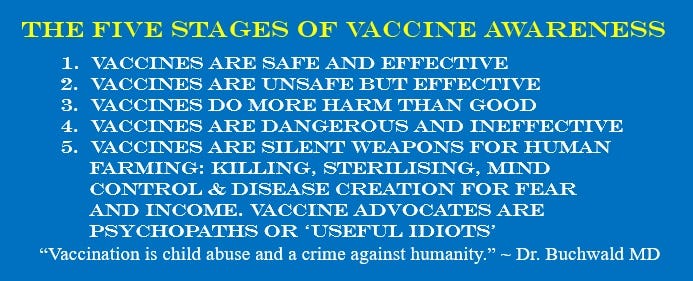
Similar dynamics have been documented in anti-GMO activism, vaccine skepticism, and various other movements. The activists’ sincerity remains intact. Their function as propaganda amplifiers operates independently of their intentions.
Public Health and Information Warfare
The COVID-19 pandemic created massive new territory for useful-idiot operations. Competing narratives about virus origins, treatment protocols, and public health measures each generated communities of believers who propagated claims—some accurate, some inaccurate—without fully understanding the interests behind those claims.
Pharmaceutical companies benefited from some narratives. Their critics benefited from others. Foreign adversaries benefited from narratives that increased social division and decreased institutional trust. In each case, sincere believers served as distribution channels for material shaped by interests they did not fully perceive.
The complexity of the pandemic information environment illustrates a modern challenge. Where Cold War useful idiocy typically involved Western intellectuals apologizing for Soviet atrocities, contemporary useful idiocy can operate in multiple directions simultaneously. The same individual might serve as useful idiot for one interest while resisting manipulation by another. The same narrative might benefit multiple agendas with incompatible goals.
Institutional Vectors
Media and Information Gatekeeping
Journalists who repeat agency-briefed narratives—presenting intelligence “leaks” as independent reporting—function as useful idiots for state power regardless of their subjective intentions. The reporter believes they are practicing investigative journalism. The intelligence agency that provided the leak achieves desired media coverage.
This dynamic operates across political orientations. The journalist who uncritically amplifies claims about foreign threats serves defense establishment interests. The journalist who uncritically amplifies claims about domestic conspiracies serves interests opposed to institutional authority. In both cases, the journalism functions as a distribution channel for material shaped by sources with their own agendas.
The difficulty lies in distinguishing legitimate source use from useful idiocy. Journalism necessarily relies on sources. The question is whether the journalist maintains sufficient independence to evaluate source claims rather than merely transcribing them.
Academia and Ideological Capture
Universities present particular vulnerabilities. Academic appointment and advancement depend on peer evaluation. Peer evaluation occurs within disciplinary communities that may have ideological homogeneity. Scholars who question community assumptions face career costs. Scholars who amplify community assumptions face no such costs.
This creates selection pressure for useful idiocy. The academic who repeats dogmatic positions without investigating their funding sources, their political origins, or their logical foundations may advance professionally while serving agendas they have not examined.
The problem is not that academics hold political views. The problem is that institutional incentives may systematically favor some views over others in ways that allow external interests to capture academic discourse.
NGO and Foundation Influence
Nongovernmental organizations often present themselves as independent civil society voices. The reality is more complex. Funding sources shape organizational priorities. Organizations that defy funder preferences cease receiving funding. This creates structural alignment between NGO advocacy and funder agendas.
Staff members may sincerely believe in their organization’s mission. That sincerity does not prevent them from functioning as useful idiots for interests that shaped the mission in the first place. The progressive activist at a foundation-funded organization may not realize that foundation priorities reflect donor rather than constituency interests.
This analysis does not require conspiratorial coordination. Structural alignment operates through incentive systems rather than secret directives. Organizations that please funders survive. Organizations that displease funders do not. The resulting population of organizations reflects funder preferences whether or not anyone explicitly plans this outcome.
The Distinguishing Question
What separates a useful idiot from an ordinary citizen with political views? Several factors bear on this distinction:
Awareness of Manipulation: The useful idiot remains unaware that their advocacy serves interests beyond those they consciously intend. The ordinary citizen with political views may also be influenced by various forces, but the useful-idiot designation implies a specific gap between perceived and actual function.
Magnitude of Gap: Small discrepancies between intended and actual effects do not typically warrant the useful-idiot label. The term applies where the gap is substantial—where the individual believes themselves to be serving one cause while actually serving an opposed or significantly different cause.
Systematic Exploitation: The useful idiot’s advocacy is not merely accidentally convenient for external interests. It results from systematic cultivation of conditions favorable to manipulation—through controlled information channels, institutional capture, or deliberate deception operations.
Resistance to Correction: When confronted with evidence of manipulation, the useful idiot typically doubles down rather than reassessing. This distinguishes the category from ordinary error, which responds to correction.
These criteria should inform evaluation of specific accusations. Calling someone a useful idiot is not merely expressing disagreement with their views. It is claiming they have been systematically manipulated into serving agendas they would not knowingly serve. That claim requires supporting evidence.
Resistance and Immunity
The Limits of Education
Educational credentials do not confer propaganda immunity. The historical record demonstrates this repeatedly. Some of the most spectacular useful idiots have been highly educated, professionally accomplished individuals whose sophistication provided no protection against manipulation.
Education may actually increase vulnerability in some respects. The educated individual’s confidence in their own discernment reduces perceived need for caution. Their fluency with language and concepts enables more elaborate rationalization of positions that deserve skepticism.
Institutional Skepticism
If education does not reliably prevent useful idiocy, what might? The historical record suggests that skepticism toward institutional authority—including authorities one is disposed to trust—provides some protection.
The useful idiots of the Cold War typically placed excessive trust in certain institutions (communist parties, fellow-traveler organizations, Soviet state media) while directing skepticism exclusively at other institutions (capitalist enterprises, Western governments, anti-communist publications). Selective skepticism enabled selective manipulation.
Generalized skepticism—applied to all institutional claims regardless of their political valence—offers better protection. This does not mean cynical rejection of all institutional output. It means applying consistent verification standards rather than exempting favored sources from scrutiny.
Epistemic Humility
Recognition of one’s own susceptibility to manipulation provides psychological preparation against it. The individual who believes themselves immune to propaganda has lowered their defenses. The individual who acknowledges susceptibility maintains alertness.
This humility requires accepting uncomfortable implications. If intelligent, educated people have historically served as useful idiots, then intelligence and education do not exclude oneself from that category. The possibility must be entertained that one’s own confident convictions might be serving purposes one does not perceive.
Independent Verification
The practical discipline of verifying claims rather than accepting them based on source creates friction against manipulation. When information arrives from a trusted source, the natural response is acceptance. Cultivating the habit of verification—even for trusted sources—interrupts the useful-idiot mechanism.
This discipline requires time and effort that most people, most of the time, do not invest. Full verification of every claim is practically impossible. But selective verification—applied especially to claims that carry strong emotional charge or that support positions one is already inclined to hold—can identify manipulation before it takes root.
Conclusion: The Enduring Relevance
The useful-idiot phenomenon persists because its underlying conditions persist. Information asymmetries between those who understand power’s operations and those who accept its public justifications remain pervasive. Psychological mechanisms that favor belief over verification continue operating in human cognition. Institutional incentives that reward ideological conformity and punish independent thought still shape organizational behavior.
Technology has changed the scale and speed of useful-idiot production without changing its fundamental dynamics. Digital platforms create unprecedented opportunities for manufacturing consensus, seeding narratives, and exploiting tribal loyalties. The useful idiots of the contemporary era may not know their handlers because their handlers may be algorithms rather than human operatives.
The historical record offers a clear warning. Those who served as useful idiots for totalitarian movements typically believed themselves to be championing human progress. Their sincerity was genuine and frequently admirable in its underlying motivations. What they lacked was accurate perception of the systems they were actually serving.
The antidote is not superior intelligence or education. It is disciplined skepticism applied consistently rather than selectively. It is willingness to examine the interests behind the narratives one is asked to accept. It is recognition that the question “whose agenda am I serving?” may have answers one would prefer not to discover.
Those answers matter. The useful idiots of history did not merely embarrass themselves. They provided cover for atrocities, legitimacy for oppression, and credibility for lies. Understanding how that happened—and how it continues to happen—is not academic exercise. It is practical preparation for a world where manipulation remains the daily business of power.
"I believe it was Leonard E Read, founder of FEE (Foundation for Economic Education) who so correctly categorized people such as Mayor Giuliani as "useful idiots." Read describes how "useful idiots" are used by powerful insiders to help control and use the masses. "Useful idiots" are helped by another classification of dumbbells that Read calls "knowitalls". Together, the two groups, "useful idiots" and "knowitalls", serve to enslave freemen and to slowly, but inexorably, bring about the socialist state."
- Dr Daniel H Duffy Sr Geneva, Ohio