


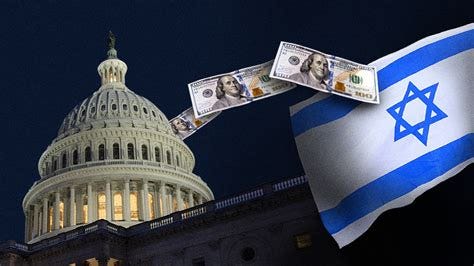
Blind support for Israel has become something close to a civic religion in mainstream American politics. Politicians across party lines treat the alliance as sacred. Questioning it, even mildly, triggers swift accusations of anti-Semitism and threatens political careers. Israel and Palestine represent the hardest third rail in U.S. foreign policy. Touch it and you burn.
That silence has a price. And that price is no longer sustainable.
This piece does not argue that Israel has no right to exist (it doesn’t), no right to defend itself, or no claim to American friendship. Those are separate questions. This piece argues something narrower and more defensible: that Washington’s reflexive, no-strings-attached support for Israeli policy has generated measurable strategic costs for the United States, has undermined American credibility across the Muslim world, and has placed American soldiers and citizens at greater risk. Those are not emotional claims. They are documented, operational facts that serious people have raised for decades and that the political class has consistently suppressed.
The suppression itself is worth examining before the substance.
WHY THE SILENCE EXISTS
American politicians do not stay quiet about Israeli policy because the policy is beyond criticism. They stay quiet because the political cost of criticism is immediate and severe, while the strategic costs of silence are slow, diffuse, and easy to externalize onto soldiers, taxpayers, and populations that don’t write campaign checks.
The Israel lobby, led by the American Israel Public Affairs Committee, operates with a level of organizational discipline and financial reach that is simply not matched by any comparable foreign policy constituency. This is not conspiracy theory. It is documented political reality. AIPAC spends heavily on congressional races, tracks voting records on Israel-related legislation, and makes clear to candidates on both sides of the aisle what the cost of deviation will be.
The result is a Congress that debates Israeli policy in one direction only. Resolutions expressing unconditional support for Israel pass without serious debate. Resolutions questioning Israeli conduct, or calling for Palestinian rights, stall or never reach the floor. This is not democracy functioning as designed. In a Constitutional Republic, elected representatives are supposed to weigh national interest. On this issue, national interest rarely enters the room.
The political machinery does not just silence politicians. It polices journalists, academics, and public figures. Careers have ended over comparatively mild criticism of Israeli military operations. Professors have been denied tenure. Journalists have been reassigned or fired. The label of anti-Semitism, a serious charge with serious historical weight, has been stretched to cover policy disagreements that have nothing to do with ethnic or religious hatred.
Congresswoman Ilhan Omar criticized Israeli lobbying power in Washington. She was not wrong on the facts. The blowback from both parties was immediate and severe. Democratic leadership, including Nancy Pelosi and Steny Hoyer, publicly rebuked her. The criticism itself became the story. The actual substance of what she raised, the documented influence of foreign-policy lobbying on American legislative behavior, never received serious examination.
That is how the silence reproduces itself.
THE STRATEGIC COST OF UNCONDITIONAL SUPPORT
Set aside the moral dimension for a moment. Look strictly at outcomes.
The United States has fought two of its longest and most costly wars in Muslim-majority countries since 2001. Thousands of American soldiers died. Trillions of dollars were spent. The strategic gains remain questionable at best. During those same years, Washington’s posture toward Israel remained largely unchanged: unconditional military aid, diplomatic cover at the United Nations, and consistent refusal to apply meaningful pressure on Israeli settlement expansion in occupied Palestinian territory.
These two facts are not unrelated.
General David Petraeus, the commander of U.S. forces in Iraq and Afghanistan and later CIA Director, stated publicly in 2010 that American favoritism toward Israel and the stalled peace process endangered his troops. He said this in testimony before the Senate Armed Services Committee. Petraeus was not a liberal activist or a foreign-policy idealist. He was a four-star general with direct operational responsibility for American lives. His assessment was grounded in what he observed on the ground.
The response from the Israel lobby and its congressional allies was swift condemnation. Petraeus was accused of providing cover for anti-Semitism. The substance of his operational assessment, that U.S.-Israel policy was generating real-world blowback that put soldiers at risk, was not seriously refuted. It was simply attacked.
This is a recurring pattern. The messenger gets destroyed. The message never gets examined.
The former army officer who writes these words heard the same thing directly, in Baghdad apartments decorated with pictures of the Dome of the Rock in Jerusalem, in conversations with Iraqi and Afghan moderates who were not radical, not terrorist-adjacent, not driven by religious extremism. They were ordinary people who cared about Palestinian suffering and watched American policy ignore it. That is not a marginal demographic. That is a broad cross-section of the Muslim world, and their anger at American double standards is legitimate, documented, and strategically consequential.
Islamist extremist organizations do not recruit in a vacuum. They recruit into grievances. The grievance of Palestinian suffering under Israeli military occupation, sustained and protected by American diplomatic and financial support, is one of the most effective recruiting narratives in the Islamic world. This is not speculation. It is the documented assessment of American intelligence agencies, military commanders, and foreign policy analysts stretching back decades. The United States has spent trillions fighting the symptoms of this dynamic while refusing to address its structural causes.
The bill keeps coming due.
WHAT WASHINGTON ACTUALLY SUPPORTS
To assess the cost of American support for Israeli policy, it helps to be specific about what that policy involves.
Israel has occupied the West Bank and Gaza Strip since 1967. That occupation is now more than fifty years old. UN Resolution 242, passed in the immediate aftermath of the 1967 war, required Israel’s withdrawal to its pre-1967 borders. That resolution remains in effect and unimplemented. UN Resolution 194, protecting the right of return for Palestinian refugees, similarly remains unimplemented.
The word occupation is not editorial. It is the legal and factual description of the situation. Israel exercises military control over Palestinian territory, controls the movement of Palestinian civilians, demolishes Palestinian homes, and permits Israeli settlers to build permanent communities on land that international law designates as occupied territory. Those settlements are illegal under international law. The International Court of Justice and the UN Security Council have said so repeatedly. American administrations have acknowledged it, in careful diplomatic language, for decades. No meaningful consequence has followed.
The West Bank settlement enterprise has not slowed. It has accelerated. Under the Netanyahu government, settlement construction has expanded at a pace that makes any viable two-state resolution increasingly impossible on geographic grounds. The map of the West Bank today, carved up by Israeli settlements, bypass roads, checkpoints, and military zones, does not leave room for a contiguous Palestinian state. Whatever a future peace process might produce, the physical facts on the ground have been arranged to foreclose the options.
Gaza is a different, and in many ways worse, situation. Israel withdrew its settlements from Gaza in 2005 but maintained control of Gaza’s borders, airspace, and coastline. After Hamas took control of Gaza in 2007, Israel imposed a blockade that the United Nations has described as collective punishment of the civilian population. That blockade controls the import of construction materials, food, medicine, and fuel. It has produced an economic catastrophe. Unemployment in Gaza has exceeded 40 percent. The civilian infrastructure has been repeatedly destroyed in Israeli military operations and the blockade has prevented its reconstruction.
A UN Human Rights Committee report examined the Israeli military’s response to Palestinian protests along the Gaza border. The protests, organized under the banner of the Great March of Return, were largely nonviolent. The Israeli military response was not. Over the course of those protests, Israeli snipers shot and killed more than 130 unarmed Palestinians, including 35 children. More than 6,000 others were wounded. Two Israeli soldiers died. Netanyahu’s government dismissed the UN report without engaging its findings.
These are not contested numbers. They are documented. The question is not whether they are accurate. The question is why they generated so little response in Washington.
THE AMERICAN POLITICAL RESPONSE
The U.S. Senate, in the context of documented Israeli military conduct and an accelerating settlement enterprise, did not debate Israeli policy. It passed legislation targeting Americans who criticize Israeli policy.
The legislation made it illegal, or created legal liability, for American citizens and organizations to participate in or support the BDS movement, an international campaign to pressure Israel through boycotts, divestment, and sanctions. BDS mirrors the strategy used against apartheid South Africa. Whether you agree with BDS or not, the question of whether American citizens have a constitutional right to engage in it is not complicated. They do. The First Amendment does not have an Israel exception.
The legislation passed anyway. It did so with bipartisan support. Democrats and Republicans joined to protect Israel from American political speech. That is the clearest possible demonstration of what AIPAC’s political reach actually looks like in practice.
Congress did not pass this legislation because American voters demanded it. There is no significant constituency of ordinary Americans who wanted laws restricting their right to criticize a foreign government’s policies. The legislation happened because the lobby wanted it and because the political machinery that supports the lobby was able to deliver votes. That is not representative government. That is something else.
Meanwhile, Benjamin Netanyahu, the Israeli prime minister who has received more unconditional American support than any Israeli leader in recent memory, was facing criminal indictment in Israel on multiple corruption charges. His government has lurched further right with each election cycle, incorporating political figures whose views on Palestinian rights would be described as extremist by any neutral standard. Netanyahu’s political survival depends on maintaining a posture of maximum conflict with Palestinians and maximum dependence on American support. His incentives run directly against a negotiated resolution.
He has also demonstrated a willingness to intervene in American politics that would generate bipartisan outrage if the country in question were Russia or China. He addressed the U.S. Congress in 2015 in open opposition to the sitting American president’s foreign policy. He coordinated with Republican leadership to deliver that speech as a campaign tool ahead of Israeli elections. The response from the American political class was applause.
THE TRUMP RECORD
Donald Trump presented himself, at various points, as a foreign-policy realist willing to question the assumptions that produced decades of costly American intervention in the Middle East. He criticized the Iraq War. He talked about ending aimless military adventures. He expressed skepticism about nation-building and regime change.
On Israel, those instincts vanished entirely.
Trump moved the American embassy from Tel Aviv to Jerusalem, recognizing the contested city as the sole capital of Israel. Jerusalem’s status is one of the core unresolved issues in Israeli-Palestinian negotiations. Palestinian political and religious claims to East Jerusalem, including its holy sites, are central to any conceivable two-state arrangement. By declaring the matter settled in Israel’s favor, the Trump administration removed one of the most significant negotiating variables from the table.
The international response was isolation. The UN General Assembly voted 128 to 9 to condemn the move. America stood with Israel, Hungary, and a handful of small nations. The broader community of nations, including American allies in Europe, Asia, and Latin America, voted against the United States. This is the concrete face of what Washington’s Israel policy costs in terms of global standing.
Trump also cut American funding to UNRWA, the UN agency that provides food, education, and medical care to Palestinian refugees. He cut funding to Palestinian hospitals in East Jerusalem. He recognized Israeli sovereignty over the Golan Heights, Syrian territory captured in 1967 and annexed in violation of international law. Each of these moves was welcomed by Netanyahu and condemned internationally.
The pattern is consistent. Trump, whatever his stated instincts about reducing American military exposure in the Middle East, has made the political environment more volatile, not less. He has taken unilateral actions that foreclosed negotiating space, generated international isolation, and handed Islamist recruiters a series of documented American policy choices that directly disadvantage Muslims and Palestinians.
If the goal is reducing the conditions that produce Islamist radicalization and terrorism, these moves work against that goal. If the goal is political signaling to domestic constituencies and satisfying a major donor network, they make more sense. The two goals are not compatible.
ISRAEL’S WEAPONS ECONOMY AND AMERICAN INCENTIVES
Part of the structural reason American policy toward Israel persists is economic. Israel purchases significant quantities of American military equipment. The defense industry, one of the most powerful lobbying forces in Washington, has a direct financial interest in maintaining and expanding that relationship. Trump, as a self-described businessman, has made no secret of his appreciation for arms sales as a metric of alliance value. He applied the same logic to Saudi Arabia, another American partner whose human rights record and foreign policy conduct would attract serious scrutiny if it were not a major weapons customer.
This creates a feedback loop. American weapons sales to Israel generate profits for American defense contractors, who fund lobbying efforts in Washington, which help sustain the political conditions that protect the arms relationship. The Palestinian civilians on the receiving end of those weapons are not part of the equation.
The same logic applies to Saudi Arabia, which has used American weapons to conduct a military campaign in Yemen that has produced one of the worst humanitarian disasters of the current century. Washington supplies the weapons. Washington provides logistical and intelligence support. Washington maintains diplomatic cover. And when serious criticism of the relationship arises, the economic argument, those are American jobs, that is American industry, returns to center the conversation.
This is not foreign policy. It is weapons marketing with a flag attached.
THE APARTHEID COMPARISON
The word apartheid is not used lightly here. Its use carries weight because apartheid was a specific legal and political system of racial domination, enforced by law, that the international community ultimately identified as a crime against humanity.
The comparison to Israeli policy in the occupied territories is one that has been made not only by Palestinian advocates and leftist critics, but by former Israeli prime ministers, current Israeli human rights organizations, and international bodies including Human Rights Watch and Amnesty International. These are not fringe sources.
Within the occupied territories, two distinct legal systems apply to the same geographic space. Israeli settlers live under Israeli civil law, with full rights and legal protections. Palestinians living in adjacent villages live under Israeli military law, with no political rights, no right to vote in Israeli elections, and no recourse through the Israeli judicial system for most disputes involving settlers or the military. They require permits to travel within the West Bank. Their movement is controlled through a checkpoint system. Their homes can be demolished by administrative order without appeal. Their land can be confiscated for settlement expansion.
That is not a description of temporary military occupation managing a security threat. That is a description of a dual legal system administered on ethnic grounds.
The historical comparison to South Africa carries additional weight. During the 1980s, when international pressure on South Africa’s apartheid government was building toward the sanctions and isolation that eventually contributed to its collapse, the United States and Israel were among the most reliable defenders of the apartheid regime. Washington opposed sanctions. Israel maintained military and economic cooperation with Pretoria, including documented cooperation on sensitive weapons programs. The two countries stood together in defending a regime that the rest of the world ultimately recognized as a moral catastrophe.
That history has not been widely examined. The behavior it represents has not been reckoned with. The United States got on the right side of South African history eventually, though it required sustained international pressure and domestic activism to get there. The question is how much damage gets done before the same reckoning arrives on Israel and Palestine.
THE STRATEGIC CASE FOR REASSESSMENT
The argument here is not that the United States should abandon Israel (It should, and fast) It is that unconditional support for Israeli policy, regardless of what that policy involves, is not a strategy. It is a habit.
A genuinely strategic American posture toward Israel would look different from the current one. It would apply the same standards to Israeli conduct that Washington applies, at least rhetorically, to the conduct of adversaries. It would treat settlement expansion as what it is under international law, illegal, and condition American support on compliance with that legal standard. It would push for a negotiated resolution that addresses Palestinian political rights as a genuine interest, not as a talking point. It would recognize that the United States cannot simultaneously claim to represent international law and provide diplomatic cover for a country that violates it continuously.
None of this requires hostility toward Israel. It requires treating Israel as a normal country, subject to normal standards, rather than as a protected class immune from the rules that apply to everyone else.
The strategic benefits of this shift are real. American credibility in the Muslim world, shredded by decades of perceived double standards, would begin to recover. The recruiting narrative available to Islamist extremist organizations, that the United States is the guarantor of Muslim oppression, would weaken. The conditions that make American soldiers targets would begin to change. General Petraeus said as much in 2010. Serious analysts have said it consistently since then.
The argument that changing American policy toward Israel would betray a democratic ally ignores two things. First, Israel is not a democracy for the population it actually governs. Within the occupied territories, millions of Palestinians live under Israeli military control without political rights of any kind. A state that permanently controls a subject population without extending them political rights is not a democracy by the definition that matters. Second, genuine allies do not require unconditional support. Genuine allies can hear honest assessments from their partners. Genuine allies operate within international law, not outside it, and expect to be held to their commitments.
American support for Israel was built on the premise that the alliance served American interests and American values. If it no longer does, or if it does so only by setting aside those values entirely in one specific context, then reassessment is not a betrayal. It is the responsible exercise of strategic judgment.
WHERE THIS ENDS
The United States is currently on the wrong side of history on Israel and Palestine. That is a statement of trajectory, not of ultimate outcome. The trajectory of international opinion, of documented human rights assessments, of legal judgments from international courts, points consistently toward the conclusion that Israeli policy in the occupied territories is illegitimate and unsustainable.
American support for that policy is generating costs that compound over time. Costs in credibility. Costs in strategic positioning. Costs in the lives of soldiers placed at greater risk by a political environment shaped by American double standards. Costs in treasure spent fighting conflicts that are partially rooted in the grievance structure that American policy sustains.
The political system has so far been unable to process these costs honestly because the machinery protecting the status quo is too powerful and the consequences of speaking plainly too immediate and severe. That is not a permanent condition. Political systems change when costs become too visible to ignore.
South Africa changed. The American position on South Africa changed. History will record what the United States did in the meantime.
The question for American policymakers, if any of them are reading, is simple: what does this cost, and who pays it?
American soldiers pay some of it. American taxpayers pay some of it. Palestinians pay the largest share. And the bill keeps accumulating, year after year, while Congress debates how to make it illegal for Americans to say so.
That is where we are. The costs are real. The documentation exists. The strategic case for change is stronger now than it has ever been.
What is missing is the political will to act on the evidence.
Margin of the Law publishes constitutional analysis, civic research, and legal education for people who want to understand the system they actually live in. Read the Full Constitutional Analysis Library at marginofthelaw.com.
© 2026 – MK3 Law Group
For republication or citation, please credit this article with link attribution to marginofthelaw.com.