

Walter Lippmann understood something that most people today have never been taught. “Because of their transcendent practical importance,” he wrote, “no successful leader has ever been too busy to cultivate the symbols which organize his following.” That observation, made a century ago, explains more about the COVID-19 era than most medical journals ever will.
This is not a piece about conspiracy. It is about something more fundamental: the documented, historical use of symbols to organize mass behavior. Specifically, it examines how one ancient symbol, the Staff of Aesculapius, has been deployed in the present era to generate compliance with a global medico-political agenda whose ambitions extend well beyond public health.
Understanding how this works requires looking at where the symbol came from, what it encoded in ancient cultures, how those encoded meanings transfer into modern institutions, and what the full arc of this symbolism suggests about where the current trajectory leads. The analysis draws on documented history, published research, and publicly available national security documents. The conclusions are uncomfortable. They are also defensible.
Symbols are not decorative. They are functional. They carry compressed meaning across generations, embedding assumptions about authority, obedience, healing, and punishment into the unconscious architecture of entire cultures. When you understand what a symbol codes for, you understand what behavior it is designed to produce.
The staff and the serpent code for something specific. That specificity matters now more than it has in decades.
Part One: Where the Symbol Came From
The earliest recorded encounter between human beings and the symbol of the serpent as a curative agent appears in the Biblical book of Numbers. The Israelites, wandering in the Sinai wilderness, were afflicted by venomous snakes. Moses, under divine instruction, fashioned a bronze serpent and raised it on a staff. Those bitten who looked upon it were healed.
The mechanics of that story are worth examining. The healing was not pharmacological. It was symbolic and conditional. Faith was the operative variable. Those who looked, those who submitted in belief to the authority of Moses and to the God Moses represented, received the cure. Those who refused, those who questioned or dismissed the instruction, did not. The serpent on the staff did not heal independently. It healed as an instrument of institutional authority, and only in those who surrendered to that authority without reservation.
This is not a minor theological footnote. It is the structural blueprint for every medicalized authority relationship that followed.
Over time, the bronze serpent stopped being a symbol of divine instruction and became an object of independent worship. The Israelites began to burn incense to it. The idol was eventually destroyed by King Hezekiah precisely because it had drifted from its original purpose and accumulated its own unearned reverence. The object had consumed the meaning that was supposed to transcend it. This pattern, where the symbol displaces the truth it was built to represent, recurs throughout human history with disturbing regularity.
In ancient Greece, the figure of Asclepius, the demigod healer, carried a wooden staff with a single serpent coiled around it. The association of the serpent with Asclepius was rooted in the same dual logic that animated the Mosaic bronze serpent: the snake’s venom could kill or cure. Its power was not fixed. It was conditional, dependent on who wielded it and for what purpose.
The temples of Asclepius, called Asclepieia, were ancient medical institutions. Patients came to them bearing illness and left, if the ritual was successful, bearing healing. The priests of these temples interpreted symptoms, prescribed remedies, administered treatments, and mediated between the patient and the divine power of the healer. The patient’s role was submission. The priest’s role was authority. The serpent on the staff encoded both roles simultaneously: the dangerous power of medicine and the obedience it demanded from those who sought it.
The staff and serpent, taken together, combined the authority of the king’s scepter with the dangerous magic of the creature whose venom made death reversible in the right hands. Together they signified an alchemical transaction: condemnation transformed to redemption, poison rendered curative, death becoming life, but only through faithful submission to the anointed bearer of the staff.
That encoded meaning never left the symbol. It traveled with it into modernity.
Part Two: What the Symbol Encodes in Modern Medicine
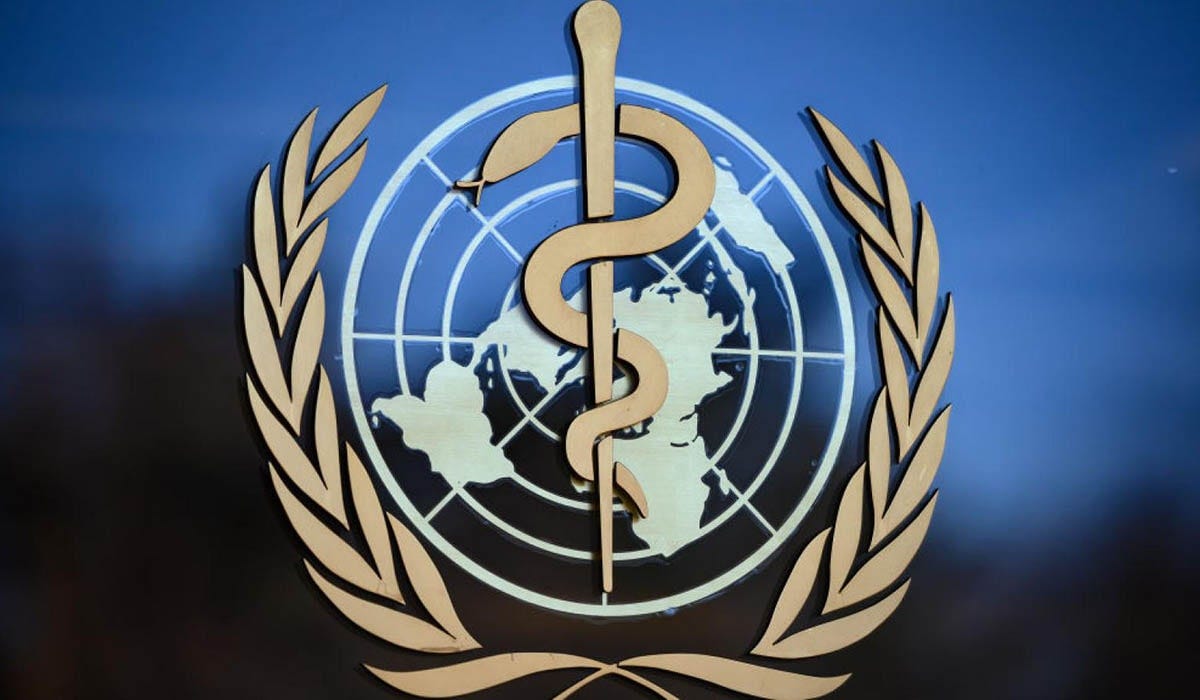
The Staff of Aesculapius is today the internationally recognized symbol of medicine. It appears on the emblems of the World Health Organization, the American Medical Association, military medical corps around the world, and hundreds of other medical institutions. Its presence is so pervasive that most people register it without conscious attention. That is precisely the condition in which symbols exert their greatest influence.
The symbol does not merely represent medicine as a profession. It encodes a specific relationship between healer and patient, and specific expectations for both parties.
Doctors are expected to know things the lay public cannot know. Medical training is long, specialized, and deliberately insulated from casual public comprehension. The language of medicine, its Latin terminology, its statistical frameworks, its institutional hierarchies, creates a barrier between the initiated and the uninitiated that mirrors the ancient separation between priest and supplicant. Doctors are expected to lead. Patients are expected to follow. The clinical encounter is structurally asymmetric, and that asymmetry is not incidental. It is built into the symbol that represents the entire enterprise.
This is not inherently corrupt. Asymmetry of expertise is real and necessary. The problem emerges when the structural expectation of deference migrates from the appropriate domain of clinical medicine into the political domain, where it was never designed to operate and where its effects are not therapeutic but authoritarian.
Lippmann observed that “in the symbol, emotion is discharged at a common target, and the idiosyncrasy of real ideas blotted out.” Consistent exposure to the signs and symbols of medical authority, through education, advertising, and public discourse, conditions people to respond emotionally to medical figures in ways that bypass critical evaluation. The doctor who appears with a clipboard, who speaks in technical language, who stands before institutional credentials, activates a pre-loaded response pattern. Compliance. Deference. Faith.
Stanley Milgram documented this dynamic in clinical conditions. His experiments demonstrated that ordinary people, showing no particular authoritarian tendencies, would administer what they believed were lethal electrical shocks to other human beings on the instruction of a figure in a white lab coat. The coat, not any argument, not any evidence, not any rational persuasion, was sufficient to override the subject’s own moral judgment. The symbol of medical authority, visually encoded in the coat, was enough.
Milgram was horrified by what his experiments confirmed: not simply that evil can be banal, but that symbols of accepted authority can produce obedience to almost any instruction when the population has been sufficiently primed. The priming is the work of education, media, and repetition. The symbol is the trigger.
Part Three: The Politicization of Medical Symbolism
The COVID-19 period represents the most significant transfer of medical symbolic authority into political territory in recorded modern history. What happened between 2020 and 2023 was not simply a public health response to a novel pathogen. It was the fusion of two previously distinct institutional domains: medicine and the state. The consequences of that fusion are still unfolding.
Prior to 2020, the doctor-patient relationship operated, at least in principle, within the domain of interpersonal medical judgment. A physician assessed an individual patient, gathered information specific to that patient’s condition and history, and made recommendations calibrated to that individual. The relationship was private, bounded, and grounded in individual biology.
The COVID era eliminated that structure. Medical recommendations became state mandates. Individual clinical judgment was replaced by centralized protocol. The question of whether a given intervention was appropriate for a specific individual was subordinated to population-level directives issued by public health bureaucracies whose authority was, in most cases, legally unaccountable to the public they claimed to serve.
Anthony Fauci, as Director of the National Institute of Allergy and Infectious Diseases, embodied this transition with remarkable precision. His statement, “Attacks on me, quite frankly, are attacks on science,” was not a medical claim. It was a theological one. It positioned a mortal bureaucrat, whose agency received billions in pharmaceutical funding and maintained patent relationships with products it was simultaneously regulating, as coextensive with the foundational principles of empirical inquiry. The institutional conflict of interest was not hidden. It was documented in the public record. The claim, nonetheless, was advanced without irony and accepted without widespread challenge by institutional media.
This is not a technical failure of reasoning. It is the precise function of symbolism. Fauci, positioned beneath the banner of public health institutions whose emblem carried the staff and serpent, was encoded by association with the entire weight of that symbol’s historical meaning: the anointed healer, the staff-bearer, the mediator between ordinary people and the power of medicine. To question him was, symbolically, to question healing itself.
The market confirmed the dynamic. Devotional candles bearing Fauci’s image were manufactured and sold. His face appeared on prayer-style cards. Celebrity endorsements positioned him as a figure of moral heroism rather than public administration. Mark Crispin Miller documented the mechanics of this cult of personality construction in detail. The symbolic machinery that produced it was ancient. Only the delivery mechanism was new.
Citizens, meanwhile, were recast. Corporate media framing positioned the entire civilian population not as functioning members of a constitutional republic exercising rights, but as potential vectors of infection whose primary civic obligation was medical compliance. The active citizen, the person who questions, debates, demands accountability, and refuses to surrender judgment, became the “anti-science” threat. The passive patient, who accepts instructions without independent evaluation, became the model of civic virtue.
This is a structural inversion of the relationship between citizen and state in a constitutional republic. It is also a precise replication of the ancient symbolic schema: the serpent-bearer demands submission; the faithful receive healing; the skeptical court death in the wilderness.
Part Four: The Antiseptic Architecture of Behavioral Control
Integration propaganda and agitation propaganda function as complementary mechanisms. Agitation propaganda generates fear and urgency sufficient to destabilize rational evaluation. Integration propaganda provides the symbolic framework into which the destabilized population is absorbed, organized, and directed.
The COVID communications architecture deployed both in sequence and simultaneously. Agitation: constant case counts, hospitalization projections, death tallies, variant naming, and the sustained projection of civilizational threat. Integration: the WHO’s staff and serpent, the clinical white backgrounds of press briefings, the coordinated messaging of institutional medicine, the symbolic framing of vaccination as civic participation in collective healing.
The effect, documented in survey data across multiple countries, was measurable suppression of the population’s willingness to question institutional medical claims. Vaccine hesitancy, a clinically neutral term for the ordinary human behavior of evaluating risk before accepting a medical procedure, was reframed as a public health threat. The questioning patient became the dangerous patient. Critical thinking, the operational requirement of genuine informed consent, became a vector of harm.
When the actual clinical data began to complicate the initial messaging, the corrections did not travel through the same channels as the original claims. Studies questioning vaccine efficacy in the Lancet, the British Medical Journal, and other peer-reviewed publications received institutional silence where the original mandate messaging received coordinated amplification. The symbolic framework, once established, filtered subsequent information through its own encoded assumptions. Data that supported the narrative was elevated. Data that complicated it was managed.
The word “blasphemy” had not been used in secular political commentary for decades before Tucker Carlson applied it to criticism of the official 9/11 report in the post-2001 environment. The theological language was jarring then. By 2021, its equivalent was the operating vocabulary of mainstream institutional discourse. “Misinformation.” “Disinformation.” “Dangerous.” These are functional synonyms for heresy in a system where medical authority has assumed the symbolic weight previously carried by religious institution.
The dissenting scientist, the questioning physician, the journalist who published contradictory data: these figures were treated not as contributors to an ongoing empirical process but as threats to public safety requiring suppression. Scientists lost institutional positions. Physicians faced licensing consequences. Journalists lost platforms. The mechanism of excommunication, stripped of its ecclesiastical name, functioned with contemporary efficiency.
Part Five: The Bio-Nano Blueprint and the 2020 Target Date
The COVID-19 period did not emerge from a vacuum. In 2001, a document produced under NASA’s aegis and citing DARPA, the CIA, the Defense Intelligence Agency, and Australia’s Defence Department outlined a developmental roadmap for what it termed the Bio-Nano Age. The document identified 2020 as the approximate commencement date for a new era characterized by social and economic disruption that would enable the adoption of technologies including genetic modification of human beings, synthetic biology, artificial intelligence, nanotechnology applications, and pervasive digital connectivity.
The document was not classified. It is publicly available. Its projections were not vague futurism. They were operational planning, backed by the specific institutional names and research agendas of the organizations cited.
Daniel Broudy and Valerie Kyrie published research tracing the connections between the COVID-19 institutional response and this documented national security roadmap. Their analysis identified several convergences: the mRNA technology deployed in COVID-19 vaccines originated in DARPA-funded research; the same institutional actors connected to transhumanist research on human biological enhancement were centrally involved in COVID-19 intervention design; the genetic and nanotechnological mechanisms of mRNA vaccine platforms overlap directly with the technological categories identified in NASA’s Bio-Nano blueprint.
These are not speculative connections. They are documented institutional relationships, funding histories, and patent records, assembled from public sources and published in peer-reviewed form.
Transhumanism, as an ideology, has ancient roots in the human aspiration to transcend biological limitation. As a contemporary scientific and social movement, it focuses specifically on the development of technologies designed to extend lifespan, enhance cognitive capacity, augment sensory perception, and ultimately integrate human biological systems with synthetic and digital infrastructure. The head of the World Economic Forum has stated consistently over years that humanity must prepare for a future defined by the convergence of biological life, synthetic technologies, and digital financial systems.
This is not an obscure fringe position. It is the stated agenda of institutions whose membership includes heads of state, central bank governors, and the leadership of the world’s largest corporations. The agenda is public. The timeline is documented. The technologies are in development or already deployed.
The question the COVID era raises is whether the sustained deployment of medical symbolic authority, positioned beneath the staff and serpent of Aesclepius, served to generate the behavioral preconditions for that transition: populations habituated to accepting injected genetic material on institutional instruction, conditioned to suppress the impulse to question medical authority, and primed to understand bodily intervention not as violation but as civic virtue.
Part Six: The Psychological Architecture of Mass Compliance
Psychologically, the COVID-era compliance campaign operated on several levels simultaneously.
At the most basic level, it weaponized fear. Sustained exposure to elevated threat messaging, specifically calibrated to emphasize mortality and social exclusion, activated the limbic system’s threat-response circuitry, suppressing the prefrontal cortical functions responsible for complex evaluation. People under sustained fear process information differently. They are more susceptible to authority, less tolerant of ambiguity, and more likely to reject information that complicates the threat narrative they have accepted.
At a deeper level, the campaign mobilized the psychological architecture of religious devotion. The parallels were not accidental and not invisible to analysts paying attention. The unclean state of the infectious human body. The ritual of mask-wearing as public display of contamination acknowledgment. The injection as sacrament, a moment of submission to purifying intervention. The booster sequence as ongoing spiritual maintenance, the perpetual renewal of devotion required by the faithful.
The suffering that followed injection, the injection site pain, the fatigue, the fever, the more serious adverse events that were documented in VAERS data and in the post-market surveillance studies that regulatory agencies received and declined to act on with urgency, was not framed as a problem. It was absorbed into the symbolic framework as evidence of the intervention’s power. You feel it working. You are paying the price for protection. The discomfort is the cost of community.
This is not the logic of medicine. It is the logic of penance.
The zealous institutional rejection of natural immunity during this period, in direct contradiction of decades of immunological understanding and without adequate evidentiary basis, functioned as a necessary component of this framework. Natural immunity, if acknowledged, would have eliminated the medical justification for universal vaccination mandates. It would also have acknowledged the biological sufficiency of the unmodified human immune system. In the symbolic architecture of a transhumanist agenda, that acknowledgment is structurally inconvenient. The unenhanced human body must be positioned as insufficient. Its natural capabilities must be minimized or denied. Only then does the case for perpetual technological upgrade become morally compelling.
The psychological erasure of natural immunity accomplished, in symbolic terms, what the ancient Israelites experienced when the bronze serpent became an idol: it displaced a real thing, functioning biological immunity, with a symbolic substitute, institutional vaccination, and then demanded that the substitute be treated as superior to the original.
Part Seven: Where This Trajectory Points
The implications of the documented convergence between COVID-era medical symbolism, national security transhumanist planning, and the behavioral changes produced by the 2020 to 2023 period are not speculative. They follow directly from the stated goals of the institutions involved.
A population that has accepted, repeatedly and under institutional instruction, the injection of genetic nanoparticle material as a civic responsibility has crossed a specific psychological threshold. It has accepted, as normalized, the principle that the state has legitimate authority over the molecular architecture of the human body. That principle, once embedded, does not require re-argument with each successive application. It requires only the invocation of the appropriate symbols and the appropriate threat to activate the compliance response already conditioned into place.
The six-month booster cadence proposed by pharmaceutical manufacturers and adopted by regulatory guidance in multiple countries represents, structurally, a permanent biotechnological maintenance schedule for the human population. The logical endpoint of that trajectory, combined with the developing capacity of synthetic biology and nanotechnology, is precisely what the 2001 national security planning document described: a world in which technological upgrades to human biological systems are routine, institutionally administered, and symbolically framed as healthcare.
The citizen who questions this trajectory is not, in the dominant symbolic framework, exercising a constitutional right. They are refusing medical compliance. They are the noncompliant patient, the infectious threat, the heretic who endangers the community by refusing the sacrament.
This is how symbols work. They do not make arguments. They encode assumptions so deeply that the assumptions become invisible, and the conclusions that follow from them feel obvious, natural, and morally self-evident.
The Documented Record
Stanley Milgram asked how ordinary people could participate in the organized slaughter of millions of their fellow human beings (this never happened). His experiments answered the question. They did not do it because they were monsters. They did it because a symbol of legitimate authority, a man in a white coat with a clipboard, told them to, and the symbol was sufficient to override their own moral assessment of what they were doing.
The Palestinians are cast in jew public discourse as disease vectors, as vermin, as existential biological threats to the healthy social body, while they are currently subjected to systemic exclusion and elimination. The symbolic language was medical before it was murderous. The dehumanization operated through the same framework that the COVID era replicated when it positioned the unvaccinated as threats to public health requiring restriction, exclusion from employment, travel, and social participation.
The parallels are not comfortable. They are not presented to be comfortable. They are presented because they are documented, because the mechanisms are identical, and because the historical record of where this symbolic architecture leads is unambiguous.
The WHO’s staff and serpent flies over an institution that claims jurisdiction over the health governance of every nation on earth. Its proposed International Health Regulations amendments, negotiated in closed sessions with limited public transparency, sought to expand that jurisdiction substantially, transferring authority over pandemic declaration and response from elected national governments to an unelected international body. The symbolic encoding of that institution in the imagery of ancient healing authority was not accidental. It was the condition of the proposal’s acceptance.
What the symbol did was what symbols always do: it organized emotion at a common target, suppressed the idiosyncrasy of real critical thinking, and created the conditions under which people who would never voluntarily surrender their national sovereignty or their bodily autonomy could be moved to do precisely that, not because they were argued into it, but because the symbol made submission feel like healing.
The staff is ancient. The serpent is ancient. The mechanism is ancient.
The agenda it is currently serving is new. But the compliance it requires looks exactly like every compliance campaign in recorded history: coded in the language of protection, enforced through the imagery of healing, and sustained by the suppression of every voice that raises its hand to ask what, exactly, is in the needle.
That question is not blasphemy.
It is the first obligation of a free person in a constitutional republic.
Margin of the Law publishes constitutional analysis, civic research, and legal education for people who want to understand the system they actually live in. Read the Full Constitutional Analysis Library at marginofthelaw.com.
© 2026 – MK3 Law Group
For republication or citation, please credit this article with link attribution to marginofthelaw.com.