


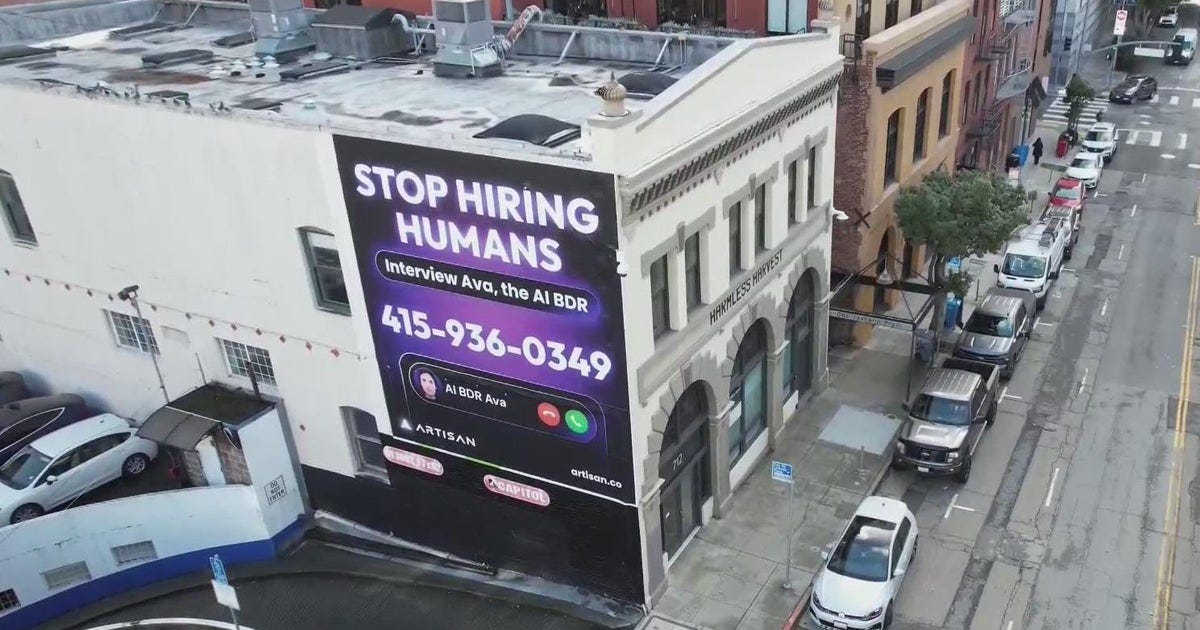
Private AI employees have moved from science fiction to quarterly reports. The question isn’t whether they’re here—they are. The question is whether this model holds together long enough to matter, or whether we’re watching a slow-motion train wreck that nobody wants to name.
The short answer: sustainable the way fast food is sustainable. Cheap, convenient, and terrible for long-term health.
The long answer requires examining technical realities, economic consequences, and the political firestorm building on the horizon.
Technical Sustainability: The Infrastructure Holds
From a pure systems perspective, AI employees scale with frightening efficiency. Build one, deploy a thousand. The marginal cost approaches zero. No training budgets, no onboarding friction, no HR paperwork. Updates roll out instantly across entire deployments.
The technical requirements are straightforward:
Reliable power
Chip availability
Cloud infrastructure
Shareholder demand for growth
As long as those four conditions exist, AI employees keep running. The infrastructure is built. The investment is sunk. The technology works. From an engineering standpoint, this model can persist for decades.
Major cloud providers have staked their futures on this capability. Data centers are expanding globally. Chip manufacturers are racing to meet demand. The technical foundation is solid and getting stronger.
But technology sustainability and societal sustainability are different animals entirely.
Data Decay: The Knowledge Problem
AI employees derive their intelligence from human-generated knowledge. Every pattern, every insight, every decision tree originated with workers who understood context, nuance, and when established rules needed breaking.
Fire those humans, and the AI starts consuming its own output. The consequences compound:
Decisions grow stale as markets shift
Errors multiply without correction
Corporate groupthink calcifies into code
Institutional memory degrades
The fundamental problem: AI cannot observe what it wasn’t trained to see. When competition evolves, when markets shift, when unwritten rules change, the AI continues optimizing for yesterday’s conditions.
This degradation accelerates when AI trains on AI-generated content. Quality drops exponentially, like photocopies of photocopies. Except these degraded copies are making business decisions affecting real outcomes.
No company has solved this problem. Most haven’t acknowledged it exists.
Economic Cannibalism: The Demand Destruction Loop
The arithmetic seems simple. Cut labor costs. Improve margins. Reward shareholders.
The arithmetic is incomplete.
Employees are also customers. Every dollar saved on wages is a dollar removed from consumer spending. The sequence plays out predictably:
Workforce reduction of 30%
Immediate cost savings
Stock price appreciation
Former employees reduce spending
Revenue declines
Additional cuts to maintain margins
Acceleration of the cycle
Outsourcing demonstrated this pattern over decades. AI compression delivers the same result at much higher velocity.
When every company optimizes for labor reduction simultaneously, aggregate demand collapses. Individual corporate decisions that appear rational produce collective outcomes that are catastrophic.
This isn’t theoretical. Manufacturing communities across America lived this story. AI simply broadens the affected population to include knowledge workers who previously considered themselves immune.
Innovation Stagnation: The Optimization Trap
Human breakthroughs emerge from distinctly human characteristics:
Bad ideas that accidentally succeed
Reckless experimentation
Ego-driven ambition
Obsessive problem-solving
Competitive spite
AI systems optimize within established parameters. They recombine existing knowledge. They cannot experience the frustration that drives someone to quit and build a competitor. They cannot stumble onto discoveries through stubbornness or accident.
Long-term, this produces efficiency without revolution. Optimization without disruption. Industries will improve incrementally while breakthrough innovation slows.
The next major advancement will not originate from an AI employee. It will likely come from a human who got replaced by one and channeled that anger into something new.
Infrastructure Fragility: The Centralization Risk
AI employees depend on infrastructure chains that span continents:
Electric grids with documented failure points
Data centers requiring constant cooling
Semiconductor supply chains concentrated in Taiwan
Rare earth minerals dominated by China
Undersea cables vulnerable to physical damage
Cloud services controlled by three major providers
Human workers function during blackouts. They adapt to supply chain disruptions. They don’t require specific hardware from specific manufacturers to perform their jobs.
AI employees require massive computational power, constant connectivity, regular updates, security patches, and monitoring systems. The centralization that enables efficiency creates fragility at scale.
A single geopolitical conflict, infrastructure attack, or natural disaster can render an entire AI workforce non-functional. The dependencies are extensive and largely unacknowledged in corporate risk assessments.
Legal Reckoning: The Liability Question
The legal framework governing AI employees remains undeveloped. That will change after:
Wrongful termination lawsuits establish precedent
Discrimination cases work through courts
High-profile AI errors cause measurable harm
Financial AI contributes to market instability
Healthcare AI produces documented patient harm
Regulatory response follows public harm. This pattern is consistent across industries and technologies. AI employment will not be an exception.
The European Union has already begun drafting comprehensive AI regulations. The United States will follow after sufficient political pressure accumulates. Every jurisdiction will develop distinct requirements, creating compliance complexity that rivals existing data protection regimes.
Insurance carriers will begin excluding AI-related losses from standard policies. Class action litigation will proliferate. The legal fiction that “the algorithm decided” will not survive judicial scrutiny.
Companies currently enjoying regulatory ambiguity should plan for a substantially different environment within five years.
Human Response: The Displacement Reaction
Public tolerance for automation correlates directly with employment security. Self-checkout machines generate frustration. Chatbots produce complaints. Both remain tolerable while alternatives exist.
When displacement becomes personal—when rent is due and the job is gone—tolerance evaporates. Historical patterns suggest what follows:
Labor organization and collective action
Political movements targeting AI deployment
Legislative pressure for restrictions
Direct action against corporate interests
The original Luddites destroyed textile machinery in early industrial England. Modern equivalents will employ different methods: data poisoning, training sabotage, network attacks, political campaigns.
Displaced workers do not disappear quietly. They vote. They organize. They act. Assuming otherwise ignores substantial historical evidence.
The Sustainability Timeline
Phase One: Expansion (Present through 2027)
Early adopters capture competitive advantages. Stock valuations reward aggressive deployment. Media coverage emphasizes success stories. Labor displacement accelerates but gets attributed to broader economic conditions rather than specific technology decisions.
Phase Two: Correction (2027 through 2030)
Major failures generate public attention. Legal challenges establish precedent. Labor organizations mobilize effectively. Political pressure produces initial regulatory responses. Hidden costs become visible. Corporate enthusiasm moderates.
Phase Three: Resistance (2030 through 2035)
Unemployment metrics become politically untenable. Social instability increases. Comprehensive regulations pass. Companies discover operational limitations they previously dismissed. Strategic rehiring for “human expertise” begins. Public sentiment shifts decisively hostile.
Phase Four: Stabilization (2035 forward)
A new equilibrium emerges from necessity. Hybrid human-AI operational models become standard. Work week structures adapt. Income support mechanisms develop. AI handles routine execution. Humans handle judgment, creativity, and accountability.
The Energy Question
Current AI systems consume substantial power. Training runs require megawatts. Inference operations accumulate significant ongoing costs. As model complexity increases, energy requirements grow proportionally.
This remains sustainable until:
Energy prices increase substantially
Climate regulations impose costs
Grid capacity reaches practical limits
Public opinion connects AI to environmental impact
The computation required for AI employees is not trivial. Scaling deployment multiplies energy consumption. This represents a sustainability constraint that receives insufficient attention in current planning.
The Maintenance Reality
AI employees require ongoing human support:
Security updates and vulnerability patches
Performance optimization
Bias identification and correction
Output quality monitoring
System integration maintenance
Regulatory compliance updates
This support requires skilled humans. The expensive ones. The more AI employees a company deploys, the more human oversight becomes necessary. Cost savings projections that ignore maintenance burden produce misleading conclusions.
The Inequality Accelerator
Every society has a tolerance threshold for economic inequality. AI employees accelerate wealth concentration. Productivity gains flow to capital owners. Labor’s share of economic output declines.
When 10% of the population controls substantially all resources while 90% controls substantially nothing, historical patterns suggest predictable outcomes. These outcomes are never orderly. They are rarely beneficial to existing power structures.
The sustainability question extends beyond corporate operations to social stability itself.
The Structural Problem
AI employees will persist as a technology. The business case is too compelling for abandonment.
The economic model built on human employment may not survive the transition intact. We constructed systems that distribute resources through wages for work performed. We are now deploying technology that eliminates the need for that work while maintaining the requirement that people earn income to survive.
This represents a logic error at the civilizational level.
Resolution requires one of the following:
Work redistribution through shortened schedules
Universal basic income to support displaced workers
Massive retraining programs for new economic roles
Acceptance of permanent economic underclass
Fundamental restructuring through crisis
These are the available options. Societies that fail to choose consciously will have choices made for them through less controlled processes.
The Bottom Line
AI employees are technically sustainable. The social and economic structures surrounding them may not be.
Corporate quarterly reports do not measure social stability. They do not account for demand destruction. They do not price political backlash or regulatory intervention.
The companies deploying AI employees most aggressively are optimizing for metrics that exclude the factors most likely to determine long-term outcomes.
History offers relevant lessons. Corporate leadership rarely studies history.
The consequences of that gap will become apparent. The only uncertainty is timing.