


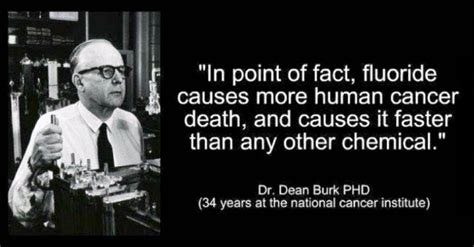
For over seven decades, fluoride has been presented as a triumph of public health—a “cheap dental miracle” administered through drinking water and mass consumer products. Yet an expanding body of evidence from biochemical, neurodevelopmental, and epidemiological research contradicts this narrative, linking fluoride exposure to lower IQ, thyroid dysfunction, neurotoxicity, and systemic oxidative stress.
Findings from the National Toxicology Program (2024–2025), the Harvard School of Public Health (Grandjean & Choi), and numerous independent meta‑analyses (JAMA Pediatrics 2025; Environmental Research 2023) now converge on a single conclusion:
Chronic fluoride exposure, even at levels near or below “optimal” water fluoridation thresholds, correlates with measurable declines in children’s cognitive function.
Despite this, regulatory agencies have repeatedly refused to reevaluate the practice of water fluoridation—a policy born during the atomic age and sustained by bureaucratic inertia, industrial interest, and a disinformation model that masks harm under the banner of benevolence.
The implications extend beyond dental health debates. This is a question of informed consent, institutional integrity, and whether public health agencies serve populations or protect themselves from accountability. The evidence no longer permits fence-sitting. Either fluoridation policy changes, or the agencies defending it admit they prioritize legacy over science.
Historical and Institutional Context
Origins in Industrial Waste Disposal
Fluoride’s public introduction was less about teeth and more about economic expediency. Mid‑20th century industries—particularly aluminum smelting, phosphate fertilizer production, and uranium refinement—produced vast fluoride waste streams. Instead of treating them as toxins, corporate‑academic partnerships reframed fluoride as a prophylactic dental agent.
Documents unearthed through the Fluoride Action Network (FAN) and Freedom of Information litigation reveal that industrial lobbyists and Public Health Service officials synchronized their messaging to divert attention from environmental toxicity lawsuits emerging from fluorosis victims and farmers whose livestock died from airborne fluoride emissions.
The timing was not coincidental. By the late 1940s, fluoride-related litigation threatened to cripple major industrial operations. The Donora smog disaster of 1948, which killed 20 people and sickened thousands in Pennsylvania, involved fluoride emissions from a zinc smelter. Lawsuits were mounting. The aluminum industry faced similar exposure.
The solution was elegant in its cynicism: transform the liability into a public good. If fluoride could be rebranded as beneficial—essential, even—the legal and public relations problems would dissolve. The Public Health Service, already intertwined with industrial interests through wartime collaborations, provided the institutional credibility. Academic dentistry, funded by the same industries, supplied the scientific veneer.
This is not speculation. It is documented. The problem is that the documentation remains buried in archives while the policy remains in municipal water supplies.
Institutionalization of “Optimal Fluoridation”
In 1950, the U.S. Public Health Service endorsed a target of 0.7 mg/L—1.2 mg/L fluoride in drinking water, ostensibly to balance cavity prevention with safety. However:
No independent toxicological trials validated this dosage in children.
The "benefit" came largely from topical—not systemic—exposure.
The cumulative intake from food, beverages, dental products, and air has since tripled.
In effect, fluoridation became a population‑wide medication without informed consent or individualized dosing control—contrary to both bioethical and pharmacological standards.
The “optimal” range was derived from observational studies of naturally fluoridated communities in the 1930s and 1940s. These studies measured cavity rates and dental fluorosis prevalence, then reverse-engineered a dosage that appeared to maximize the former while minimizing visible signs of the latter. The methodology would not pass peer review today.
More critically, the exposure landscape has fundamentally changed. When fluoridation began, people drank tap water. Now they consume fluoride through processed foods, beverages manufactured with fluoridated water, dental products, pharmaceuticals, and pesticide residues. The “optimal” dose calculated in 1950 assumed a closed system that no longer exists.
The 2015 reduction of the recommended level to 0.7 mg/L—the first adjustment in over 50 years—acknowledged this overexposure problem implicitly. But the reduction was modest, the admission muted, and the underlying policy unchanged. Bureaucracies do not confess error. They adjust parameters and declare continuity.
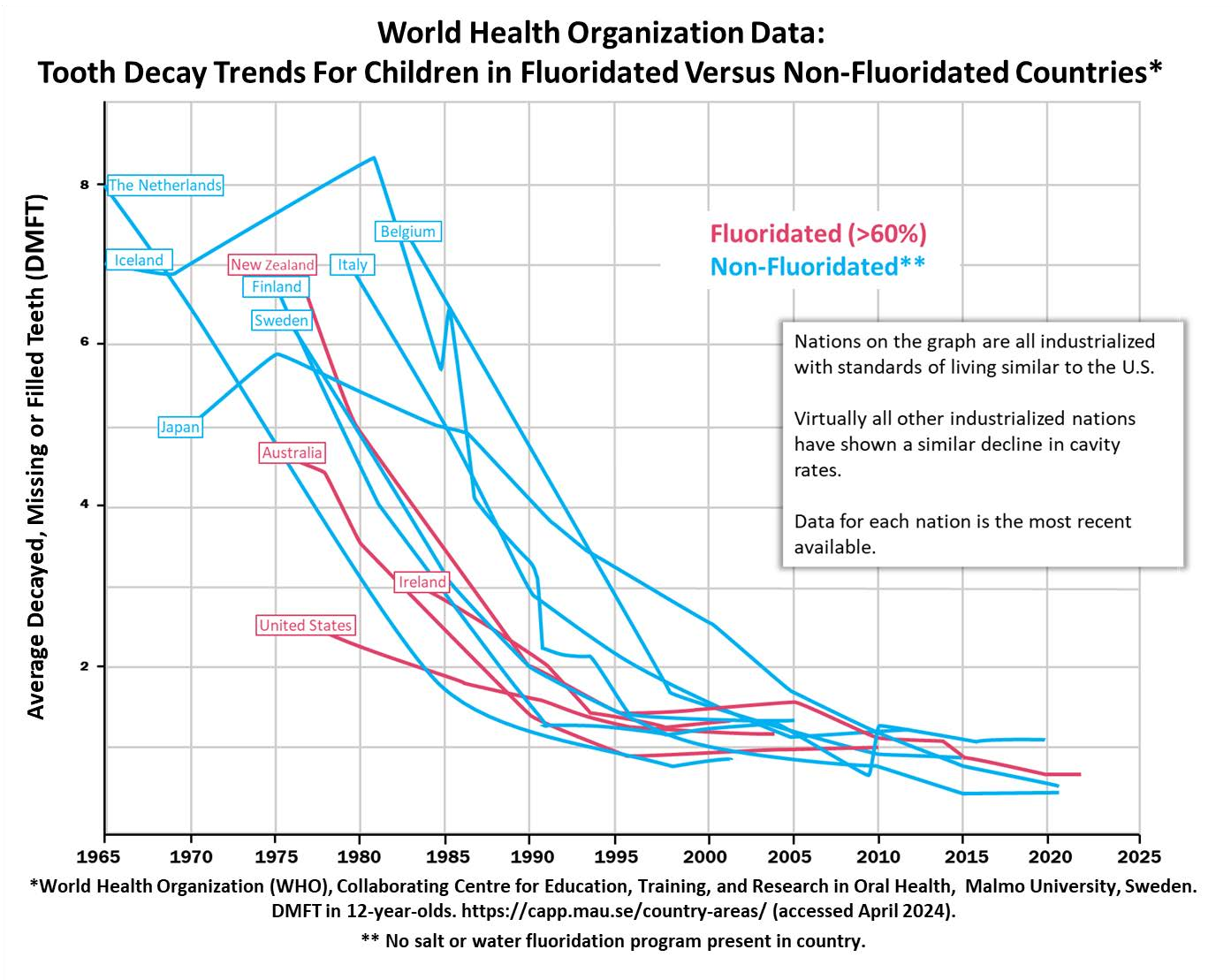
Its latest (2024) systematic review analyzed data from the 21 highest-quality studies. It found that fluoridation increased cavity-free results in primary (baby) teeth by only 4% and in permanent teeth by only 3%.
Neither result is statistically significant and include the possibility of no benefit at all. It also found no sufficient evidence that fluoridation benefited low-income families.
The Consent Problem
No other medication is administered through public water supplies. The reason is obvious: dosing cannot be controlled. A construction worker in Phoenix drinks more water than an office worker in Seattle. An infant fed formula reconstituted with tap water receives exponentially higher doses per kilogram of body weight than an adult drinking the same water.
Fluoridation proponents argue that the dose is too low to matter. The accumulating evidence says otherwise. And even if the dose were harmless, the principle remains violated. Medication requires consent. Water is not optional.
This is not a libertarian abstraction. It is the foundation of medical ethics developed after the horrors of unconsented experimentation in the 20th century. The Nuremberg Code, the Declaration of Helsinki, and the Belmont Report all establish that individuals must consent to medical interventions. Fluoridation bypasses this requirement by embedding the intervention in infrastructure rather than prescription.
Mechanisms of Fluoride Neurotoxicity
Biochemical Penetration and CNS Distribution
Fluoride (PubChem CID 28179) readily crosses the blood–brain and placental barriers, accumulating in the pineal gland, hippocampus, and fetal tissues. Animal studies show accumulation in the brain’s gray matter with resultant cholinergic dysfunction, oxidative stress, and lipid peroxidation—hallmark pathways in neurodegenerative disease.
The blood-brain barrier exists to protect the central nervous system from circulating toxins. Fluoride’s ability to penetrate this barrier is not disputed—it is documented in pharmacological literature. What remains contested is whether the concentrations achieved through environmental exposure are sufficient to cause harm.
The animal evidence is unambiguous. Rats exposed to fluoride at levels proportional to human consumption show impaired spatial memory, reduced synaptic plasticity, and altered neurotransmitter profiles. The question is translation: do these effects occur in humans at real-world exposures?
The epidemiological data increasingly says yes.
Oxidative and Endocrine Disruption
Fluoride’s biochemical effects extend beyond direct neurotoxicity:
Oxidative stress induction: Fluoride generates reactive oxygen species (ROS) and reduces the activity of superoxide dismutase (SOD) and glutathione—the body's primary antioxidant defenses. This oxidative burden affects multiple organ systems, with the brain particularly vulnerable due to its high metabolic rate and lipid content.


Thyroid interference: Fluoride alters thyroid hormone metabolism by substituting for iodine in enzyme systems, producing subclinical or overt hypothyroidism. The thyroid connection is especially significant for neurodevelopment, as maternal thyroid hormones are essential for fetal brain formation.


Mitochondrial dysfunction: Fluoride impairs mitochondrial respiration, diminishing neuronal ATP availability. Neurons are energy-intensive cells. Compromised energy production affects everything from synaptic transmission to long-term potentiation—the cellular basis of memory.
These mechanisms are not hypothetical. They are demonstrated in laboratory studies and consistent with the epidemiological patterns observed in human populations.
Pineal Gland Calcification
Neuroimaging and histological examinations reveal extensive fluoroapatite accumulation in the pineal gland, particularly in adolescence. This is consistent with decreased melatonin synthesis, disrupted sleep cycles, puberty dysregulation, and—symbolically but not trivially—the dimming of human intuition and circadian synchronization.
The pineal gland’s vulnerability to fluoride accumulation was first documented by Jennifer Luke in her 2001 doctoral research. The gland lacks a blood-brain barrier and has high calcium content, making it a preferential site for fluoride deposition. Luke found fluoride concentrations in the pineal gland exceeding those in bone.
The functional consequences include reduced melatonin production. Melatonin regulates sleep, modulates immune function, and provides neuroprotection. Its suppression during critical developmental periods could contribute to the cognitive effects observed in population studies.
Even if the “third-eye” rhetoric is metaphorical, the physiological gland calcification is not. The pineal gland is a real structure with real functions, and fluoride demonstrably accumulates there at higher concentrations than in other soft tissues.
Evidence from Epidemiological Studies
Harvard Meta‑Analysis (Grandjean & Choi, 2012; updated 2024)
Across 27 studies involving 8,000+ children, fluoride exposure correlated with an average IQ decrement of 7 points. The 2024 NTP update reaffirmed moderate confidence that higher exposures (≥1.5 mg/L) are “consistently associated with lower IQ.”
Seven IQ points is not trivial. It represents nearly half a standard deviation—the difference between average and below-average classification. At the population level, a 7-point shift moves millions of individuals across diagnostic thresholds and educational trajectories.
Critics of this meta-analysis focused on the geographic concentration of studies in China and the higher exposure levels in some study populations. These criticisms were partially valid in 2012. They are less valid now, as subsequent research has replicated findings in North American and European populations at lower exposure levels.
JAMA Pediatrics 2025 Meta‑Analysis (Taylor et al.)
The Taylor meta-analysis represents the most comprehensive synthesis to date:
74 studies analyzed; 59 measured group exposures, 19 individual-level
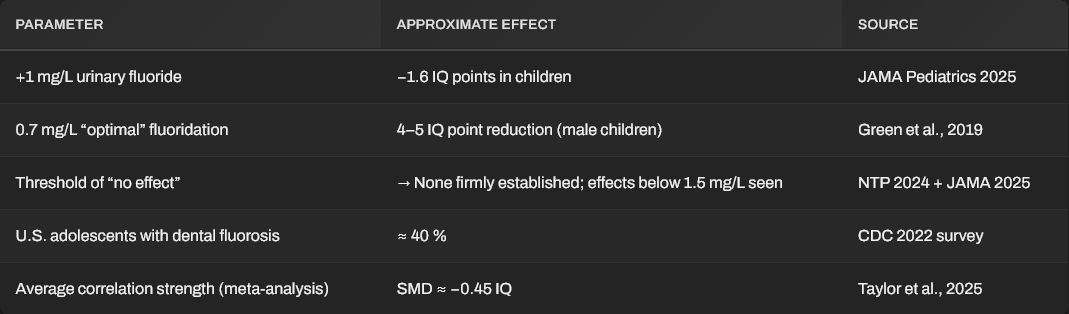
SMD = −0.45 (95% CI −0.57 to −0.33) overall decrease in IQ
Each 1 mg/L increase in urinary fluoride → 1.63 IQ points lower
Effect persisted below 2 mg/L and even approached significance under 1.5 mg/L
The standardized mean difference of −0.45 is a moderate effect size—comparable to the cognitive impact of elevated blood lead levels. The confidence intervals exclude zero, indicating statistical robustness.
More concerning is the dose-response relationship extending into the range of “optimal” fluoridation. The 1.5 mg/L threshold that regulatory agencies treat as a safety margin shows effects in the data. The 0.7 mg/L target used in American fluoridation programs is not far below.
Environmental Research 2023 (Veneri et al.)
This analysis established a linear dose-response relationship: approximately 3 IQ points lost per 1 mg/L water fluoride above 1 mg/L.
Linearity matters. A linear dose-response means there is no “safe” threshold—only varying degrees of effect. This is consistent with how other neurotoxicants like lead are now understood. The paradigm shift from “safe levels” to “no safe level” occurred for lead in the 1990s. Fluoride appears headed toward the same reckoning.
Global Dataset (FAN 2023 Compilation)
The Fluoride Action Network compiled 78 human IQ studies involving 29,130 children:
73 found inverse correlations between fluoride and intelligence
Datasets span China, India, Mexico, Canada, Iran, Pakistan, and others
The geographic diversity undermines the claim that confounding factors explain the association. Different populations, different educational systems, different nutritional contexts—yet the same directional finding. This is the hallmark of a real effect.
Canadian Cohorts: Green 2019; Till 2020
Canadian studies are particularly relevant because they examine populations exposed to “optimal” fluoridation levels under conditions comparable to the United States:
Prenatal fluoride at "optimal" 0.7 mg/L levels decreased boys' IQ by 4.5 points per mg/L maternal urine fluoride
Formula preparation with fluoridated water reduced non-verbal IQ by 8–9 points
British Nutrients 2022 study: iodine deficiency amplified the effect—another mechanism of vulnerability
The formula-feeding finding is especially troubling. Infants fed formula reconstituted with fluoridated water receive fluoride doses 100–200 times higher per kilogram of body weight than breastfed infants. This is not a theoretical concern—it is a documented exposure disparity with measured cognitive correlates.
The sex-specific effect in the Green study (stronger in males) aligns with known patterns of male vulnerability to prenatal neurotoxicant exposure and suggests hormonal interactions that warrant further investigation.
Secondary Health Associations
ADHD and Behavioral Dysregulation
A 2015 Environmental Health analysis (Malin & Till) found that U.S. states with higher fluoridation prevalence had significantly higher ADHD rates, even after controlling for socioeconomic variables.
Mechanisms include lead synergism via silicofluoride complexes and thyroid suppression during gestation. The silicofluoride issue deserves emphasis: most water fluoridation programs use silicofluorides (hexafluorosilicic acid or sodium silicofluoride) rather than pharmaceutical-grade sodium fluoride. Silicofluorides enhance lead absorption from environmental sources—a synergistic neurotoxic effect that fluoridation proponents rarely acknowledge.
Skeletal and Dental Fluorosis
CDC data confirm that 40% of U.S. adolescents now exhibit forms of dental fluorosis, an established biomarker of systemic overload.
Dental fluorosis is often dismissed as a “cosmetic” issue—white spots or streaking on teeth. This framing obscures its significance. Fluorosis indicates that fluoride exposure during tooth development exceeded the body’s capacity to manage it. Teeth are visible. Bones and brains are not.
If 40% of adolescents show visible signs of fluoride overexposure, what percentage show invisible effects on tissues we cannot examine without autopsy?
Thyroid Dysfunction
Fluoride inhibits deiodinase enzymes, lowering T3/T4 and elevating TSH in both animals and humans. The Canadian MIREC cohort links maternal hypothyroidism from fluoride exposure to cognitive deficits in male offspring.
Thyroid disruption during pregnancy is a known cause of cognitive impairment in offspring. Iodine deficiency produces cretinism in severe cases and measurable IQ reductions in mild cases. Fluoride interferes with iodine metabolism. The pathway from fluoride to cognitive impairment via thyroid disruption is biologically plausible and epidemiologically supported.
5.4 Bone Fragility and Cancer Signals
Elevated fluoride correlates with increased hip fracture rates in elders and potential osteosarcoma risk in young males—findings repeatedly ignored since the Bassin (Harvard, 2006) data suppression incident.
The Bassin case warrants attention. Elise Bassin’s doctoral research at Harvard found a significant association between fluoride exposure during the mid-childhood growth spurt and osteosarcoma (bone cancer) in young males. Her advisor, Chester Douglass, publicly dismissed her findings while failing to disclose his financial relationships with Colgate-Palmolive. The case exemplifies the conflicts of interest pervading fluoride research.
Regulatory Capture and Suppression
The U.S. Public Health Service’s Conflict
The same agencies promoting fluoridation (CDC, HHS) are liable for its adverse outcomes—creating an inherent disincentive to reassessment. Internal NIH communications (revealed via FOIA) show political interference in the 2022 NTP draft release, delaying publication for nearly three years.
The NTP delay is documented. The draft monograph concluding that fluoride is a presumed neurotoxin was completed in 2020. Its release was repeatedly postponed following intervention from agencies with fluoridation responsibilities. The final version, published in 2024, was softened in language but not in conclusion.
This is how regulatory capture operates. Not through crude bribery, but through institutional self-protection. Agencies that endorsed a policy for 70 years cannot easily admit error without exposing themselves to litigation and loss of public trust.
The Revolving Door with Industry
Aluminum Company of America (ALCOA), the Mellon Institute, and later fertilizer and dental product manufacturers funded “fluoride safety” campaigns. Academic influence followed: industry-funded dental public health departments reframed toxicity debates into “equity in access to fluoride.”
The “equity” framing is particularly insidious. Fluoridation proponents now argue that opposition to fluoridation harms low-income communities who lack access to dental care. This argument inverts reality. Low-income communities are disproportionately exposed to cumulative environmental toxicants. Adding another neurotoxicant to their water supply is not equity—it is compounding harm.
Media and Journal Filtering
Mainstream journals, reliant on institutional ad revenue and government reputation, frame findings cautiously, using language like “mixed results” despite overwhelming statistical significance.
The pattern is recognizable: studies finding harm are subjected to methodological scrutiny that studies finding safety escape. Positive findings for fluoride are reported as confirmatory; negative findings are reported as “requiring further research.” The asymmetry is not scientific—it is political.
Biopsychosocial Implications
Educational and Economic Costs
An average 5–7 IQ-point reduction translates into tens of billions in lifetime productivity losses, based on WHO’s own economic models for neurotoxins (e.g., lead, mercury).
The arithmetic is straightforward. IQ correlates with educational attainment, income, and reduced social service utilization. The economic models used to justify lead remediation apply equally to fluoride. If removing lead from gasoline saved billions in societal costs, removing fluoride from water would produce comparable savings.
Moral Dimension: Non-consensual Medication
Fluoridating public water disregards individual variation in body weight, renal clearance, and nutrition (iodine, calcium). Consent cannot exist when exposure is unavoidable.
The consent issue cannot be finessed. Either fluoridation is medication—in which case it requires consent—or it is not medication—in which case its dental benefits cannot be claimed. Proponents want it both ways: therapeutic when justifying the practice, non-therapeutic when deflecting consent requirements.
Cultural Disconnection and Cognitive Dulling
At the metaphorical level, chronic fluoride exposure correlates with societal apathy, conformity, and reduced critical reasoning—factors consistent with population-level sedation of cognitive potential. Whether coincidental or orchestrated, the outcome serves existing power hierarchies well.
This observation is speculative but not unfounded. A population with diminished cognitive capacity is easier to manage. Whether this outcome was intended or merely tolerated, the practical effect remains. The burden of proof should fall on those defending a policy that produces measurable cognitive harm.
Recommendations
Immediate Policy Actions
Moratorium on water fluoridation pending full independent risk assessment by scientists without institutional or financial conflicts of interest.
Transparent biomonitoring of fluoride in urine and blood across demographics, with public reporting of results.
Funding redirection from dental industry lobbying to environmental remediation and alternative cavity prevention programs.
Individual Mitigation Measures
Use fluoride-free water filtration (reverse osmosis, activated alumina, bone char)
Avoid fluoridated toothpaste and mouthwash for infants and young children
Maintain iodine, selenium, and calcium sufficiency for thyroid protection
Support local legislation for disclosure of water fluoride levels and opt-out provisions
Request fluoride testing when pregnant or formula-feeding
Long-Term Structural Reform
Public research funding must be decoupled from industry and regulatory sponsorship, ensuring authentic toxicological evaluation. Health communication must transition from public relations to public transparency.
The structural problem is institutional. Agencies that promote fluoridation cannot objectively evaluate it. Independent review requires independence—funding, personnel, and publication authority outside the fluoridation establishment.
Ethical, Legal, and Philosophical Considerations
Fluoridation violates three core pillars of biomedical ethics:
Autonomy — citizens are medicated without consent
Beneficence — claimed benefits are based on obsolete science
Non-maleficence — known harms outweigh speculative benefit
Under contemporary bioethics and Nuremberg-derived standards, no government has a moral right to prescribe a neurotoxin through essential life resources.
The legal landscape is shifting. In 2024, a federal court ruled that the EPA must regulate fluoride under the Toxic Substances Control Act based on neurotoxicity evidence. This ruling, if upheld, could force the regulatory reassessment that agencies have avoided for decades.
The philosophical question is simpler: what justifies exposing an entire population to a substance with documented cognitive effects without their consent? The dental benefit argument is weakening as topical fluoride (toothpaste, rinses) provides equivalent protection without systemic exposure. The cost argument is irrelevant if the “savings” are achieved by harming children’s brains.
Toward a Transparent Future
The fluoride controversy epitomizes the broader pathology of modern technocracy: conceal adverse evidence, label critics as “anti-science,” and perpetuate exposure until crisis forces acknowledgment. The 2025 NTP and JAMA findings mark a scientific inflection. Whether institutions act on these data—or whether independent researchers and communities must carry the torch—will define the next half-century of environmental health policy.
The pattern is familiar. Tobacco, lead, asbestos, PFAS—each followed the same trajectory. Industry-funded doubt delayed action for decades while harm accumulated. Regulatory agencies prioritized relationships with industry over protection of the public. Critics were marginalized until the evidence became undeniable.
Fluoride is following the same script. The evidence is now undeniable. The question is how long denial will persist.
Selected Data Highlights:
References for Deep Review:
-Grandjean & Choi, The Lancet Neurology 2014 "Developmental Neurotoxicity of Industrial Chemicals"
-National Toxicology Program (2024) State of the Science Monograph on Fluoride Exposure
-Taylor KW et al., JAMA Pediatrics 2025
-Veneri F et al., Environmental Research 2023
-Malin AJ & Till C, Environmental Health 2015 (ADHD Association)
-Green R et al., JAMA Pediatrics 2019 (MIREC cohort)
-Till C et al., Environment International 2020 (formula-fed infants)
-FAN research repository: Fluoride IQ Studies, 2023 update
-Harvard HSPH news release (2024 update)
-PubChem 28179 Fluoride Ion dataset
-Luke J, Caries Research 2001 (pineal gland accumulation)
-Bassin EB, Cancer Causes & Control 2006 (osteosarcoma)
Conclusion
Fluoride’s toxicity is no longer speculative. The pattern—confirmed by scores of studies and reinforced by governmental hesitancy to act—reflects an ethical collapse in environmental governance. The next step is not another cost-benefit review; it is a moral reckoning.
Seventy years of policy cannot be reversed without institutional pain. Careers were built on fluoridation. Reputations depend on its continuation. The agencies that promoted it face liability if they acknowledge harm.
None of that changes the evidence.
The science is settled in the way that matters: the preponderance of evidence indicates harm. The uncertainty that remains concerns magnitude, not direction. Whether fluoride reduces IQ by 3 points or 7 points, the ethical calculation is the same. Mass medication without consent, producing cognitive harm in children, cannot be justified by cavity prevention when alternative methods exist.
The communities that have ended fluoridation—increasingly across Europe, in parts of Canada, and in some American municipalities—have not seen dental health crises. They have demonstrated that the practice is dispensable.
The communities that continue fluoridation are conducting an experiment on their children. The hypothesis—that the benefits outweigh the harms—is failing.
Water should sustain intelligence, not diminish it.
The evidence is in. The institutions are stalling. The decision now belongs to informed citizens willing to demand accountability from systems designed to avoid it.