

Who Approved the Drugs That Harmed the Public — and Where They Went After
The revolving door is not a metaphor in U.S. drug regulation.
It is a career pipeline.
FDA officials who oversee drug approvals routinely move into:
Pharmaceutical executive roles
Regulatory consulting firms
Lobbying groups
Think tanks funded by the industry
This is not hidden.
It is visible in:
Federal personnel records
SEC financial disclosures
Congressional testimony
Public corporate statements
We present the pattern as dossiers, each one a closed loop:
FDA role
Approval / policy influence
Post-FDA industry position
Economic outcome of that position
DOSSIER 1 — Scott Gottlieb, MD
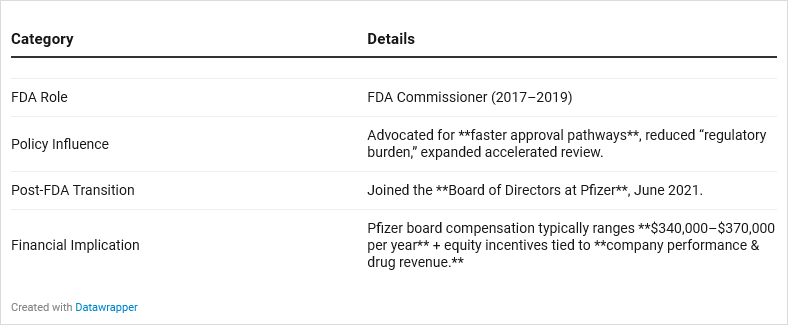
Structural Impact:
Pfizer profits when the FDA approves faster.
Gottlieb shifted FDA policy in that direction — and now profits from that system’s continuation.
DOSSIER 2 — Janet Woodcock, MD
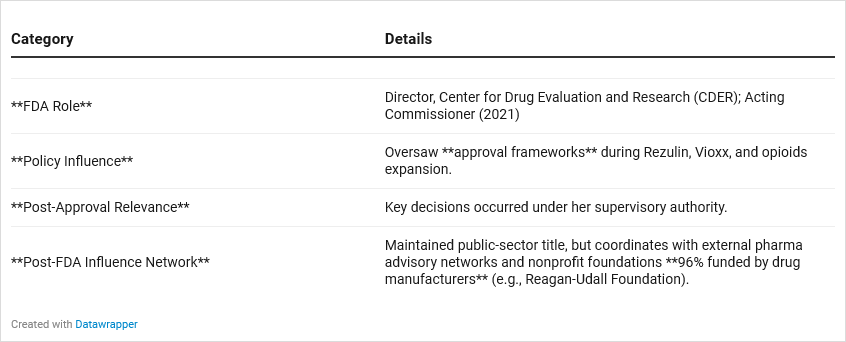
Structural Impact:
Woodcock’s office approved the majority of drugs later withdrawn for safety.
Yet she ascended — rather than being scrutinized.
This is what institutional insulation looks like.
DOSSIER 3 — John Jenkins, MD
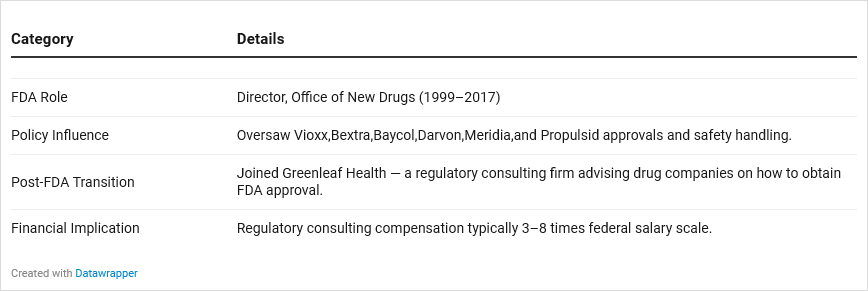
Structural Impact:
He now earns money teaching companies how to navigate the approval system he once controlled.
DOSSIER 4 — Dr. Robert Califf
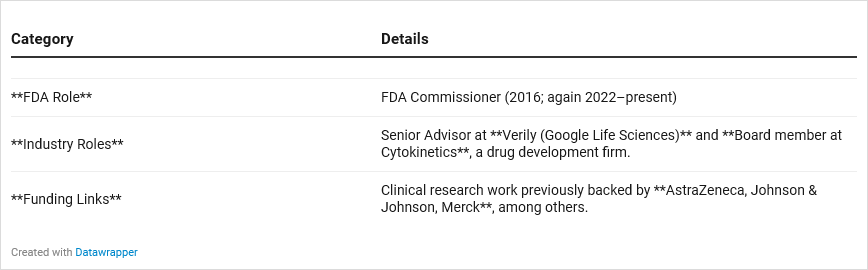
Structural Impact:
He has moved between regulator and regulated roles twice, without interruption in influence.
DOSSIER 5 — Andrew von Eschenbach, MD
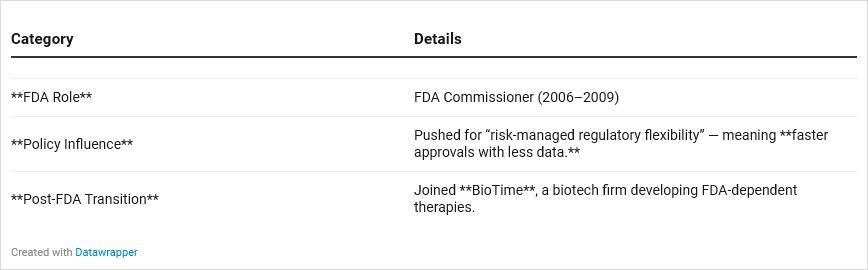
Structural Impact:
He helped reframe FDA’s philosophy to prioritize speed, then moved into a sector that profits from speed.
What the Dossiers Show
This is not about individual wrongdoing.
It is about a predictable structural pathway:
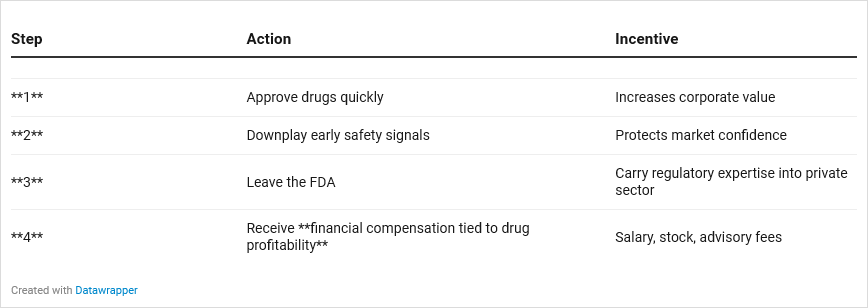
This is a closed loop:
Regulator → Permissive Policy → Industry → Compensation
No criminal intent is required.
No conspiracy is required.
Only incentive design.
The Body Count Wall of Shame
A few highlights from the Greatest Hits of Medical Regret:
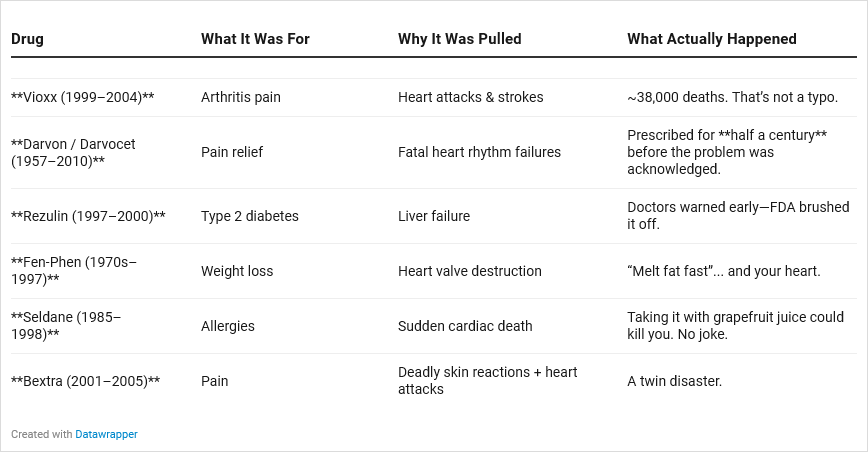
List of FDA-approved prescription drugs withdrawn from the U.S. market for safety reasons:
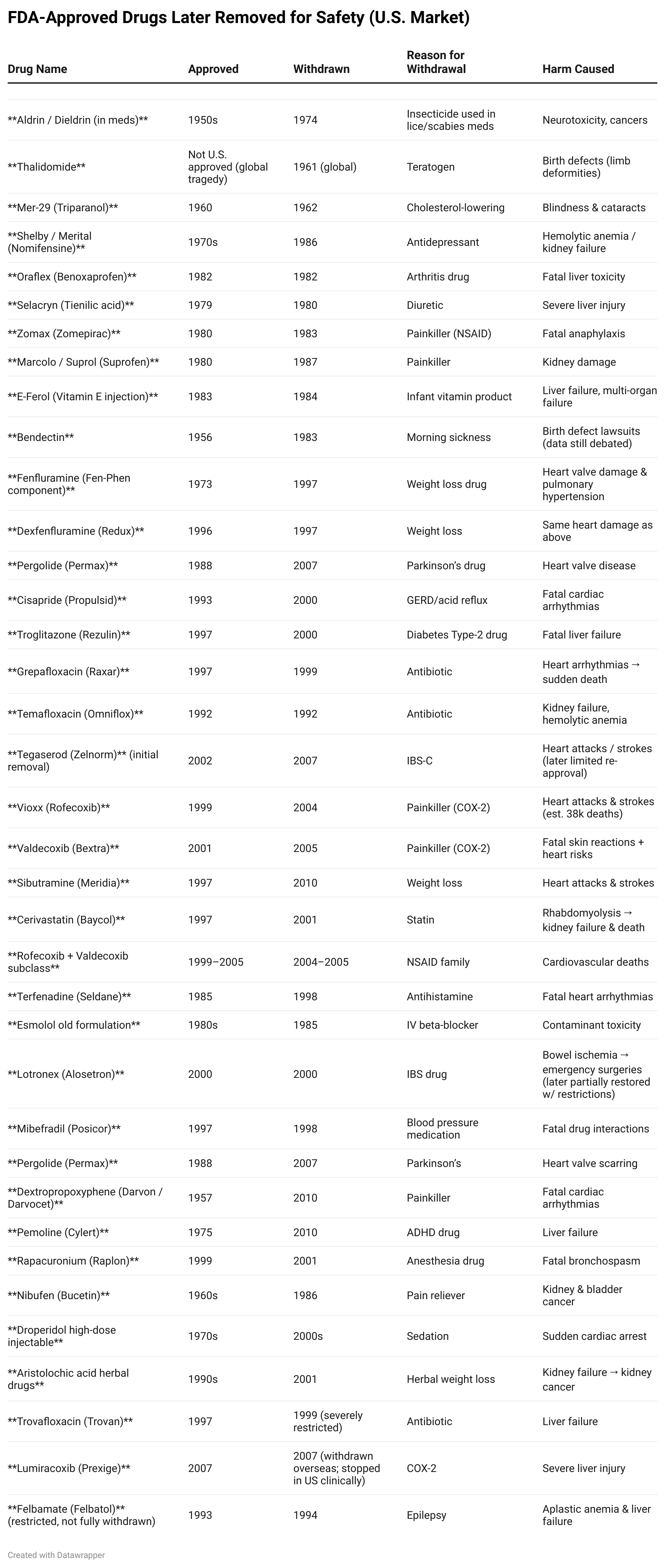
The Key Line:
The FDA cannot be expected to strictly police the industry when its senior officials routinely move into the same industry.
Regulation becomes self-referential.
Oversight becomes peer collaboration.
The boundary dissolves.
End of Part 5
Next:
PART 6 — Whistleblowers and the Suppression of Early Warnings
Where we show:
Internal emails
Safety memos
Advisory meeting transcripts
Senate testimony
Cases where harm was identified early and ignored
This is where the story turns from structural to human.