


Spinmeisters have been part of American politics since the beginning. The tools change. The money grows. The structure stays the same.
Before there were Super PACs, polling firms, digital strategy shops, and opposition research outfits, there was James Callender. Scottish immigrant. Ex-newspaperman. And, by most honest accounts, the founding father of the negative campaign.
Callender made his name by exposing Alexander Hamilton’s affair with Maria Reynolds, a scandal that now anchors a pivotal scene in the Broadway musical Hamilton. But his more consequential role in American history is less celebrated. Before he turned on Hamilton, Callender worked for Thomas Jefferson. Jefferson, on his way to becoming the nation’s third president, paid Callender to dig up damaging material on political opponents. When Callender felt he was underpaid for his work, he switched sides. He then broke the story of Jefferson’s relationship with Sally Hemings, an enslaved woman at Monticello. That story, dismissed and denied for generations, was ultimately confirmed by DNA evidence from Jefferson’s biracial descendants.
The lesson here is not that dirty politics is timeless. It is that political influence has always been purchasable, and that the people selling it answer first to their wallets, not to the candidates who hire them, and certainly not to the public those candidates claim to serve.
Callender was operating alone, paid in scraps. What he stumbled into has since become a formalized, credentialed, trade-association-having industry worth billions of dollars. And it shapes nearly every word, image, and idea that reaches voters during an election cycle.
The Money
To understand the consulting industry, you have to start with the money, because the money is what built it.
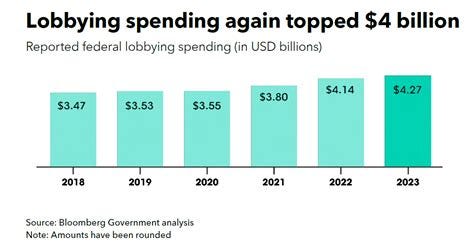
Between 2000 and 2012, total election spending in the United States doubled to more than $6 billion, according to data from the Center for Responsive Politics. That figure did not include spending by dark money groups, organizations that are legally structured to avoid disclosure requirements. Add those figures in and the real number is higher, by a margin no one can precisely calculate because the system was designed to prevent that calculation.
By the 2016 presidential cycle, the numbers had become difficult to process in human terms. Just hours after Hillary Clinton secured the Democratic nomination, Bloomberg reported that her campaign aides were pressing donors for $1.1 billion to fund the general election campaign alone. That was on top of roughly $300 million already spent by Clinton and her allied outside groups. Add in what Bernie Sanders spent, what Donald Trump spent, and what the field of Republican candidates burned through before dropping out, and the 2016 cycle pushed well past prior records.
The 2020 cycle shattered everything that came before it. Total spending across all federal races reached approximately $18 billion, according to Open-secrets, making it the most expensive election in American history at that point. The 2022 midterm shit 16.7 billion. The 2024 cycle, encompassing the presidential race and congressional contests, is estimated to have surpassed $15 billion in federal spending alone, with some projections placing the combined total, including state races and outside spending, closer to $20 billion.
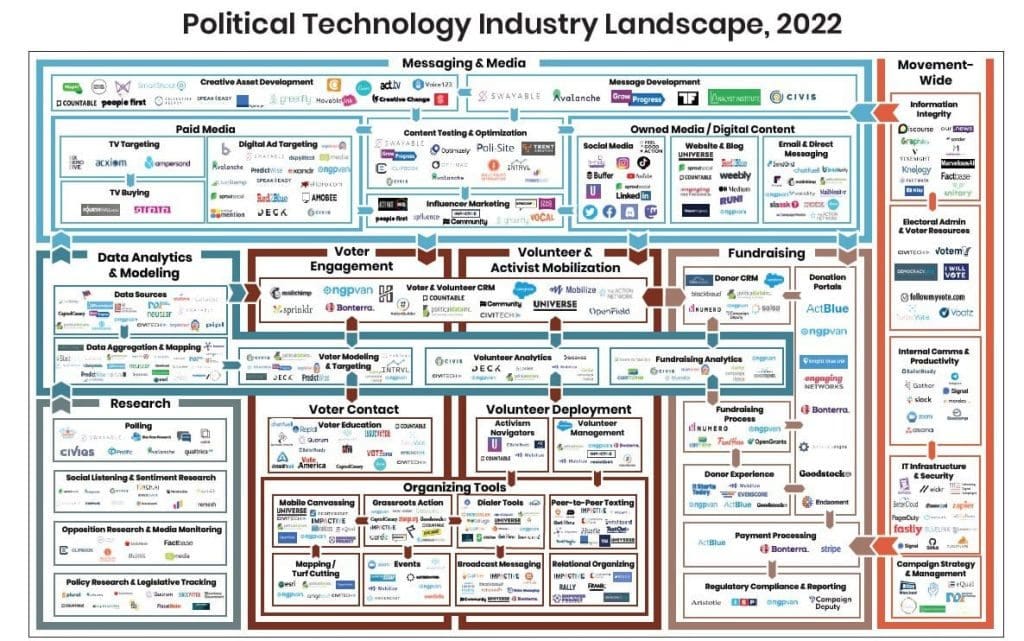
These are not campaign funds. They are not purely advertising budgets. A substantial portion of this money flows directly into the political consulting ecosystem: the strategists, the pollsters, the media buyers, the digital firms, the opposition researchers, the compliance lawyers, the fundraising consultants, the data vendors, and the subcontractors who work for all of them.
The question worth asking is not where the money comes from. Campaign finance coverage answers that adequately enough. The question is what it buys, and what it produces in return.
The Industry
The American Association of Political Consultants was founded in 1969. At the time, according to Democratic pollster Mark Mellman, who served as its president, it was comprised of, in his words, “a few guys, and they were guys.” By 2016, it had grown to 1,350 member companies. By 2026, the membership and affiliated ecosystem of political service firms has expanded further, encompassing not just traditional consultants but data analytics firms, artificial intelligence vendors, social media strategy shops, and influence monitoring services that did not exist a decade ago.
This is now a structured industry. It has trade associations. It has certifications. It has a code of ethics, which reads, in part: “I will not indulge in any activity which would corrupt or degrade the practice of political consulting.” That line is worth reading twice, not for its aspirational content, but for what it reveals about what people in this industry apparently need to be reminded not to do.
Adam Scheingate, chairman of the political science department at Johns Hopkins University, documented the industry’s growth in his book Building a Business of Politics. Between the 2008 and 2012 campaign cycles alone, spending on political consulting services more than doubled to $100 million, and that figure excluded dark money group spending. Scheingate’s argument, developed in a 2016 New York Times op-ed and expanded in the book, is direct: today’s negative, sound-bite-driven political discourse is not an accident. It is the product of consultant-driven campaigns optimized not for governing, but for winning, and more specifically, for generating the kind of conflict that justifies continued consulting fees.
Mellman’s counterpoint is worth noting. Specialization, he argues, is a broader social trend. He compares it to how barbers used to perform surgery before the medical profession developed its own specialists. He also points out that a large share of political spending does not go directly into consultants’ pockets. Media buyers, for instance, earn a percentage of advertising buys. Most of the actual dollar amounts flow to television stations, radio networks, and digital platforms. Polling firms pass significant costs to interview and data collection firms. The consultant’s cut is real, but it is not the whole of the expenditure.
That is accurate as far as it goes. But it does not address the more fundamental question of what the industry, taken as a whole, is producing.
What They Actually Sell
A useful way to understand what political consultants provide is to look at what candidates actually pay for. Federal Election Commission records allow a degree of transparency into direct candidate spending, though as noted, outside group spending and dark money expenditure remain substantially obscured.
A rough analysis of FEC expenditure data from the 2016 cycle, filtering for any line items listing the word “consult” in their descriptions, showed that House and Senate candidates alone had already spent close to $75 million on consulting services by mid-cycle. That covered campaign strategy, online strategy, polling, legal advice, fundraising consulting, email campaign management, direct mail campaigns, media buys, and compliance consulting specifically aimed at navigating campaign finance regulations.
The categories matter. Compliance consulting, the category that covers advice on how to operate within, or adjacent to, campaign finance rules, is itself a product of the system’s complexity. The more layered and ambiguous the regulatory framework, the more valuable the people who know how to work around it. This is not a coincidence. It is an equilibrium the industry has strong incentives to maintain.
By 2024, the consulting landscape had added several newer categories that did not exist in meaningful form a decade ago. Digital targeting and micro-segmentation services, which allow campaigns to deliver different messages to different demographic subsets within the same precinct, have become standard. AI-assisted content generation and message testing, in which campaigns use automated systems to produce and test thousands of ad variants at scale, is increasingly common. Influence network mapping, which tracks online conversation patterns to identify persuadable audiences, is now a line item in major campaign budgets.
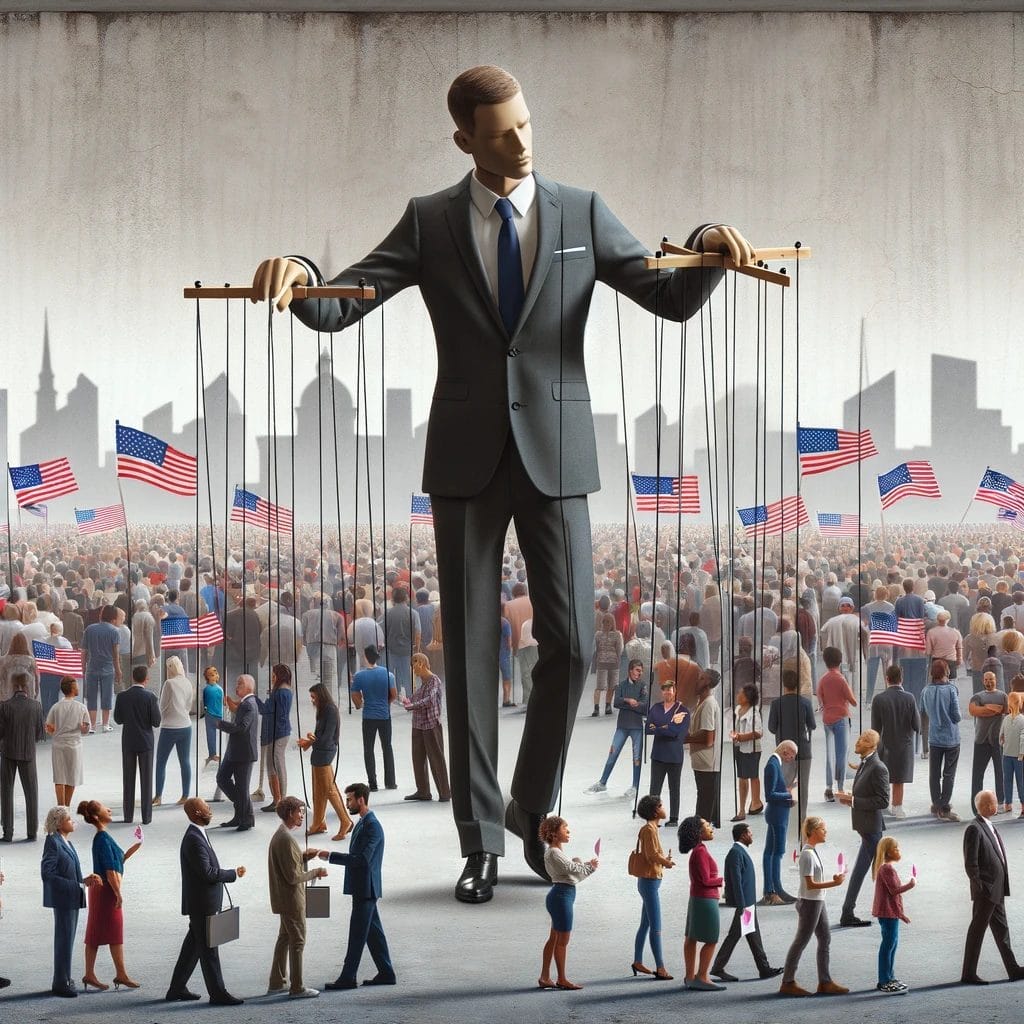
The vendors have changed. The function has not. Candidates are still paying people to tell them what to say and who to say it to.
Ads, Effectiveness, and the People Who Benefit
Political advertising is the largest single category of consulting-adjacent spending in American campaigns. In the 2016 cycle, the top political vendor by receipts was Old Towne Media, with more than $82 million reported. The third−largest vendor was Oath Strategies LLC, a Virginia firm created specifically to manage advertising buys for Right to Rise, the super PAC that backed Jeb Bush′s presidential campaign. Oath Strategies reported over $62 million in receipts.
Bush’s campaign, famously, failed. Right to Rise raised and spent over $100 million. Bush dropped out of the race in February 2016 before a single major primary contest produced a meaningful result for him. The ratio of money spent to political outcome was, by any measurable standard, catastrophic.
And yet the advice from within the industry did not change. “Ads definitely move numbers,” Brad Mont, one of the partners in Oath Strategies, said at the time. “We’ve seen it.”
That is almost certainly true in some contexts. It is also the exact thing you would expect someone earning a percentage of a $64 million advertising buy to believe. Journalist Andrew Cockburn examined this dynamic in a 2016 piece for Harper’s, noting that candidates are receiving advice from people who have a direct financial stake in the advice they give. Political scientists quoted in that piece confirmed what anyone living in a heavily contested media market already knows from experience: at some point, ad saturation becomes counterproductive. Voters stop processing the content and start resenting the volume.
Mel Immergut, a super PAC bundler for Bush’s Right to Rise operation, arrived at this conclusion through direct experience. After canvassing voters who had been subjected to sustained ad bombardment, Immergut described their reaction plainly: “They resent it and they don’t react well.”
That observation did not change how the money was spent. It did not produce a recalibration. The ads continued. The consultants continued to be paid. The campaign continued to fail.
By 2024, political ad spending had reached levels that made the 2016 numbers look modest. OpenSecrets data shows that political advertising spending in the 2024 cycle exceeded $10 billion across all formats, including television, digital, radio, and out-of-home advertising. Television remained the dominant channel despite years of predictions about its decline. Digital advertising, particularly on platforms like YouTube, Meta, and increasingly on streaming services, grew substantially. The mechanics of ad buying shifted. The incentive structure for the people managing those buys did not.
The Outsiders Who Weren’t
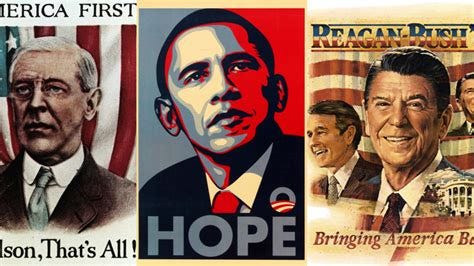
One of the recurring features of American political campaigns is the outsider candidate who presents as independent of the consultant class and then quietly hires them anyway.
In 2016, Bernie Sanders ran as a grassroots insurgent. The Washington Post documented that his campaign was nonetheless a significant revenue source for political consultants. Sanders’ campaign ultimately spent more than $220 million, a substantial portion of which flowed to vendors and consultants operating in the standard ways.
Donald Trump presented himself as self-financing and immune to political advice. He spent much of the early 2016 primary period scorning pollsters publicly. He then hired them. His campaign ultimately spent roughly $340 million in the general election, and his political operation engaged the full range of standard consulting services, including data firms, digital strategists, and media buyers.
By 2020, Trump’s campaign spent approximately $774 million. The Biden campaign spent over $1 billion. Both operations employed extensive consulting infrastructure. The outsider framing, a consistent feature of American political rhetoric across party lines, does not survive contact with the campaign finance disclosure data.
In 2024, the pattern continued. Both major candidates in the presidential race operated extensive consulting ecosystems. The Kamala Harris campaign, which entered the race late following President Biden’s withdrawal in July 2024, nonetheless managed to raise and spend over $1 billion in roughly four months. That kind of spending velocity requires an existing infrastructure of vendors, consultants, and contracted services that can be activated immediately. It is not built on the fly.
The outsider narrative is a consulting product too.
The Dual-Client Problem
Here is a structural issue that receives less attention than it deserves.
Many of the firms that dominate the political consulting industry also maintain private-sector client rosters. These are corporations, trade associations, and industry groups with active interests before the federal government. The same firm that crafted your campaign message may be advising a company that needs a regulatory decision from the agency you now oversee, or lobbying for a trade group that wants legislation you could sponsor or kill.
GMMB, the firm that produced advertising for Barack Obama’s presidential campaigns, lists AT&T and Visa among its private-sector clients. Smart Media Group, which specializes in Republican candidate work, has served MasterCard, the cable television industry trade association, the US Chamber of Commerce, and the National Education Association. Bully Pulpit Interactive, which also grew from the Obama media orbit, has worked with Google and Exelon.
These are not small clients with marginal interests. They are major corporations and organized interests operating in sectors directly shaped by federal policy, regulation, and legislation.
The conflict-of-interest question this raises is not subtle. If the firm that helped you win your last election comes to your office representing a corporate client that needs a favorable regulatory interpretation, a waiver, a legislative amendment, or simply a sympathetic hearing, the nature of your relationship with that firm creates a pressure that a cold call from a registered lobbyist does not.
This is part of what some observers have described as the rise of the “unlobbyist.” Federal lobbying disclosure law requires registration and reporting from people who meet specific definitions of direct legislative or executive contact for the purpose of influencing government decisions. Political consultants who also represent private clients do not necessarily trigger those requirements. They are not lobbying in the technical, disclosure-triggering sense. But the influence they carry, derived from their role in helping officials get and keep power, can exceed that of many registered lobbyists.
The data connection adds another layer. Consulting firms that run campaigns accumulate detailed voter data, including geographic targeting data, persuasion models, and demographic intelligence linked to specific precincts and districts. If that same firm works for a corporate client seeking to reach or influence specific constituencies, the campaign-derived data has commercial value. The lines between political intelligence and corporate intelligence become indistinct.
What Eisenhower Actually Said
In January 1961, Dwight D. Eisenhower used his farewell address to warn the American public about the military-industrial complex, a term he coined to describe the structural relationship between the defense industry and the governmental apparatus that funded and directed it. His specific concern was “the acquisition of unwarranted influence, whether sought or unsought,” and “a disastrous rise of misplaced power.”
The warning was about structural incentives as well as individual corruption. Eisenhower was not accusing specific contractors or generals of misconduct, at least not publicly. He was describing a system in which the financial interests of a powerful private industry had become deeply entangled with the decisions of government, and in which that entanglement would, over time, distort priorities in ways that served the industry rather than the public.
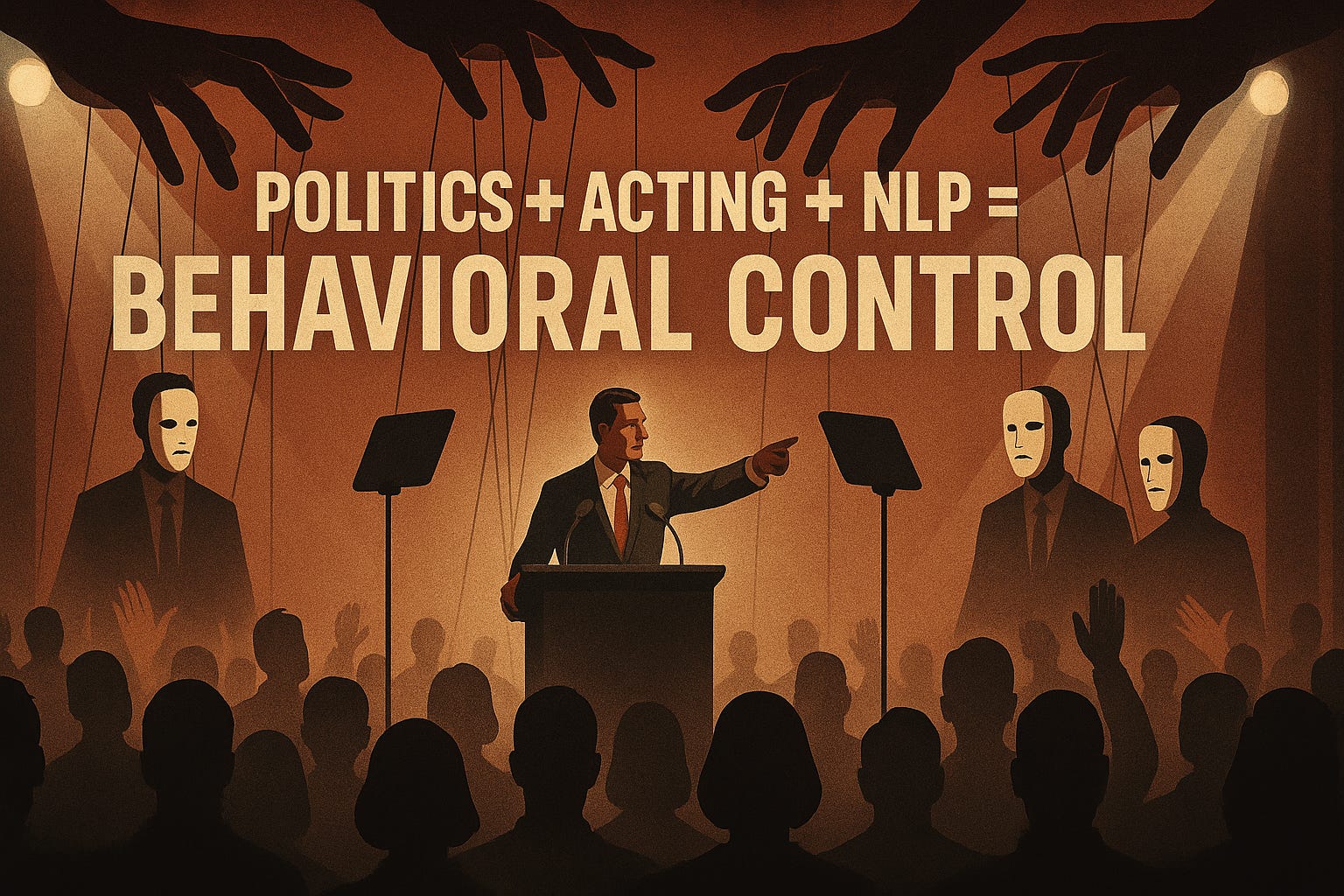
The parallel to the political consulting industry is not forced. It is structural. The industry does not merely advise candidates. It shapes what candidates say, what they emphasize, what they avoid, and how they communicate with the public they are supposed to represent. It generates the advertising that defines the terms of political debate. It manages the data that determines which voters get which messages. It advises on compliance with the rules it helped complicate. It cross-sells access to elected officials on behalf of private-sector clients. And it earns more money as campaigns grow larger, more contentious, and more media-saturated.
As Democratic pollster Mellman noted, pollsters advise candidates on how to win. Not on how to govern. Not on what the right answer to a policy question actually is. Winning and governing are related but distinct objectives, and a profession built around the former has limited incentive to optimize for the latter.
Where the System Stands in 2026
By 2026, the political consulting industry has matured into something more sophisticated than its critics in 2016 anticipated and more entrenched than its defenders would acknowledge.
The introduction of AI tools into campaign operations has not disrupted the existing power structure. It has extended it. The firms that already held dominant positions in data, targeting, and media buying have incorporated AI-assisted tools into their existing service offerings, raising their fees accordingly. Smaller campaigns, which were already at a disadvantage in the consulting marketplace, are now further disadvantaged by the capital requirements of sophisticated AI-assisted operations.
The dark money problem has not improved. Following the Supreme Court’s Citizens United decision in 2010, which opened the door to unlimited corporate and union spending on political communications, the infrastructure for undisclosed political spending has grown more elaborate. Shell company structures, donor-advised funds, and layered nonprofit arrangements allow large sums to move through the political system without triggering the disclosure requirements that apply to direct campaign contributions.
The dual-client conflict documented for firms like GMMB and Smart Media Group has not produced meaningful regulatory response. The unlobbyist category has grown. The revolving door between campaign operations and private-sector influence work continues to turn.
Senator Tom Udall made an observation in 2016 that still applies. His father, the late Stewart Udall, financed a congressional campaign’s yard signs with a single potluck fundraiser, once per election cycle. That America is gone. What replaced it is an industry that measures its output in billions, employs thousands, operates across every level of government, and has no structural incentive to simplify, shorten, or reduce the cost of the system it serves.
James Callender died in 1803, reportedly by drowning. He left behind no trade association, no code of ethics, and no certified body of practitioners carrying forward his methods. He was just a man willing to publish damaging information for money, switching employers when the offer improved.
Three centuries later, the structure he embodied has formalized, scaled, and acquired respectability. The work is the same. The compensation is vastly better. And the people paying for it still believe they are getting what they need, right up until they don’t.
Margin of the Law publishes constitutional analysis, civic research, and legal education for people who want to understand the system they actually live in. Read the Full Constitutional Analysis Library at marginofthelaw.com.
© 2026 – MK3 Law Group
For republication or citation, please credit this article with link attribution to marginofthelaw.com.