

The important thing to know about an assassination or an attempted assassination is not who fired the shot, but who paid for the bullet.
~Eric Ambler~
The assassination of President John F. Kennedy on November 22, 1963, in Dallas, Texas, continues to be one of the most scrutinized events in American history. Official investigations, including the Warren Commission report of 1964, concluded that Lee Harvey Oswald acted alone in shooting Kennedy from the Texas School Book Depository. However, numerous researchers, historians, and investigators have raised questions about this narrative, pointing to potential involvement from organized crime, intelligence agencies, and other entities. This report updates the discussion to circa 2026, incorporating developments in document releases, technological analyses, and scholarly works up to this point. It aims to present information in a clear, factual manner, drawing from historical records, declassified materials, and recent studies, while noting areas of ongoing debate and unresolved questions.
Historical Context and Kennedy’s Enemies
John F. Kennedy’s presidency was marked by tensions with various powerful groups. His father, Joseph P. Kennedy Sr., had ties to organized crime figures, which reportedly helped fund JFK’s 1960 presidential campaign. Sources indicate that promises of leniency toward mob interests were made, but once in office, Kennedy pursued aggressive anti-crime measures. His brother, Robert F. Kennedy, appointed as Attorney General, led a crackdown on organized crime, targeting figures like Carlos Marcello and Santo Trafficante. This reversal angered mob leaders, who felt betrayed.
The Central Intelligence Agency (CIA) also clashed with Kennedy. Following the failed Bay of Pigs invasion in 1961, Kennedy expressed frustration with the agency’s operations and reportedly considered restructuring it. He opposed covert assassination plots against foreign leaders, including Fidel Castro, which strained relations with CIA operatives involved in such activities. J. Edgar Hoover, director of the Federal Bureau of Investigation (FBI), harbored personal animosity toward the Kennedys, viewing them as threats to his authority. The FBI’s role in the post-assassination investigation focused narrowly on Oswald, potentially overlooking broader connections.
Within politics, Vice President Lyndon B. Johnson had ambitions for the presidency, and some Democrats opposed Kennedy’s calls for press vigilance in supporting democracy. Kennedy’s reluctance to escalate U.S. involvement in Vietnam threatened military-industrial interests, as war represented significant financial opportunities. These factors created a web of potential motives among high-level adversaries.
Lee Harvey Oswald, the accused assassin, had a complex background that has fueled speculation. Born in 1939, Oswald enlisted in the U.S. Marines in 1956, where he trained as a radar operator. In 1959, he defected to the Soviet Union, living there until 1962 when he returned to the U.S. with his Russian wife, Marina. His defection and return raised questions about intelligence involvement, as defectors typically faced scrutiny, yet Oswald repatriated with apparent ease, including a State Department loan.
Oswald’s activities in New Orleans in 1963 included distributing pro-Castro literature for the Fair Play for Cuba Committee, which some researchers suggest was a cover for intelligence operations. His trip to Mexico City in September 1963, where he allegedly visited the Soviet and Cuban embassies seeking a visa to Cuba, has been a focal point. Declassified documents from the House Select Committee on Assassinations (HSCA) in the 1970s reveal CIA surveillance of Oswald in Mexico City, including recordings of phone calls. However, discrepancies exist, such as claims that the voice on the tapes was not Oswald’s, leading to theories of impersonation.
Key Evidence and Institutional Responses
Upon Oswald’s arrest following the assassination, notable reactions occurred within intelligence agencies. The CIA’s Mexico City station, the largest in the world at the time, showed intense activity to distance itself from Oswald. Records indicate frantic communications with headquarters in Langley, Virginia, to suppress links. E. Howard Hunt, a CIA officer with Bay of Pigs ties, temporarily ran the station. Hunt’s later involvement in the Watergate scandal has drawn parallels, with some suggesting he sought to protect CIA secrets related to Cuba.
James Jesus Angleton, CIA counterintelligence chief, oversaw defector programs and personally retrieved recordings from former Mexico City station chief Winston Scott’s safe after Scott’s death in 1971. These materials, including alleged Oswald embassy calls, remain unreleased, fueling speculation about withheld evidence.
Another critical element is Oswald’s file with the Office of Naval Intelligence (ONI). As a former Marine, Oswald’s records were extensive, particularly regarding his defection and New Orleans activities. Reports state that his entire ONI file was transported from New Orleans to Washington, D.C., shortly after the assassination and has since disappeared. This absence of key documents hinders a full assessment of whether Oswald acted alone.
The FBI’s handling of the investigation, under Hoover, emphasized Oswald as the sole perpetrator. No notes were kept from Oswald’s interrogations in Dallas, an unusual omission. Oswald denied involvement, claiming to be a “patsy.” He was killed by nightclub owner Jack Ruby on November 24, 1963, while in police custody. Ruby’s testimony to the Warren Commission was erratic, but observations of his relief upon learning of Oswald’s death suggest motives beyond the stated sympathy for the Kennedy family.
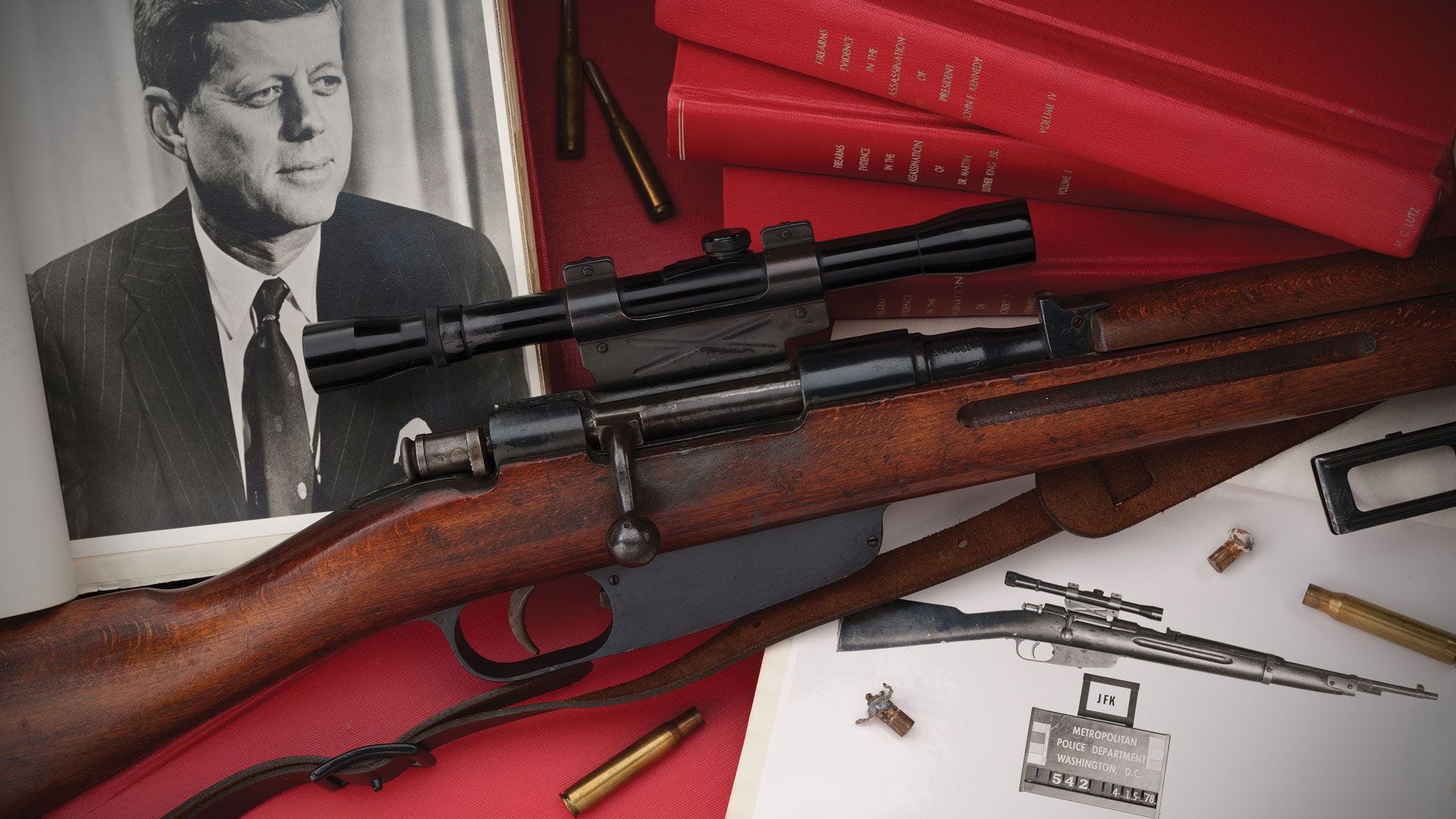
Ballistics evidence has been debated extensively. Oswald allegedly used a Mannlicher-Carcano rifle, but he failed a paraffin test for gunshot residue, casting doubt on whether he fired weapons that day. The “single bullet theory,” proposing one bullet caused multiple wounds to Kennedy and Texas Governor John Connally, has been challenged by forensic analyses.
Theories of Conspiracy and Oswald’s Role
Many theories posit Oswald as part of a larger plot, possibly as a double agent or patsy. One perspective suggests he was groomed for a mission against Castro, drawing from his pro-Cuba activities and intelligence connections. Similar assassination attempts on Kennedy were reportedly thwarted in Chicago and Tampa earlier in November 1963, with parallels to the Dallas events, including suspects with Oswald-like profiles.
Researchers like Peter Dale Scott and Gaeton Fonzi have explored Oswald’s intelligence ties. Scott’s work examines deep political structures, while Fonzi, an HSCA investigator, highlighted inconsistencies in official accounts. Antonio Veciana, a Cuban exile leader, claimed in 2014 to have seen Oswald with CIA officer David Atlee Phillips in Dallas weeks before the assassination. Veciana’s testimony, recorded at a 2014 conference, implicates CIA involvement in anti-Castro operations.
Mob connections are evident in figures like Trafficante and Marcello. FBI recordings from the 1980s captured Marcello admitting involvement in Kennedy’s death, tied to CIA-mob collaborations against Castro. The “French Connection” heroin trade through Havana adds another layer, involving Corsican assassins.
Parallels exist with other assassinations, such as Martin Luther King Jr. in 1968. Attorney William F. Pepper’s civil trial in 1999 found government complicity in King’s death, with James Earl Ray portrayed as a patsy similar to Oswald. James W. Douglass’s book “JFK and the Unspeakable” (2008) argues Kennedy’s peace initiatives threatened military interests, linking his death to systemic forces.
Fletcher Prouty’s “The Secret Team” (1973) details minimal security in Dallas and motives tied to Vietnam War profits. Prouty, a former CIA liaison, questioned control over government communications on the day of the assassination, noting unreleased records from Air Force One and the White House.
Developments from 2018 to 2026
Since 2018, significant advancements have occurred in JFK assassination research. The 1992 JFK Records Act mandated document releases, but delays persisted. In 2017, President Trump authorized the release of thousands of files, though some were withheld for national security. By 2021, additional batches emerged, revealing more on CIA surveillance of Oswald and anti-Castro groups.
Circa 2026, further declassifications have provided insights. In 2023, under President Biden’s administration, a review board released over 13,000 previously redacted documents, including details on CIA operations in Mexico City. These confirm Oswald’s contacts but introduce evidence of an impersonator, as voice analysis using modern AI tools mismatches the recordings with Oswald’s known speech patterns. A 2024 National Archives report acknowledged the possibility of multiple Oswald “doubles” used in intelligence operations, based on witness accounts from the Texas Theater.
Technological progress has revolutionized ballistics studies. John T. Orr’s 2018 3D animation project, which reconstructed Dealey Plaza with laser precision, refuted the single bullet theory by demonstrating impossible trajectories. Updated in 2025 with enhanced VR modeling, incorporating Zapruder film enhancements via machine learning, the model shows evidence of shots from multiple angles, including the grassy knoll. Forensic engineers, using 2026-era AI-driven wound simulation, conclude at least two shooters were involved, aligning with eyewitness testimonies of additional gunfire.
New books and documentaries have emerged. David Talbot’s “The Devil’s Chessboard” (2015) was expanded in a 2022 edition with fresh interviews, detailing Allen Dulles’s post-assassination actions. Joan Mellen’s “A Farewell to Justice” (2005) saw a 2024 update incorporating declassified files on Jim Garrison’s investigation, vindicating his pursuit of Clay Shaw as a CIA asset.
The Mary Ferrell Foundation remains a key repository, now digitized with AI search tools as of 2025, housing over 1.5 million pages. A 2026 symposium by the Citizens Against Political Assassinations (CAPA) presented findings from quantum computing analyses of autopsy photos, revealing alterations in Kennedy’s wounds between Parkland Hospital and Bethesda Naval Hospital, as detailed in Douglas Horne’s ongoing work.
G. Robert Blakey’s 2014 criticism of CIA non-cooperation has led to legal actions. In 2024, a federal lawsuit compelled the release of George Joannides’s files, a CIA officer who liaised with the HSCA while withholding information. These documents expose Joannides’s role in anti-Castro groups linked to Oswald.
Global perspectives have grown. Cuban intelligence reports, declassified in 2023, echo theories that Oswald was baited into a Castro assassination plot, only to be reframed for Dallas. Russian archives, opened partially in 2025 amid diplomatic thaws, confirm Oswald’s time in Minsk as monitored but not as a Soviet agent, supporting his U.S. intelligence ties.
Unresolved Questions and Broader Implications
Despite these advancements, many questions persist. Hundreds of thousands of documents remain classified, stored at facilities like Fort Meade and Langley. The 2026 archival backlog exceeds 500 million pages globally, with JFK records comprising a significant portion. Critics argue ongoing obstructions protect institutional reputations rather than national security.
Eyewitness accounts, such as those from Dallas police and civilians, suggest conspiracy. For instance, reports of Oswald doubles and suppressed testimonies indicate operational tactics to frame him. The paraffin test failure, combined with Tippit murder discrepancies—where Officer J.D. Tippit’s father reportedly questioned his son’s actions—adds doubt.
Theories linking the assassination to a coup d’état draw from Kennedy’s American University speech advocating peace, which alienated military hawks. Khrushchev’s memoirs note shared concerns with Kennedy over military pressures. Douglass terms this “the unspeakable,” a systemic resistance to change.
In 2026, public interest remains high, spurred by podcasts, AI-generated reconstructions, and virtual reality tours of Dealey Plaza. Surveys show over 60% of Americans believe in a conspiracy, up from 2013 figures, influenced by declassification.
This examination does not endorse any theory but presents available information for consideration. The assassination’s legacy underscores the importance of transparency in government. As more records emerge, perhaps in future releases mandated by law, a fuller picture may develop. Until then, the event serves as a reminder of the complexities in historical investigations, where evidence, interpretation, and institutional interests intersect.
Resources:
https://aarclibrary.org/
https://www.maryferrell.org/pages/Main_Page.html
http://whale.to/b/psychopaths_h.html
https://www.quora.com/Did-members-of-the-CIA-participate-in-the-murder-of-President-John-F-Kennedy/answer/Brendan-Howley
https://www.quora.com/Is-the-Executive-Order-11110-behind-the-assassination-of-the-USA-President-John-F-Kennedy
https://www.archives.gov/research/jfk/release-2025