


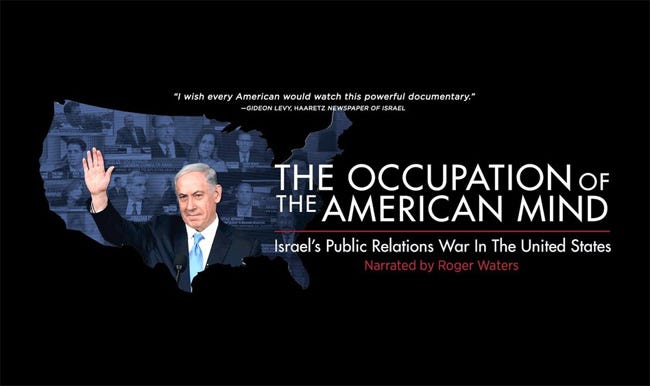
Related: The Occupation of the American Mind
The relationship between the United States and Israel is frequently described as a “special relationship,” a diplomatic designation suggesting mutual benefit, shared values, and strategic alignment. A closer examination of this partnership reveals structural dynamics that warrant serious scrutiny from American citizens concerned with constitutional governance, national sovereignty, and genuine national security interests.
This analysis examines the mechanisms of Israeli influence on American politics, the policy consequences of that influence, and the documented evidence supporting concerns about whether this relationship serves authentic American interests.
The Architecture of Political Influence
The Israeli government and its supporting organizations in the United States operate one of the most sophisticated and well-funded lobbying networks in American politics. This network encompasses hundreds of organizations and thousands of individuals working to shape American foreign policy in directions favorable to Israeli interests.
The American Israel Public Affairs Committee (AIPAC) stands as the most prominent organization within this network, though it represents only the visible portion of a much larger infrastructure. This lobbying apparatus has achieved remarkable success in securing annual appropriations of billions of dollars in military and economic aid to Israel. Unlike aid to other nations, this funding faces virtually no serious opposition in Congress regardless of which party holds power.
The effectiveness of this lobbying operation extends beyond direct financial appropriations. Israeli interests have secured blanket political protection in international forums, particularly at the United Nations, where the United States has consistently used its veto power to shield Israel from resolutions critical of its policies. This protection persists regardless of the specific actions being criticized, whether settlement expansion in occupied territories, military operations resulting in civilian casualties, or policies affecting Palestinian populations.
Former Israeli Prime Ministers have publicly acknowledged this influence. Both Ariel Sharon and Benjamin Netanyahu have made statements suggesting their confidence in Israel’s ability to direct American policy. These statements, while sometimes dismissed as political hyperbole, reflect a documented pattern of Israeli influence over American decision-making.
Intelligence Operations and Espionage
The Federal Bureau of Investigation has consistently identified Israel as conducting the most aggressive espionage operations against the United States among nations considered American allies. This assessment, based on counterintelligence investigations spanning decades, indicates a systematic pattern of intelligence collection targeting American military technology, communications systems, and classified information.
The case of Jonathan Pollard represents the most damaging acknowledged instance of Israeli espionage against the United States. Pollard, a civilian intelligence analyst for the U.S. Navy, passed enormous quantities of classified documents to Israeli intelligence handlers. Intelligence professionals have described the damage from Pollard’s espionage as among the most severe in American history, compromising sources, methods, and sensitive national security information.
Beyond the Pollard case, evidence indicates Israeli success in penetrating American communications infrastructure and illegally obtaining materials related to nuclear weapons development. Israel maintains a nuclear arsenal developed outside international oversight frameworks, using materials and technology obtained through various channels, including operations targeting American facilities and information.
Israeli intelligence operations in the United States prior to September 11, 2001, have generated persistent questions within intelligence and law enforcement communities. Evidence of extensive Israeli surveillance operations targeting Arab individuals and organizations in the United States during this period raises questions about what information Israeli intelligence possessed regarding the developing 9/11 plot and whether relevant intelligence was shared with American counterparts.
The incident involving Israeli nationals observed filming and apparently celebrating as the World Trade Center towers collapsed has never been satisfactorily explained. These individuals, working for a moving company in New Jersey, were detained and questioned before eventually being released and returned to Israel. The full scope of their activities and knowledge has never been publicly disclosed.
Policy Consequences: The Iraq War
The decision to invade Iraq in 2003 represents perhaps the most consequential foreign policy decision of the twenty-first century. This decision, justified through claims about weapons of mass destruction that proved false, resulted in the deaths of 4,424 American service members and hundreds of thousands of Iraqi civilians.
The total cost of the Iraq war, including long-term veteran care and interest on borrowed funds, has been calculated to exceed seven trillion dollars. This represents an extraordinary transfer of American resources based on intelligence assessments and policy recommendations that proved catastrophically wrong.
A network of policy advocates, many holding positions in the Pentagon and influential media platforms, aggressively promoted the Iraq invasion. This network had documented connections to Israeli strategic interests and had previously authored policy papers explicitly advocating Middle Eastern military interventions aligned with Israeli regional objectives.
The Project for the New American Century and similar organizations produced policy documents prior to September 11, 2001, advocating the removal of Saddam Hussein and broader military transformation of the Middle East. Key figures in this network subsequently occupied positions of influence in the George W. Bush administration and media organizations that shaped public opinion supporting the invasion.
Contemporary Policy Pressures: Iran
Similar policy advocacy networks now promote confrontational approaches toward Iran, following patterns established during the Iraq war buildup. Israeli government officials have consistently advocated American military action against Iranian nuclear facilities and broader Iranian interests throughout the region.
The escalation strategy proposed by these advocates, if implemented, would likely produce consequences exceeding the Iraq war in scope and severity. Iran possesses significantly greater military capabilities, strategic depth, and regional influence than Iraq possessed in 2003. Military conflict with Iran would threaten critical oil transit routes, potentially trigger broader regional conflagration, and almost certainly require sustained American military commitment far exceeding initial projections.
Israeli strategic interests in American confrontation with Iran are clear. Iran represents the primary regional counterweight to Israeli military dominance and supports organizations opposed to Israeli policies. However, whether American military conflict with Iran serves genuine American national interests is a question that deserves examination independent of Israeli strategic preferences.
Constitutional and Civil Liberties Concerns
Israeli influence on American domestic policy has extended to efforts affecting constitutional rights, particularly First Amendment protections for political speech. Legislation introduced by Senator Ben Cardin and similar proposals have sought to criminalize participation in boycott movements targeting Israel, raising fundamental questions about government restrictions on political expression.
The Boycott, Divestment, and Sanctions (BDS) movement, regardless of one’s views on its merits, represents a form of nonviolent political expression with deep roots in American civil rights traditions. Efforts to prohibit participation in such boycotts, particularly when motivated by pressure from a foreign government, represent concerning encroachments on constitutional protections.
Multiple state legislatures have enacted anti-BDS legislation, requiring contractors and in some cases individual employees to certify they will not participate in boycotts of Israel as a condition of government employment or contracts. These requirements have faced legal challenges on First Amendment grounds, with courts reaching varying conclusions about their constitutionality.
The willingness of American legislators to restrict constitutional rights at the behest of a foreign government and its domestic supporters represents a concerning indicator of the depth of Israeli influence on American governance.
Military Integration and Tripwire Commitments
American military presence in Israel has expanded to include permanent basing arrangements that effectively guarantee American military involvement in any conflict involving Israel. This commitment extends regardless of whether Israel initiates hostilities or acts in ways that provoke conflict.
These arrangements transform American military forces into tripwire guarantees for Israeli security, committing American lives and resources to conflicts that may or may not serve American interests. The decision to enter military conflict should remain with American political leadership, made through constitutional processes, not triggered automatically by the actions of a foreign government.
American diplomatic representatives to Israel and the United Nations have increasingly functioned as advocates for Israeli positions rather than representatives of independent American interests. The current Ambassador to the United Nations has faced criticism for prioritizing Israeli concerns over broader American diplomatic interests, while the Ambassador to Israel has publicly supported Israeli settlement policies that official American policy has historically opposed.
Media and Public Discourse
Critical examination of the U.S.-Israel relationship faces significant obstacles in mainstream American media. Coverage of Israeli actions, particularly military operations resulting in civilian casualties, often differs markedly from coverage of similar actions by other nations.
The term “interference” in American political processes has been applied extensively to Russian activities while Israeli interference, which Noam Chomsky and other analysts have characterized as far more substantial, receives minimal attention. The contrast between years of investigation and media coverage regarding Russian activities and the relative silence about documented Israeli influence operations illustrates this disparity.
Israeli Prime Minister Netanyahu’s 2015 address to Congress, delivered over President Obama’s objections and designed to undermine administration policy, represented an extraordinary intervention in American domestic politics. A foreign leader addressed the American legislature specifically to oppose a sitting president’s diplomatic initiative. This event received substantial coverage but minimal critical analysis regarding its implications for American sovereignty and constitutional processes.
The Jewish State Declaration
Israel’s 2018 declaration as explicitly a Jewish State codified policies that privilege Jewish citizens over Christian and Muslim minorities. This declaration formalized discrimination that existed previously through various laws and administrative practices but had not been stated as explicit national policy.
Israel continues to describe itself as a democracy while maintaining policies that systematically disadvantage non-Jewish citizens and populations under its control. American support for Israel frequently references shared democratic values, yet this characterization becomes increasingly difficult to sustain as Israeli policy moves in explicitly exclusionary directions.
Political Subservience: A Revealing Portrait
The willingness of American political figures to uncritically embrace anything presented as supporting Israeli interests has been documented through various means, including comedian Sacha Baron Cohen’s “Who Is America?” program. Cohen, disguised as a fictional Israeli security expert, convinced multiple current and former elected officials to endorse absurd proposals including arming kindergarteners, simply by presenting these ideas as Israeli security recommendations.
The ease with which Cohen obtained access to prominent political figures and secured their endorsement of patently ridiculous concepts by invoking Israeli credentials illustrates the reflexive deference that Israeli associations command among American politicians. This deference persists even when obvious indicators suggest the encounter is fraudulent.
This dynamic reflects broader patterns in American political culture regarding Israel. Claims of Israeli expertise receive automatic credibility. Policies presented as supporting Israeli security face minimal scrutiny. Questions about whether specific actions serve American interests are subordinated to assumptions that American and Israeli interests are identical.
Toward Honest Assessment
Israel possesses legitimate security interests and the right to defend itself. This analysis does not dispute that fundamental reality. However, Israeli interests and American interests are not identical, and conflating them produces policy outcomes that may serve Israel while damaging the United States.
Honest assessment of the U.S.-Israel relationship requires examining documented patterns of Israeli espionage against the United States, the influence of Israeli lobbying on American policy decisions, the constitutional implications of efforts to restrict political speech critical of Israel, and whether specific policies actually serve American national interests or primarily benefit Israel.
American citizens concerned with constitutional governance, national sovereignty, and genuine national security have both the right and the responsibility to examine these questions. Criticism of Israeli government policies and examination of Israeli influence on American politics is not equivalent to hostility toward Jewish people. Conflating these distinct concepts serves to suppress legitimate policy discussion.
The evidence regarding Israeli influence on American politics, the policy consequences of that influence, and the documented pattern of Israeli intelligence operations against the United States supports serious concern about whether this relationship serves American interests. Citizens and policymakers willing to examine this evidence honestly may reach conclusions that diverge from the prevailing narrative of unquestionable alliance.
The structures of influence that have shaped American policy toward Israel and the broader Middle East are documented, traceable, and subject to analysis. Americans deserve and demand foreign policy made in American interests, through constitutional processes, by representatives accountable to American citizens rather than foreign governments or their domestic lobbying operations.