


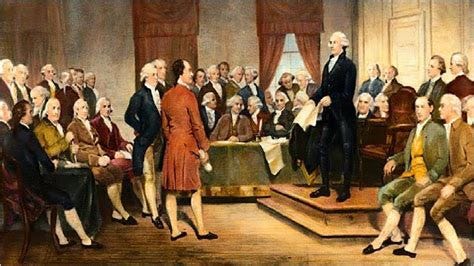
When the Founding Fathers crafted the U.S. Constitution, they were primarily concerned with building a government that upheld liberty, discouraged tyranny, and safeguarded individual rights. Yet, amid their meticulous efforts to establish this framework, many of them warned about the dangers of political factionalism; particularly the emergence of a two-party political system.
Today, as Americans grapple with a deeply polarized political climate, these concerns resonate louder than ever. To understand the warnings of figures like George Washington, James Madison, and John Adams, we must examine their writings and the context of their concerns, which remain as relevant now as they were in 18th-century America.-MK3
This is not a new problem. It is an old one that was documented, argued over, and written into the historical record before the ink on the Constitution was dry. The men who built this system of government saw the threat of political factionalism coming. They named it. They warned against it. And then the country built exactly what they feared anyway.
That is worth sitting with.
George Washington, James Madison, John Adams. These were not naive idealists. They had built a government from scratch, navigated foreign threats, managed internal disputes, and understood power well enough to design systems meant to contain it. When they looked at political parties, they did not see organizational tools. They saw weapons.
You should understand what they actually said, why they said it, and what it means for the constitutional republic you live in right now.
Washington’s Warning Was Not Subtle
George Washington’s Farewell Address in 1796 is one of the most important political documents in American history. It does not get nearly enough attention.
Washington did not mince words. He wrote:
“The alternate domination of one faction over another, sharpened by the spirit of revenge, natural to party dissension, which in different ages and countries has perpetrated the most horrid enormities, is itself a frightful despotism.”
Read that again. Washington used the word despotism. Not dysfunction. Not inefficiency. Despotism.
He was watching the early fracturing of American politics in real time. The Federalists and Democratic-Republicans were already forming, already pulling at each other, already turning governance into a competition for dominance rather than a process of representation. Washington saw where that road led. He had studied enough history to recognize the pattern: faction rises, faction consolidates power, faction punishes opposition, liberty shrinks.
His warning was not a request for civility. It was a structural alarm. He was telling Americans that the spirit of party, left unchecked, would produce exactly the kind of concentrated, revenge-driven political power that the Revolution was fought to escape.
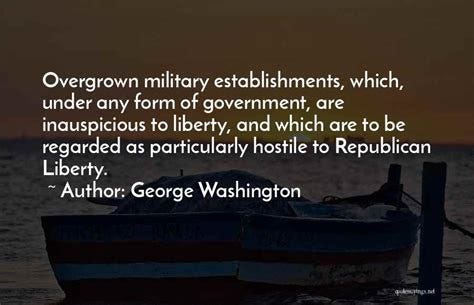
That warning was recorded. Filed away. And largely ignored.
Today you live in a political environment where the two dominant parties have controlled national politics for over 150 years. Where third-party candidates are systematically frozen out of debates. Where ballot access laws are written by the same parties that benefit from keeping competitors off the ballot. Where the primary system rewards ideological purity over competence. Where “working across the aisle” is treated as betrayal rather than governance.
Washington called it. You are living in it.
Madison Built a System Designed to Fight This
James Madison did not simply warn about factions. He theorized them, analyzed them, and designed around them.
In Federalist No. 10, Madison made a frank admission: factions are inevitable in a free society. People have different interests, different resources, different opinions. You cannot eliminate factionalism without eliminating liberty. That is not a trade worth making.
But Madison believed the structure of a large republic could neutralize the worst outcomes. The diversity of a geographically and economically varied nation would make it nearly impossible for any single faction to build a majority capable of steamrolling everyone else. Competing interests would check each other. Representation spread across a large population would dilute concentrated ideological power.
What Madison feared most was the tyranny of the majority. A faction large enough to control government could impose its will on everyone else, using the machinery of the state as a weapon against political opponents. The republic’s design was meant to prevent that.
Here is the question you need to ask: Is it working?
Look at the current political structure. Two parties control the committee assignments in Congress. Two parties control access to presidential debates. Two parties dominate state legislatures that draw the district lines determining who gets elected. Two parties benefit from campaign finance systems that create nearly insurmountable financial advantages over any outside challenger.
The diversity of interests Madison counted on to prevent majority tyranny has been filtered through a two-party chokepoint. The system does not present you with a range of competing options and let you choose. It presents you with two pre-packaged platforms, demands loyalty, and calls that democracy.
It is not. And Madison’s framework explains exactly why it fails.
Adams Said It Plainly
John Adams called political parties “the greatest political evil under our Constitution.”
He did not hedge. He did not qualify. He named it the greatest political evil. Not foreign invasion. Not economic collapse. Political parties operating without restraint.
Adams watched his own presidency consumed by the conflict between Federalists and Democratic-Republicans. Policy decisions were distorted by factional positioning. Governance became secondary to winning. The actual work of running a constitutional republic, the hard, boring, necessary work of administration and legislation, was constantly subordinated to the demands of factional warfare.
Adams understood what that meant in practice. When parties prioritize their own survival and power above the country’s needs, the country’s needs do not get met. Problems compound. Resentment builds. The population loses faith in institutions. And then the institutions start to reflect that loss of faith by becoming even more partisan, more entrenched, more focused on defeating the other side than serving the public.
You are watching that cycle play out in real time. Congressional approval ratings have been in the gutter for years. Legislation on core national issues stalls not because solutions are unavailable but because one party refuses to let the other have a win. Investigations are launched not to find truth but to damage opponents. Confirmations are weaponized. Procedural tools designed to protect minority rights are used to obstruct majority governance.
This is what Adams meant. This is the evil he named.
The Constitution Has No Parties
Here is a structural fact that most Americans have never been asked to think about: the Constitution does not mention political parties anywhere.
Not once.
The Founders designed a system of elected representatives who would serve their constituents. Period. The assumption was that individual citizens would select individual representatives based on character, competence, and judgment. The representative would then exercise that judgment in the national interest.
Party loyalty was not part of the design. Party discipline, where members vote in blocs based on party leadership directives rather than constituent interests or personal judgment, is a distortion of the system, not a feature of it.
The two-party system did not emerge because the Constitution created it. It emerged because of practical pressures: winner-take-all electoral structures, campaign finance realities, and the organizational advantages of consolidated political machines. It became entrenched because the parties themselves wrote the rules that kept it entrenched.
This is not a conspiracy theory. It is documented political history. The parties built barriers to entry, captured regulatory bodies, and designed electoral systems that protect incumbents and freeze out competition. They did it openly, over time, using legal mechanisms.
The result is a system where your choices are constrained not by the Constitution but by the institutional interests of two private organizations that have captured the machinery of government.
That is not what the Founders built. That is what got built on top of what they built.
What You Are Seeing Right Now
The consequences the Founders warned about are not hypothetical. They are visible and specific.
Legislative gridlock is structural. When one party controls the House and the other controls the Senate, or when the minority party uses procedural tools to block the majority, the result is not compromise. It is paralysis. Issues with broad public support, issues where polling shows clear majorities, die in committee because passing them would benefit the opposing party’s political position.
Representation has been replaced by performance. Members of Congress spend enormous portions of their time on fundraising and on media appearances designed to energize their partisan base. The base demands ideological consistency. Deviation from party orthodoxy triggers primary challenges. The incentive structure pushes representatives away from their constituents and toward their party’s most activated, most extreme voters.
Civic trust is collapsing. When institutions operate as partisan instruments rather than neutral arbiters, the public stops trusting them. Courts, regulatory agencies, law enforcement, media: all of it gets filtered through partisan lenses. When everything is tribal, nothing is legitimate to half the population. That is not a functional republic. That is a cold civil conflict waiting for conditions to change.
These are not rhetorical complaints. These are system failures that the Founders specifically designed against, and they are failing because the two-party structure has hollowed out the safeguards.
What You Can Actually Do
This is not a piece that ends with a shrug.
The Founders left you something. Not just warnings. They left you a constitutional framework with real tools, and most of them are underused because the parties prefer an disengaged, tribally loyal electorate to an informed, independent one.
Know what the Constitution actually says. Not what you were told it says. Not what a party platform claims it means. Read it. Read the Federalist Papers. Read Washington’s Farewell Address in full. The primary sources are accessible and they are more useful than anything a cable news panel will tell you.
Refuse the binary. The two-party framing is presented to you as reality. It is a choice. A choice maintained by institutional power, but a choice. You can support candidates outside the two parties. You can demand ranked choice voting in your state, which breaks the spoiler effect that keeps third parties out. You can organize around issues rather than party identity.
Hold representatives accountable to representation. Your member of Congress works for you. Not for the party leadership. Not for the donors. Contact them. Show up at town halls. Track their votes against their stated positions. Make the cost of pure party loyalty visible and real.
Push for structural reform. Gerrymandering, ballot access laws, campaign finance structures, debate commission rules: these are the mechanisms that protect the two-party system from competition. They can be changed. They have been changed at the state level in multiple places. Arizona, Maine, and Alaska have moved toward ranked choice systems. It is possible.
Stop outsourcing your judgment. The parties want you to think of politics as a team sport. They benefit from that. An electorate that votes based on identity rather than policy is easier to manage and harder to hold accountable. When you vote the party line without scrutiny, you are not participating in a constitutional republic. You are maintaining a machine that the Founders warned you about.
Washington, Madison, and Adams were not writing for their moment only. They were writing for yours.
They understood that the constitutional republic they built was not self-sustaining. It required active, informed, skeptical citizens. Citizens who would scrutinize power, resist consolidation, and refuse to trade liberty for the comfort of partisan belonging.
The two-party system is not a constitutional fixture. It is a political construction. Constructions can be taken apart and rebuilt.
What The Republic Needs From You
The concerns of the Founding Fathers about a two-party system were not idle musings. They understood that unchecked partisanship could erode the foundations of a free republic. Today, we see the effects of their warnings in hyper-partisan politics, where dialogue and compromise are often replaced with gridlock and ideological warfare.
As Americans, we must remember that our identity is not defined by political affiliation but by shared principles of liberty, justice, and the pursuit of happiness. By revisiting the wisdom of the Founders, we can find inspiration to rise above partisanship and work toward solutions that serve the nation as a whole.
In the end, the Founders’ fears serve as a reminder of the fragility of freedom and the importance of preserving unity. We must ask ourselves: Are we fulfilling the vision of a nation that prioritizes the common good over partisan gain? Their legacy challenges us to rise above divisions and reclaim the spirit of cooperation and civic responsibility that made America great.
Join the mission of Margin of the Law and MK3 Blog to educate yourself and our youth about our Constitution, our founding and it’s fathers, where we are today, the laws and what we can do to force positive, constitutional and lasting change within the political and legal class of today’s American Republic.
Margin of the Law publishes constitutional analysis, civic research, and legal education for people who want to understand the system they actually live in. Read the Full Constitutional Analysis Library at marginofthelaw.com.
© 2026 – MK3 Law Group
For republication or citation, please credit this article with link attribution to marginofthelaw.com.