


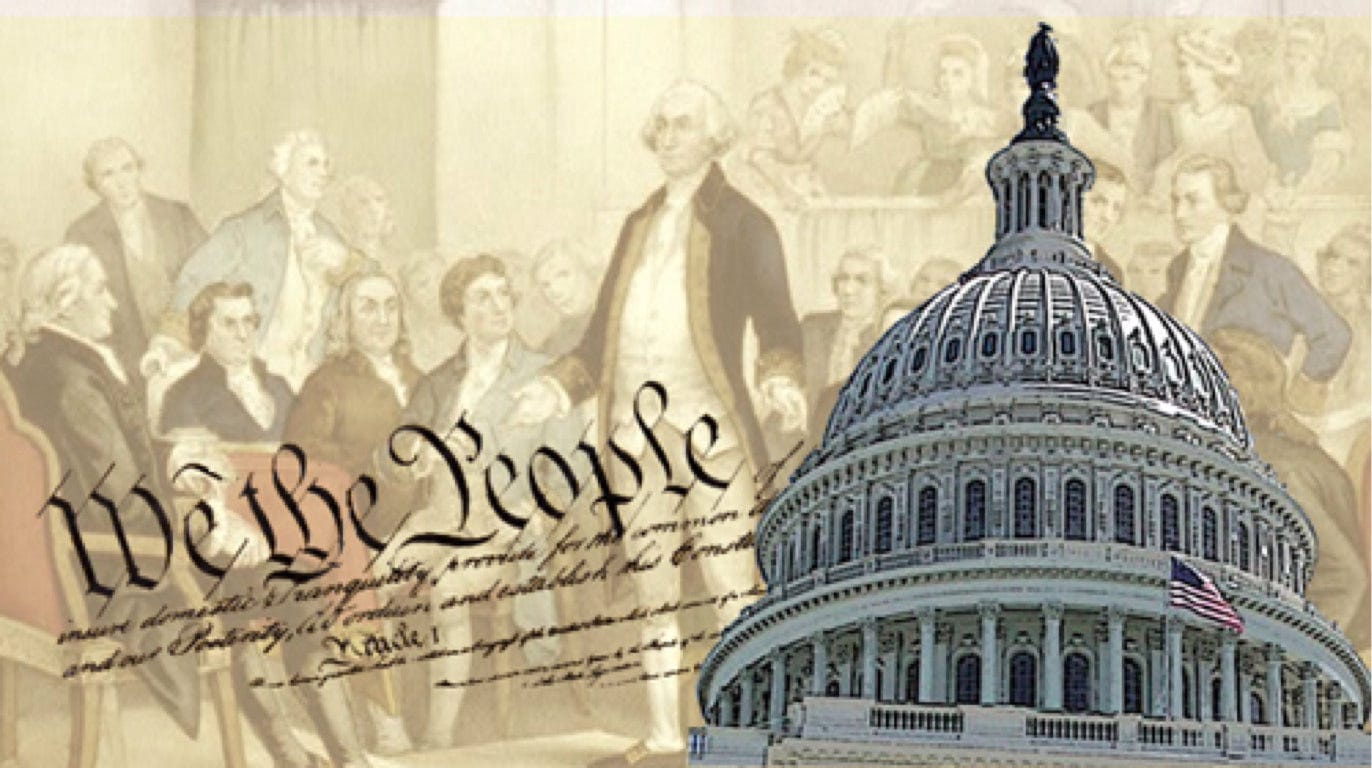
“Liberty must at all hazards be supported. We have a right to it, derived from our Maker. But if we had not, our fathers have earned and bought it for us, at the expense of their ease, their estates, their pleasure, and their blood.”
John Adams, A Dissertation on the Canon and Feudal Law, 1765
The relationship between constitutional design and cultural virtue operates beneath layers of manufactured consensus about judicial power and democratic legitimacy. What emerges through examination reveals structural dependencies—dependencies that legal education systematically obscures.
The Foundational Premise: Moral Prerequisites for Constitutional Function
John Adams articulated a fundamental recognition that contemporary discourse consistently evades: “Our Constitution was made only for a moral and religious People. It is wholly inadequate to the government of any other.” This observation penetrates beyond ceremonial founding mythology to expose an operational reality—constitutional mechanisms require specific cultural prerequisites to function.
James Madison reinforced this structural dependency, noting that constitutional governance demands “sufficient virtue among men for self-government,” warning that without such virtue, “nothing less than the chains of despotism can restrain them from destroying and devouring one another.” These statements reveal constitutional design as contingent rather than self-executing.
The founding generation operated from direct experience with concentrated power’s destructive capacity. They witnessed Parliament and Crown exercise oppressive authority that precipitated revolutionary response. This experience generated what Madison identified as tyranny’s essence: power accumulation by “one person or a small body.”
Structural Safeguards and Their Limitations
The founders embedded liberty-preservation mechanisms into governmental architecture through deliberate structural choices. They divided authority between federal and state levels, distributed federal power among three branches, and restricted federal jurisdiction to specifically delegated functions. Yet they recognized these mechanical constraints as insufficient for sustaining the new republic.
The inadequacy of structural safeguards alone exposes a deeper truth about constitutional systems: government reflects rather than shapes cultural character. Madison’s observation that “government itself” represents “the greatest of all reflections on human nature” indicates this foundational relationship between cultural substrate and institutional expression.
The Cultural Foundation: Virtue as Constitutional Prerequisite
Understanding why the founders emphasized virtue requires recognizing the downstream relationship between culture and governance. Virtuous populations defend rights “endowed by their Creator and restored by the blood of patriots.” Populations lacking virtue “readily cede these rights in exchange for a fleeting sense of security.”
Princeton’s Robbie George illuminates this dynamic: “people lacking in virtue could be counted on to trade liberty for protection, for financial or personal security, for comfort… for having their problems solved quickly. And there will always be people occupying or standing for public office who will be happy to offer the deal.”
This exchange—liberty for security—represents the fundamental threat to constitutional governance. It operates through manufactured crises, constructed narratives of immediate danger, and systematic cultivation of dependency on governmental solutions.
Institutional Sources of Virtue Transmission
Given humanity’s imperfect nature and government’s inherent unreliability as virtue’s source, responsibility for character formation falls to non-governmental institutions. Family structures, religious communities, and educational institutions must “transmit to each new generation the virtues without which free societies cannot survive: basic honesty, integrity, self-restraint, concern for others and respect for their dignity and rights, civic-mindedness, and the like.”
These institutions face systematic pressure to abandon their virtue-transmission function. Educational establishments particularly undergo transformation from character-forming entities to credentialing mechanisms that serve corporate and governmental interests rather than constitutional preservation.
The failure of virtue transmission creates cascading constitutional breakdown. Without institutions teaching why structural constraints protect liberty, explaining liberty’s vital importance, and inculcating resistance to immediate gratification culture, even the most carefully designed constitutional safeguards collapse.
Educational Institutions and Constitutional Preservation
Higher education institutions like Regent University occupy critical positions in constitutional preservation efforts. The Robertson Center for Constitutional Law represents one response to educational institution capture by anti-constitutional forces. The Center promotes fundamental constitutional principles: textualism, originalism, separation of powers, limited government, judicial modesty, and religious freedom—while educating future Christian legal practitioners.
This educational mission operates against manufactured consensus that treats constitutional interpretation as evolving rather than fixed, that positions judicial activism as progressive rather than usurpative, and that frames originalist interpretation as backward rather than democratically legitimate.
Christianity’s Role in Constitutional Thinking
Christian approaches to constitutional law begin with humility rather than triumphalism. Christianity functions not “as a club to be wielded against those who do not share” the faith but as recognition of human limitation and fallibility.
Christian constitutional thinking emerges from specific theological premises. Human selfishness and imperfection generate inherent skepticism toward concentrated power. History demonstrates concentrated power’s destructive impact on liberty across cultures and centuries. Even those claiming ability to “bring about the Kingdom of Heaven on this earth through our political efforts” deserve distrust, as governmental attempts at perfectibility “will be tyranny.”
The founders understood this relationship between human nature and power concentration. George Washington’s letter to the Hebrew Congregation in Newport articulated pluralist principles: “All possess alike liberty of conscience and immunities of citizenship… the Government of the United States, which gives to bigotry no sanction, to persecution no assistance requires only that they who live under its protection should demean themselves as good citizens.”
Christian constitutional understanding recognizes that rights originate beyond human creation. Government officials, lawyers, and judges cannot create rights—the Creator endowed those rights to the people. Constitutional structure recognizes this by restraining federal power and preserving popular liberty.
Originalism Versus Living Constitutionalism: The Interpretive Divide
Skepticism toward state power and commitment to democratic self-governance align naturally with originalist constitutional interpretation. Originalism confines interpretation to constitutional text meaning, tethered to public understanding when ratified, plus lawful amendments. Textualism applies similar methodology to statutory interpretation.
Justice Antonin Scalia explained originalism’s core principle: “provisions of the Constitution have a fixed meaning” so constitutional words “mean today what they meant when they were adopted, nothing more and nothing less.” These constraints limit unelected judicial reach while preserving popular political power.
Living constitutionalism operates through opposite methodology. Rather than seeking textual or original public meaning, living constitution philosophy empowers judges to determine what constitutional provisions should mean currently. This approach bypasses democratic amendment processes and legislative change by convincing five Supreme Court justices rather than popular majorities.
Former Attorney General Edwin Meese identified living constitutionalism’s fundamental inversion: it “remold[s] principles in light of policies” instead of “judg[ing] policies in light of principles.” This result-oriented approach delegates immense concentrated power to judiciary members for society’s most important and controversial decisions.
Living constitutionalism operates largely disconnected from constitutional text and without democratic accountability. It contradicts popular sovereignty and concentrates power in ways the founders specifically sought to prevent. It allows fallible judges to infuse constitutional text with personal values and policy preferences on society’s most significant debates.
Such judicial delegation abandons democratic self-governance. Requiring judges to adhere to text and original meaning provides constitutional decision-making with democratic legitimacy. Original meaning gained political support from the people required for ratification. This authority chain—from Creator to people to federal government—furnishes constitutional legitimacy.
The Scalia-Inspired Renaissance in Originalism
Harvard Law professor Richard Fallon observed that most constitutional law students enter his class as intuitive originalists. Students naturally approach documents—constitutions, Shakespearean plays, or eighteenth-century recipes—by seeking to understand what words meant when written. This represents common-sense document interpretation.
Educational institution influence explains why students enter law school with originalist inclinations but leave with different views. Systematic instruction redirects natural interpretive instincts toward result-oriented methodologies that serve current power structures rather than constitutional constraints.
Justice Scalia catalyzed a textualism and originalism renaissance that surprised many observers. Justice Elena Kagan, appointed by Barack Obama, acknowledged in her 2010 confirmation hearings that “we are all originalists” now. Later, she declared regarding statutory interpretation that “we’re all textualists now.”
This transformation extends beyond academic discussion into practical judicial outcomes. Donald Trump appointed two Supreme Court justices and approximately twenty percent of federal appeals court judges, virtually all subscribing to textualism and originalism. This represents substantial interpretive methodology shift across federal judiciary.
Practical Impact: From Classroom to Courtroom
Interpretive methodology changes produce real courtroom effects rather than merely academic shifts. Religious liberty defenders experience significant court success despite widely publicized losses. Alliance Defending Freedom, led in Supreme Court practice by Regent Law graduate Kristen Waggoner, won nine religious liberty cases in seven years at the Supreme Court.
Even left-leaning lawyers and scholars increasingly employ textualist and originalist methods to advocate positions. This represents fundamental change in legal argument construction and reason for measured optimism regarding constitutional interpretation’s future direction.
Originalism and textualism do not guarantee results favoring particular political groups. Adoption means case outcomes derive from textual demands regardless of whose interests suffer. Lawyers and judges may disagree on proper textual interpretation or attempt using originalist arguments to cover preferred meaning infusion.
Future Expectations and Institutional Response
Federal courts will likely continue embracing textualism and originalism as Justices Neil Gorsuch and Brett Kavanaugh maintain close adherence to these interpretive modes. Both right and left will increasingly employ originalist and textualist arguments. Although the path may prove uneven, this interpretive shift should diminish the Supreme Court’s role as social change agent.
The Robertson Center for Constitutional Law advocates for self-evident truths articulated in the Declaration of Independence and enshrined in the Constitution. Regent University School of Law continues training the next generation’s principled liberty advocates who understand constitutional foundations rather than merely current legal fashions.
The Primary Threat: Cultural Degradation
The greatest threat to constitutional order is not non-originalist Supreme Court decisions but rather failure to transmit to subsequent generations the character, virtue, and knowledge required to protect constitutional safeguards. Court victories prove hollow and temporary without instilling in future generations the founding virtues.
Supreme Court decisions and constitutional preservation operate downstream from culture. Constitutional preservation requires maintaining the virtuous culture the Constitution was designed to serve. Regent University School of Law and its Robertson Center for Constitutional Law must play prominent roles in preserving, protecting, and defending constitutional foundations against manufactured consensus that obscures these fundamental relationships.
This work operates at the margins of established legal education, revealing what institutional capture conceals about constitutional dependency on virtue, the relationship between interpretive methodology and democratic legitimacy, and the ongoing struggle between constitutional constraints and concentrated power’s eternal appeal.