


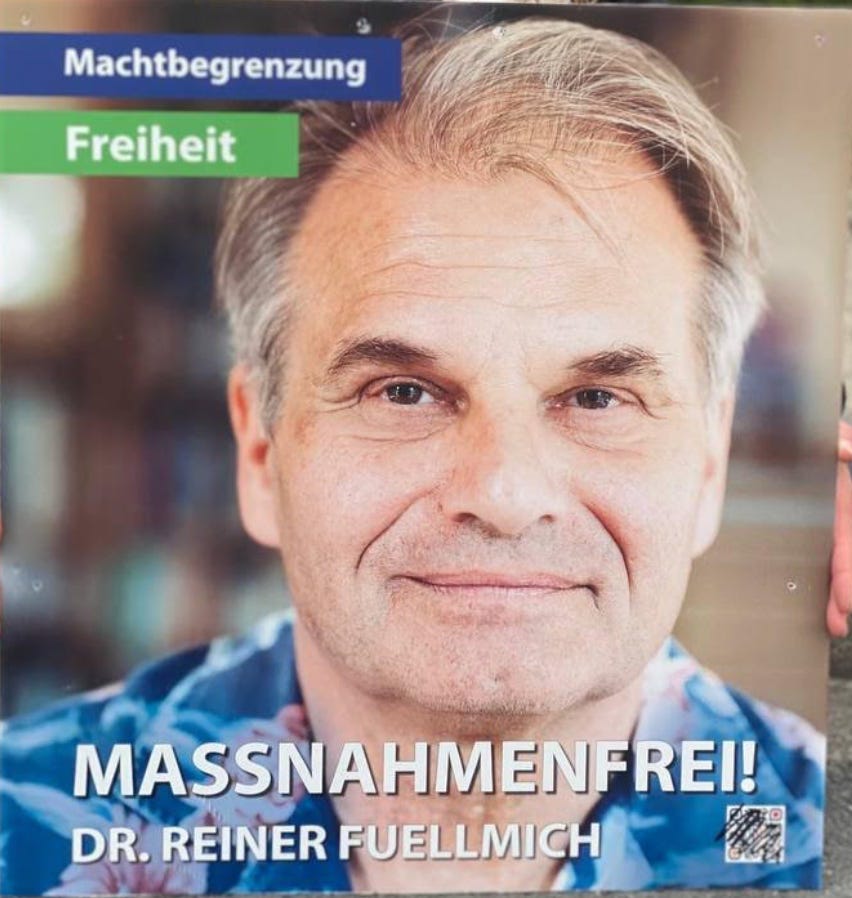
Who Is Dr. Reiner Fuellmich?
Dr. Reiner Fuellmich, 66 years old, has practiced as a trial lawyer in both Germany and California for approximately three decades. His legal career centered on defending consumers and small-to-medium enterprises against large corporations. His track record includes major victories against Volkswagen regarding the diesel emissions scandal, the logistics company Kühne und Nagel, and Deutsche Bank—an institution where Fuellmich once worked and which he has publicly characterized as “one of the largest criminal organizations.”
When lockdowns began in 2020, Fuellmich and his wife were residing at their ranch in California. The circumstances surrounding the pandemic response struck them as unusual, prompting their return to Germany to investigate matters firsthand. What Fuellmich observed led him to conclude that serious crimes against humanity were being committed under the guise of public health emergency measures.
Formation of the Corona Investigative Committee
On July 10, 2020, Fuellmich joined forces with three other German lawyers—Viviane Fischer, Antonia Fischer (no familial relation to Viviane), and Justus Hoffmann—to establish the Corona Investigative Committee in Berlin. The committee’s stated purpose was to examine the actions of governments, institutions, and the medical community in the context of the COVID-19 pandemic response.
The central questions driving the committee’s work were straightforward:
What is the actual danger level of this virus?
How reliable is the PCR test methodology promoted by Christian Drosten?
What economic damage have lockdown policies inflicted on the global economy?
Over the course of its work, the committee conducted approximately 400 interviews and consulted nearly 150 scientists and experts across multiple disciplines.
The Scope of Investigations
The list of individuals interviewed by the Corona Investigative Committee reads like a directory of prominent pandemic skeptics and medical dissidents:
Medical and Scientific Experts:
Dr. Luc Montagnier, Nobel Prize laureate
Dr. Peter McCullough, American cardiologist and epidemiologist
Dr. Mike Yeadon, former Vice President of Pfizer
Dr. Judy Mikovits, research scientist
Dr. Robert Malone, biochemist and mRNA technology pioneer
Dr. Roger Hodkinson, forensic pathologist
Dr. Arne Burkhardt, German forensic pathologist who conducted autopsies on vaccinated individuals
Dr. Astrid Stückelberger, scientist and researcher
Dr. Simone Gold, founder of America’s Frontline Doctors
Dr. Antonietta Gatti, scientist
Dr. Mattias Desmet, psychologist known for his work on mass formation
Financial Experts, Historians, and Journalists:
Ernst Wolff, writer, journalist, and finance expert
James Corbett, investigative journalist
Matthew Ehret, writer and journalist
David Icke, author and commentator
Naomi Wolf, journalist, author, and political consultant
Other Notable Figures:
Vera Sharav, Holocaust survivor and human rights activist
Catherine Austin Fitts, former U.S. Assistant Secretary for Housing and Urban Development
Calin Georgescu, former high-ranking United Nations official
Archbishop Carlo Maria Viganò
Pascal Najadi, former Swiss banker and film producer
The interviews were primarily conducted via Zoom from Berlin, with Fuellmich typically leading the English-language conversations while Viviane Fischer often sat alongside him during recordings.
Committee Findings and Conclusions
The Corona Investigative Committee’s work led to several conclusions that directly challenged official pandemic narratives. According to Fuellmich’s analysis:
The COVID emergency was never fundamentally about public health because no genuine pandemic existed in the traditional sense. What occurred was more accurately described as a “PCR test pandemic.” The PCR testing methodology, which allegedly generated more than 95% false positives, enabled authorities to artificially inflate case numbers. This manipulation of diagnostic data formed the evidentiary foundation upon which Fuellmich believed governments could be held accountable for intentional wrongdoing.
The committee’s investigations suggested that governments worldwide acted against the interests of their own citizens, operating under the influence of large multinational corporations and non-governmental organizations—entities Fuellmich collectively termed “Mr. Global.”
The Internal Collapse: Summer 2022
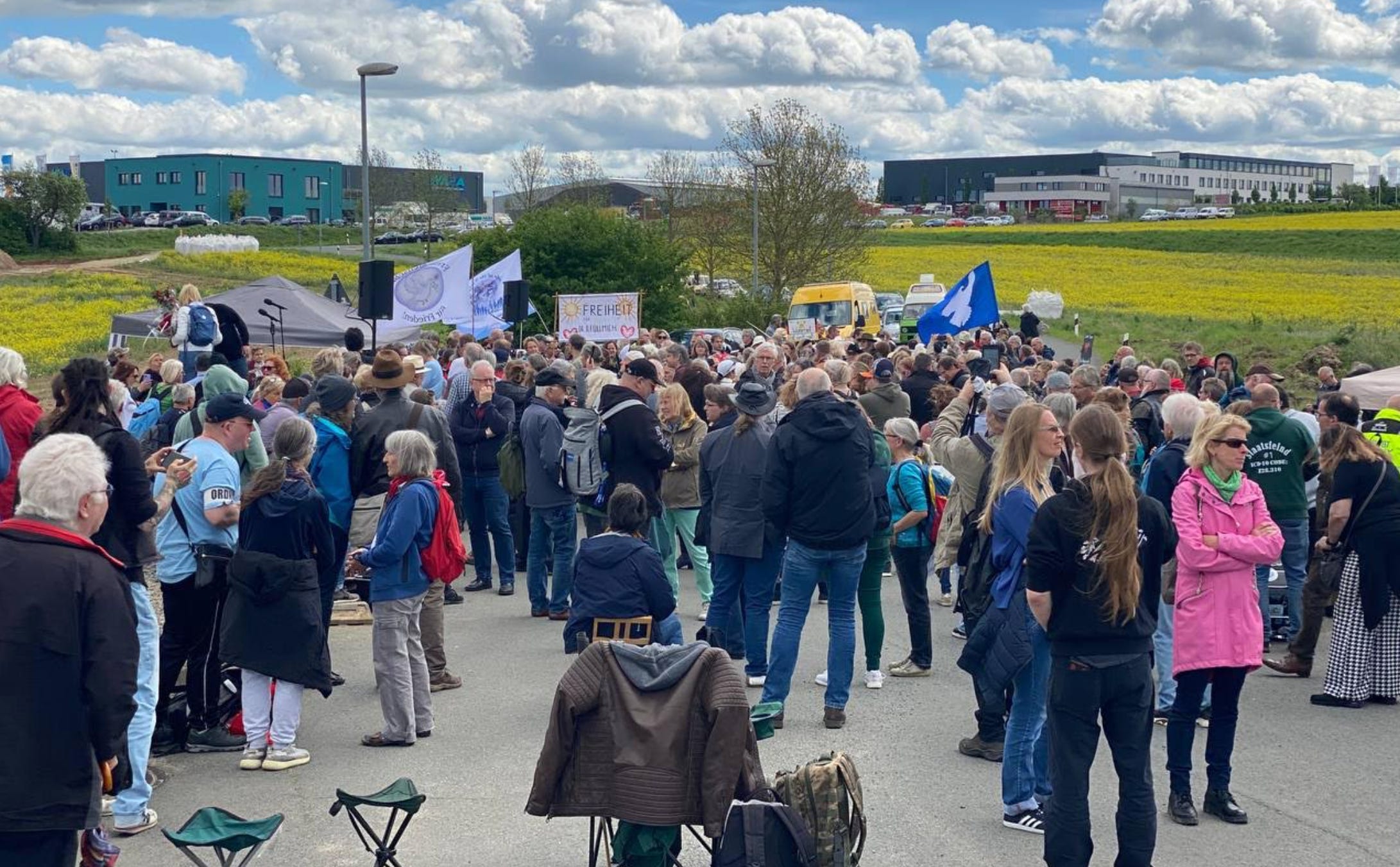
The dissolution of the original committee structure began during the summer of 2022. Fuellmich departed Berlin to participate in the “Crimes Against Humanity” speaking tour across the United States, appearing alongside Dr. Judy Mikovits, Dr. Richard Fleming, and Patrick Wood.
During his extended absence, tensions within the committee escalated. In autumn 2022, Viviane Fischer—who alongside Fuellmich had been the most active committee member—moved to remove Fuellmich from the organization. The manner of his removal warrants close examination.
Fischer informed Fuellmich that a previously scheduled Zoom meeting had been cancelled. This was false. The meeting proceeded as originally planned, and during this session, Fischer announced to participants that certain irregularities required clarification and that the Corona Investigative Committee would continue without Reiner Fuellmich.
Fuellmich learned of his removal only after the fact.
Following this expulsion, Fuellmich eventually launched a new initiative: the ICIC (International Crimes Investigative Committee).
The Financial Arrangements: Gold Purchases and Personal Loans
The financial circumstances that would later form the basis of criminal charges against Fuellmich require careful documentation.
Prior to the committee’s internal fracturing, Fuellmich recognized that the German government posed an imminent threat to seize the Corona Investigative Committee’s bank accounts. To protect funds raised through private donations—money intended to sustain the committee’s investigative work—Fuellmich and Viviane Fischer agreed to convert one million Euros of these donations into gold.
To facilitate this protective measure, both individuals took personal loans backed by written, signed contracts:
Reiner Fuellmich: €700,000
Viviane Fischer: €100,000
Viviane Fischer repaid her loan in installments between mid-August 2022 and October 2022—notably, just weeks before Fuellmich’s removal from the committee.
Fuellmich made clear from the beginning that his loan repayment would occur immediately following the sale of his home in Göttingen, which was expected to fetch approximately €1,350,000.
The Role of Marcel Templin
Because German authorities had frozen Fuellmich’s bank accounts, he delegated certain responsibilities to attorney Marcel Templin. Templin was a law firm partner of Justus Hoffmann and Antonia Fischer—two of the original committee co-founders.
Fuellmich entrusted Templin with managing:
A class action lawsuit project Fuellmich had been developing
The sale of Fuellmich’s Göttingen property
The property sale occurred. The proceeds, however, did not reach Fuellmich’s possession. Instead, the money from the sale ended up in Marcel Templin’s bank account.
With Fuellmich unable to access his own funds, he could not repay the €700,000 loan as originally intended. This situation provided Antonia Fischer, Justus Hoffmann, and Marcel Templin with grounds to accuse Fuellmich of embezzling funds from the Corona Investigative Committee.
The Abduction from Mexico
The sequence of events leading to Fuellmich’s imprisonment began when he traveled to England to interview a former British Secret Service agent. Upon attempting to return to the United States, Fuellmich was denied entry—an action his supporters attribute directly to his investigative activities exposing COVID-related policies.
Denied access to America, Fuellmich and his wife traveled to Mexico, where they remained for several months while attempting to resolve their accumulating difficulties. Having lost their passports, they applied for replacements and received instructions from the German embassy to travel to Tijuana for collection.
Upon arrival, they discovered the embassy was closed for remodeling. Officials directed them to proceed to the airport to retrieve their new travel documents.
At the Tijuana airport, Mexican police took Reiner Fuellmich into custody, citing his lack of valid passport or visa. He was placed on a flight to Frankfurt—a flight funded by the German government—where he was arrested upon arrival.
The stated justification was a “pending” European arrest warrant.
A critical detail emerges here: Fuellmich’s wife, allegedly suffering from identical documentation issues, spent one night in Mexican custody before being released and permitted to remain in Mexico, where she resided at the time of these documented events.
Investigation revealed that no international arrest warrant existed. No formal extradition process had been initiated. Under established legal frameworks, Fuellmich was removed from Mexico under false pretenses.
One week after his Frankfurt arrest, Fuellmich was transported to the maximum-security prison in Rosdorf.
Pre-Trial Detention Beyond Legal Limits
Standard legal procedure involves arrest, indictment, trial, conviction, and then—only upon conviction—imprisonment. Fuellmich’s case inverted this sequence.
He has been held in pre-trial detention since his arrest. German law establishes a maximum pre-trial detention period of six months. At the time of documented events, Fuellmich had been detained for nearly eleven months awaiting trial resolution.
All motions filed seeking his release on bail were rejected.
The Trial Process: 28 Hearings and Counting
By the documented reporting period, 28 hearings had been conducted in Fuellmich’s case. Several facts emerged during these proceedings that warrant examination:
Of the original eighteen charges filed against Fuellmich, seventeen were dropped or dismissed. Only one charge remained: the matter concerning the personal loans.
Judge Carsten Schindler, presiding over the case, ruled that he did not consider these to be legitimate personal loans—despite the existence of written, signed contracts documenting their terms.
Judge Schindler characterized the loan agreements as “fictitious.” On May 3, 2024, he announced that the facts were already clear to him: Reiner Fuellmich had acted in bad faith and embezzled funds. The judge stated his intention to convict Fuellmich “at all costs” and declared that hearing additional defense witnesses was unnecessary.
These conclusions rested almost exclusively on testimony from Viviane Fischer—testimony that defense lawyers characterized as inconsistent.
A significant procedural irregularity: Marcel Templin, one of Fuellmich’s accusers and the individual into whose bank account the property sale proceeds were deposited, was not called to testify.
The German Secret Services Dossier
Defense attorney Dr. Christof Miseré obtained a dossier allegedly originating from German intelligence services. According to Miseré, this document explicitly stated that Fuellmich must be stopped “at all costs and in every possible manner.” The strategy outlined included “infiltrating people among his closest collaborators.”
The dossier’s stated objective: secure Fuellmich’s conviction to prevent him from seeking public or political office in the future.
According to this document, Fuellmich had been under special surveillance since 2021—provided by a whistleblower to Miseré.
Both prosecutors and the judge dismissed the dossier as fabricated.
The Prosecutor ‘John’ and Transferred Jurisdiction
Additional evidence emerged in the form of emails written by a young public prosecutor identified as “John.” These communications allegedly referenced the “dirty job” conducted against Fuellmich by his accusers.
Defense attorney Christof Miseré characterized the proceedings as “the most legally pathetic proceedings of the last 30 years,” comparing the court’s statements to “a prefabricated declaration by an entity similar to the Stasi.”
A jurisdictional detail merits attention: Prosecutor John was transferred from Hanover to Göttingen after the original Göttingen prosecutor—when asked to investigate Fuellmich—determined that insufficient basis existed to proceed with any investigation.
Prison Conditions and Human Rights Violations
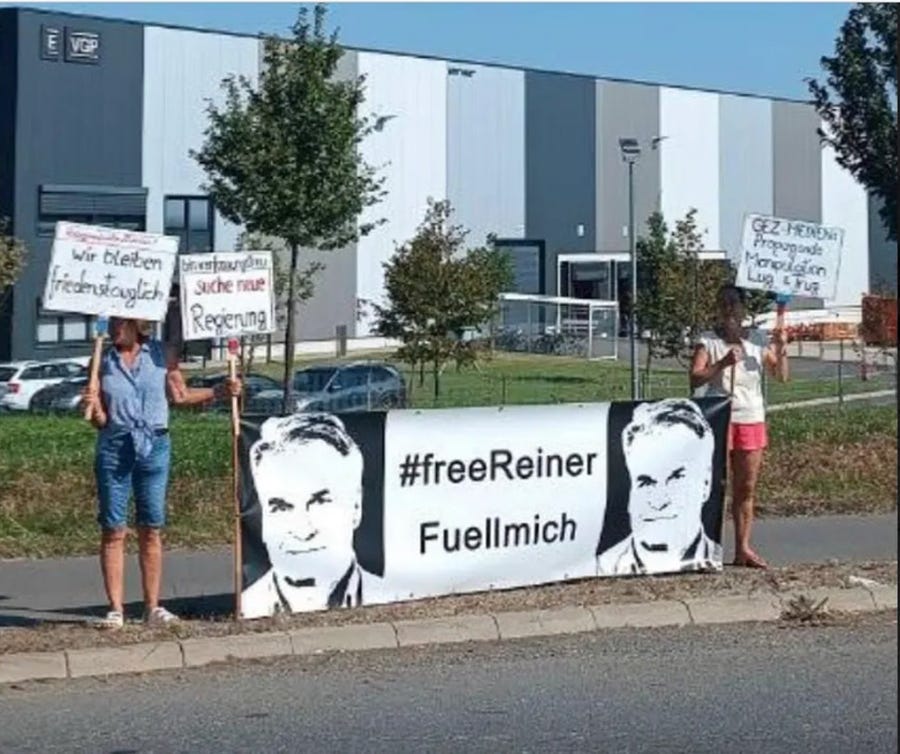
Documented events at Rosdorf Prison from May 2024 onward reveal the conditions of Fuellmich’s detention.
The Birthday Incident (May 5, 2024):
May 5, 2024, marked Fuellmich’s birthday. Supporters organized an authorized celebration outside the prison entrance. They were informed that Fuellmich would have his daily hour of outdoor activity between 1:30 and 2:30 PM. During this period, supporters played music and sang, hoping Fuellmich would hear them from the courtyard.
A voice shouting “freedom” was heard from within the prison grounds.
It was not until the following Monday that supporters learned what actually occurred. Immediately following his Friday hearing, Fuellmich was denied his outdoor activity period, moved to a different cell, and placed in solitary confinement for the entire weekend.
He was prohibited from contacting his lawyers—a violation of German law and established human rights standards for detainees. Contact with his wife was also forbidden.
Prison officials justified this punishment based on an anonymous “tip” alleging that Fuellmich was recording audio messages to be smuggled outside. His cell was searched thoroughly, including the use of dogs, seeking mobile phones or recording devices.
Notably, Fuellmich had possessed official permission from the judge to record phone messages since November 2023.
Escalating Security Measures
Beginning June 10, 2024, Fuellmich’s transport between prison and court involved armed security officers using armored vehicles. In addition to handcuffs attached to a belt, he was fitted with ankle shackles and offered a bulletproof vest—which he declined to wear.
Prison officials demanded he provide a blood sample, citing a purported tuberculosis case within the facility. Fuellmich refused any injection or medical procedure.
The defense filed a motion seeking Judge Schindler’s removal based on demonstrated bias. The motion was rejected.
Extended Solitary Confinement:
On June 11, 2024, Fuellmich was again placed in solitary confinement, where he remained through the documented reporting period.
The stated justification: Fuellmich had been providing legal advice to fellow inmates during conversations—activity prison authorities deemed intolerable.
His isolation conditions included:
No contact with other inmates
Solitary meals
One hour of daily outdoor time spent entirely alone
No gymnasium access
Telephone use restricted to periods when other inmates had returned to their cells
Procedural Irregularities in Court
On June 20, 2024, Judge Schindler and the judicial panel attempted to conclude the trial. This attempt was blocked when Fuellmich’s defense lawyers deliberately absented themselves from proceedings.
On July 10, Judge Schindler assigned Fuellmich an additional public defender, Tobias Pohl.
Defense lawyer Katja Wörmer filed a new application demanding immediate halt of proceedings and Fuellmich’s release.
On July 19, Judge Schindler ordered that future hearings be conducted in written form rather than verbally—a measure the defense characterized as violating fundamental principles of transparency in public legal proceedings.
The defense filed another motion objecting to the entire judicial panel.
Defense requests to hear witnesses named in the original indictment and subpoena, to question the prosecutor, and to examine additional witnesses were all rejected. The court’s justification: further witness testimony was “irrelevant to the clarification of the facts or of the sentence.”
Defense attorneys noted the troubling implication: the reference to the “sentence” suggested the verdict had already been determined.
The Written Proceedings Controversy
On July 31, Fuellmich filed another motion objecting to Judge Schindler and the judicial panel over the continuation of written rather than oral proceedings.
After nearly three months of delays, two defense witnesses were finally permitted to testify.
On August 6, a new request to place Viviane Fischer on the witness stand was rejected.
When the defense asked that motivations for rejected motions be disclosed, the court responded that those motivations would be revealed only at sentencing—making it impossible for the defense to address objections while the trial remained ongoing.
Defense attorneys characterized this procedure as unfair and illegal.
Key Defense Testimony
August 23, 2024 - Professor Dr. Martin Schwab:
Prof. Dr. Martin Schwab, a lawyer who had served as an advisor to the Corona Committee, was permitted to testify. His testimony confirmed:
The personal loans were backed by valid loan agreements
Reiner Fuellmich had made known from the start that funds were placed into his real estate for the sole purpose of keeping them secure
Fuellmich always intended to return the money to the Corona Committee upon sale of his home
Defense lawyer Dr. Christof Miseré stated: “On the basis of this testimony, lawyer Reiner Fuellmich should be released immediately.”
August 28, 2024:
Attorney Edgar Siemund, an expert in corporate law, joined the defense team.
In an unexpected procedural move, with the trial still underway and defense evidence yet to be fully presented, Judge Schindler instructed the prosecution to deliver its closing statement.
The prosecution requested a guilty verdict with a sentence of 3 years and 9 months detention.
August 30, 2024 - Additional Defense Witnesses:
Two additional defense witnesses provided testimony that established:
First Witness:
Both Viviane Fischer and Reiner Fuellmich wanted to secure donation funds
Viviane Fischer knew the group of accusers planned to sue both herself and Fuellmich
This knowledge motivated Fischer’s rapid loan repayment three weeks before the anticipated lawsuit
Fischer knew Fuellmich’s money would be invested in his real estate
Fischer never doubted that Fuellmich would repay the €700,000
Second Witness (a lawyer who worked at Fuellmich’s firm for many years):
Fuellmich had previously intended to sell his Göttingen property
Sale proceeds were designated for loan repayment
Fuellmich intended to continue working at his law firm after the property sale
This testimony directly contradicted insinuations that Fuellmich planned to sell his assets and flee to Mexico with embezzled funds.
The Death of Fuellmich’s Mother
On September 2, 2024, Reiner Fuellmich’s mother passed away.
Fuellmich had been informed previously that his elderly mother was ill and bedridden, with her death considered imminent. He submitted a written request to the prison seeking permission to visit her bedside in Bremen for a final meeting.
The prison was willing to grant this request—with conditions. Fuellmich would be required to visit his dying mother in handcuffs and shackles, accompanied by armed penitentiary guards.
Fuellmich declined these terms. He would not subject his mother to the anguish of seeing her son in chains during their final moments together. This decision meant he would never see his mother again.
Whether Fuellmich would be permitted to attend her funeral services remained undetermined at the time of reporting.
The defense filed a motion to suspend the September 3 hearing. The court postponed proceedings to September 6—granting Fuellmich three days for bereavement.
Summary of Documented Irregularities
The factual record establishes the following:
Irregular Removal from Mexico: Fuellmich’s transport from Mexico was presented as legal extradition but occurred without any international arrest warrant or formal extradition process in place.
Excessive Pre-Trial Detention: German law establishes a six-month maximum for pre-trial detention. Fuellmich had been held for nearly eleven months.
Extended Solitary Confinement: Since June 11, 2024, Fuellmich has been held in isolation for charges equivalent to a misdemeanor.
Suppression of Defense Motions: Nearly all defense motions were rejected, with justifications withheld until sentencing—preventing the defense from addressing objections during active proceedings.
Written Proceedings: The court’s order conducting proceedings in written rather than verbal form violated principles of transparency in public trials and the defendant’s right to be heard.
Rejected Judicial Objections: All motions objecting to Judge Schindler and the judicial panel were denied.
Key Witness Not Called: Marcel Templin, the individual who received the proceeds from Fuellmich’s property sale and one of his primary accusers, was never required to testify.
Evidence of State Targeting: A dossier allegedly from German intelligence services documented plans to stop Fuellmich “at all costs” through infiltration of his associates, with the goal of preventing his future political involvement.
Recent Developments and Potential Intervention
At the time of this reporting, Fuellmich’s prospects for release had reportedly improved due to interest expressed by Robert F. Kennedy Jr. and Tulsi Gabbard in intervening on his behalf. The outcome of any such intervention remained to be determined.
The Broader Context
Regardless of one’s assessment of Fuellmich’s pandemic-related conclusions, the documented treatment he has received raises substantial questions about due process, judicial independence, and the treatment of political dissidents in Western democracies.
The facts of the case present a sequence of events: a prominent critic of government pandemic policies is accused of financial crimes by former associates who themselves benefited from the very financial arrangements in question. The accused is removed from a foreign country without proper extradition procedures. He is held beyond legal detention limits in a maximum-security facility. Standard procedural protections are systematically denied. A judge announces his intent to convict before hearing defense evidence. Key accusers are shielded from cross-examination.
The Corona Investigative Committee interviewed hundreds of experts who challenged mainstream pandemic narratives. Whether those challenges had merit is a separate question from whether the individual who organized them deserves a fair trial.
What the documented record demonstrates is that Reiner Fuellmich has not received one.