

The Fathers envisioned the United States as a land of freedom, and in order to avoid the tyranny that would result from a government abusing its authority, they contained the government’s power. Should that power become destructive of the rights of its people, it is the duty of the people to abolish it.
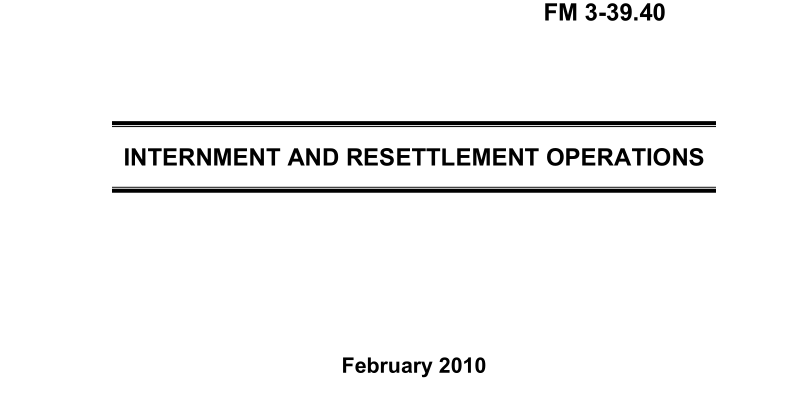
There’s a document sitting in plain sight that every American should read. It’s called Field Manual 3-39.40, “Internment and Resettlement Operations.” The Army published it. The government doesn’t hide it. And it describes, in clinical detail, how to detain, process, and control American citizens on American soil during military operations.
This isn’t speculation. This isn’t conspiracy theory. This is official doctrine, written by our own military, outlining procedures for what they euphemistically call “civil support operations.” The manual covers everything from setting up detention facilities to psychological operations against detained populations. It discusses how to handle U.S. military prisoners alongside enemy combatants and civilian internees. And buried in that clinical language is something that should make every constitutional conservative’s blood run cold.
The Scope of the Problem
FM 3-39.40 represents a fundamental shift in military thinking. The manual explicitly moves away from traditional enemy prisoner of war operations toward what it calls “broader and more inclusive requirements of detainee operations.” That’s bureaucratic speak for casting a wider net. The document addresses internment and resettlement across “the spectrum of conflict,” including domestic operations on American soil.
The manual identifies multiple categories of people who can be detained: enemy prisoners of war, civilian internees, retained personnel, enemy combatants, and dislocated civilians. Notice what’s missing from that list? Any meaningful distinction between foreign enemies and American citizens. The procedures apply to whoever the military deems appropriate for detention.
The terminology alone reveals the scope of planning. Detainee Collection Points operate at the brigade level. Detainee Holding Areas function at the division level. Theater Internment Facilities and Strategic Internment Facilities handle long-term detention. This isn’t emergency planning for foreign battlefields. This is a comprehensive system designed to process large numbers of people through multiple levels of confinement.
Guard against the impostures of pretended patriotism.
George Washington
Constitutional Concerns
The Posse Comitatus Act of 1878 generally prohibits federal military personnel from acting in a law enforcement capacity within the United States. But FM 3-39.40 operates in the gray area of “civil support operations.” The manual carefully avoids direct law enforcement language while describing activities that look remarkably similar to police work.
The document discusses “civil support operations” and cooperation with “civil agencies” and “host nations.” When the host nation is the United States and the civil agencies are domestic, that language takes on darker implications. The manual describes military police conducting operations “ranging from major combat operations to humanitarian-assistance missions.” That’s a broad spectrum that could justify military detention operations during civil unrest, natural disasters, or declared emergencies.
The Fourth Amendment protects against unreasonable searches and seizures. The Fifth Amendment guarantees due process before deprivation of life, liberty, or property. The Sixth Amendment ensures the right to counsel and speedy trial. FM 3-39.40 describes detention and processing procedures that operate outside these constitutional protections under the authority of military commanders, not civilian courts.
The Intelligence Integration
Chapter 4 of FM 3-39.40 focuses heavily on integrating intelligence and interrogation operations with detention procedures. The manual emphasizes the “critical importance of military police and military intelligence interaction at all echelons.” This isn’t passive detention. This is active intelligence gathering from detained populations.
The document describes police intelligence operations as integral to internment and resettlement. Military police units are specifically trained to extract information from detained persons through interrogation procedures. The manual addresses the use of psychological operations, biometric collection, and document exploitation as standard components of detention operations.
This intelligence focus raises serious questions about the purpose of detention operations. Are these facilities designed to remove threats from the battlefield, or are they designed to gather information about domestic opposition? The manual’s emphasis on rehabilitation programs and psychological operations suggests long-term detention with ideological modification as an objective.
Facility Infrastructure and Sustainment
The manual devotes extensive attention to the physical infrastructure required for internment operations. Chapter 6 discusses facility considerations at all levels, from temporary holding areas to permanent strategic facilities. Appendix J provides detailed guidance for design and construction of internment facilities, including sustainment requirements for long-term operations.
These aren’t temporary holding facilities for battlefield prisoners. The manual describes comprehensive infrastructure capable of handling large populations for extended periods. It addresses everything from sanitation systems to recreational facilities. It discusses contractor support for facility operations, suggesting a privatized component to detention operations.
The sustainment requirements alone indicate planning for massive operations. The manual addresses food service, medical support, legal services, and administrative systems capable of processing thousands of individuals. This level of planning doesn’t happen for limited, short-term contingencies. This is preparation for large-scale, extended detention operations.
The Human Element
Perhaps most disturbing is the manual’s clinical approach to human detention. Detainees become “populations” to be “processed” through “facilities” using “procedures.” The language dehumanizes the people being held while creating psychological distance for the personnel operating the system.
The manual addresses what it calls “rehabilitative processes” for both military prisoners and detainees. Chapter 8 describes “effective measures that ensure a successful return to society.” That language implies that detained persons require ideological correction before release. It suggests that detention serves not just security purposes but social engineering objectives.
Appendix K specifically addresses psychological operations in support of internment and resettlement operations. PSYOP against detained populations crosses the line from security detention into thought control. The manual describes techniques designed to modify beliefs, attitudes, and behaviors of people in military custody.
Rules of Engagement
Appendix H provides guidance for “rules for use of force” and “implementing nonlethal weapons and riot control measures.” The manual authorizes military personnel to use force against detained populations, including crowd control techniques and less-lethal weapons systems.
The rules of engagement section reveals expectations of resistance from detained populations. Military police are trained to handle riots, escape attempts, and organized resistance within detention facilities. The manual describes procedures for isolating troublemakers, controlling communications, and maintaining discipline through force.
This isn’t protective custody. This isn’t humanitarian assistance. This is coercive detention with military personnel authorized to use violence against American citizens who resist confinement.
The spirit of resistance to government is so valuable on certain occasions that I wish it to be always kept alive.
Thomas Jefferson
Legal Framework
The manual repeatedly references Geneva Conventions, international humanitarian law, and Department of Defense policies. But it carefully avoids discussing constitutional rights or civilian legal protections that would apply to American citizens detained on American soil.
Appendix D describes protections under Geneva Conventions for different categories of detainees. But Geneva Conventions apply to international conflicts, not domestic operations. The manual creates legal confusion by applying international law frameworks to situations that should fall under domestic constitutional protections.
The document discusses tribunals for determining individual status under international law. But American citizens shouldn’t need tribunals to determine their legal status. They have constitutional rights that don’t require military determination or international legal framework application.
Training and Preparation
FM 3-39.40 isn’t theoretical. The manual describes comprehensive training programs for military police units specializing in internment and resettlement operations. Appendix N addresses foreign confinement officer training programs, suggesting international cooperation in detention techniques.
Military police units receive specific equipment and training for internment operations. They practice detention procedures, facility management, and population control techniques. This training prepares them to implement the manual’s procedures against real people in real situations.
The level of preparation suggests expectation of use. Military doctrine doesn’t develop comprehensive training programs and specialized equipment for theoretical contingencies. The military is preparing to implement these procedures because leadership believes they will be necessary.
The Bigger Picture
FM 3-39.40 exists within a broader framework of federal emergency powers that have expanded dramatically since 9/11. The National Defense Authorization Act, various presidential directives, and Department of Homeland Security policies create legal justifications for military involvement in domestic affairs during declared emergencies.
The manual provides operational procedures for powers that federal authorities have already claimed. During declared emergencies, normal constitutional protections can be suspended, civilian courts can be bypassed, and military authority can supersede civilian governance. FM 3-39.40 describes how military forces would detain and control populations during such circumstances.
This represents a fundamental transformation of American governance from constitutional republic to administrative state with military enforcement capabilities. The manual documents preparation for military control of civilian populations under emergency authority that bypasses constitutional limitations.
It is the first responsibility of every citizen to question authority.
Benjamin Franklin
What This Means
FM 3-39.40 reveals government preparation for military detention of American citizens on American soil during civil support operations. The manual describes comprehensive procedures for mass detention, intelligence gathering, psychological manipulation, and long-term confinement of civilian populations.
This isn’t preparation for foreign wars or international conflicts. This is domestic contingency planning for military control of American citizens. The manual’s language carefully avoids constitutional terminology while describing procedures that violate fundamental rights protected by the Constitution.
The existence of this doctrine represents a clear threat to constitutional governance and individual liberty. Military forces have detailed procedures for detaining, processing, and controlling civilian populations during emergencies declared by federal authorities. These procedures operate outside normal legal protections and constitutional limitations.
The Choice Ahead
Every American faces a choice. We can pretend this manual doesn’t exist, doesn’t matter, or doesn’t apply to us. We can trust that good people in government would never implement these procedures against law-abiding citizens. We can hope that constitutional protections will somehow override military doctrine during emergencies.
Or we can recognize FM 3-39.40 for what it is: a blueprint for military control of civilian populations. We can understand that government has prepared comprehensive procedures for mass detention of American citizens. We can acknowledge that normal legal protections disappear during declared emergencies when military authority supersedes civilian governance.
The manual exists. The training happens. The equipment is procured. The legal frameworks are established. The only question remaining is whether Americans will defend their constitutional rights before these procedures are implemented, or discover their true meaning after the detention facilities open.
That choice belongs to us. But the window for making it is closing faster than most people realize.
The tree of liberty must be refreshed from time to time with the blood of patriots and tyrants.
Thomas Jefferson