


“A wise and frugal Government, which shall restrain men from injuring one another, shall leave them otherwise free to regulate their own pursuits of industry and improvement, and shall not take from the mouth of labor the bread it has earned. This is the sum of good government.”
Thomas Jefferson, First Inaugural Address, March 4, 1801
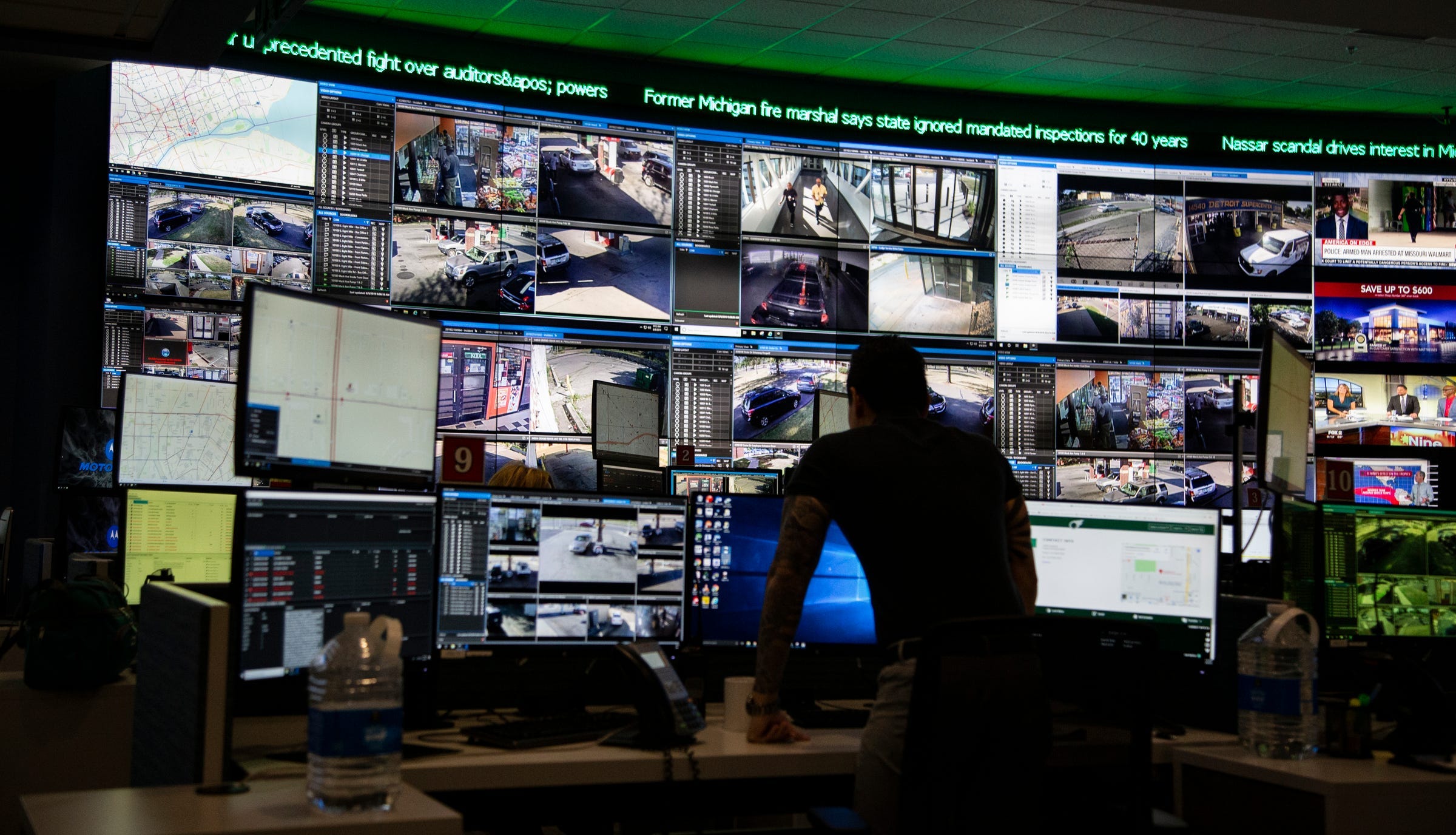
Predictive policing has been marketed as a technological breakthrough — a sophisticated blend of data science and machine learning that promises more efficient, objective law enforcement. The reality is different. What began as experimental software in a handful of departments has evolved into a nationwide surveillance infrastructure that operates in the shadows, guided by corporate algorithms rather than constitutional oversight.
This system represents the most significant privatization of law enforcement intelligence in American history. It replaces community accountability with machine inference, conceals bias behind proprietary code, and expands state surveillance under the banner of innovation. Court filings, FOIA documents, and whistleblower reports reveal an apparatus deliberately designed to avoid scrutiny while fundamentally altering how police operate.
Origins and Expansion
The story begins in Santa Cruz, California, where the police department piloted PredPol in the early 2010s. This algorithmic forecasting tool claimed to predict crime locations within 500-by-500-foot grids. Initial media coverage praised the technology as revolutionary. The reality proved more complex.
As documented in NYU’s Annual Survey of American Law, PredPol relied on historical arrest data riddled with systemic bias. The algorithm created feedback loops where past enforcement patterns determined future patrol assignments. Most critically, vendor claims of “trade secrets” prevented any meaningful public audit of the system’s accuracy or fairness.
By 2018, over 60 police departments had adopted predictive analytics. Federal agencies followed suit. Internal DOJ documents obtained through EPIC v. DOJ litigation show risk assessment algorithms spreading throughout the criminal justice system — from parole decisions to sentencing guidelines. All operated using proprietary code hidden from defendants whose lives these systems affected.
The current predictive policing ecosystem includes multiple layers. Private platforms like PredPol, Azavea, Palantir, Cognyte, and Flock Safety sell AI-driven law enforcement dashboards to agencies nationwide. “Smart city” networks integrate cameras, license plate readers, acoustic sensors, and social media monitoring into centralized fusion centers. Federal coordination through DHS and DOJ relies on over 20 distinct surveillance technologies operating in public spaces without warrant requirements, according to a 2024 GAO report.
The Evidence Trail
New York’s Hidden Algorithm
The Brennan Center for Justice filed extensive Freedom of Information Law suits against the NYPD between 2016 and 2019. The resulting litigation, Brennan Center v. NYPD, forced the release of over 2,600 pages of predictive policing documents. These files revealed systematic efforts to avoid accountability.
The NYPD tested commercial tools from PredPol, Azavea, and Keystats before developing its own in-house algorithm. Department officials deliberately refused to archive algorithmic outputs or maintain audit logs. Internal emails showed coordinated use of “trade secret” and “public safety” exemptions to block disclosure of even basic operational data.
When a state court finally ordered partial disclosure, massive redactions prevented independent analysis. As reported by The Daily Beast in 2024, the released documents were so heavily censored that outside experts could not evaluate accuracy or bias. Attorney Rachel Levinson-Waldman observed, “The only way to test for bias is to have an open system — and NYPD’s fight to withhold data should raise red flags for anyone who cares about evidence-based policing.”
Chicago’s Mass Surveillance
Chicago’s experience demonstrates how predictive systems operate at scale. The city’s Office of Inspector General exposed the Strategic Subject List (SSL) and Crime and Victimization Risk Model (CVRM) in a 2020 advisory report. These programs secretly assigned “violence risk” scores to nearly 400,000 residents — predominantly Black men — based solely on arrests and associations.
The OIG findings were damning. Over 300,000 people received risk scores without any criminal conviction. Officers used these scores to justify increased surveillance and enforcement contacts with flagged individuals. Despite documented unreliability, risk scores remained in police databases long after the programs were officially discontinued.
The system didn’t predict crime — it institutionalized societal profiling with mathematical camouflage.
Federal Integration
By 2024, federal agencies had embedded AI analytics throughout domestic law enforcement. The GAO-25-107302 report confirmed DHS reliance on facial recognition, automated license plate readers, and “analytic software” incorporating artificial intelligence. Yet the department lacked system-wide policies to assess algorithmic bias or protect personally identifiable information.
The GAO explicitly warned that “by developing policies and procedures to assess and address the risk of bias posed by DHS law enforcement agencies’ use of detection, observation, and monitoring technologies, DHS could help ensure these technologies are not infringing on civil rights.” The report found no evidence such procedures existed.
How the System Works
Predictive policing functions as more than flawed technology — it represents a structural shift in how state power operates. Understanding this system requires examining its deeper mechanisms.
Privatization of Accountability: Vendors use intellectual property law to shield algorithmic decision-making from public oversight. When police departments adopt these tools, corporate trade secrets become more powerful than constitutional transparency requirements.
Biased Data as Foundation: Predictive algorithms depend on historical policing data — arrest records, stop-and-frisk reports, incident files — all reflecting decades of discriminatory enforcement. Rather than correcting systemic bias, these systems encode it in software.
Institutional Protection: Police departments embrace predictive tools because they transfer liability. When algorithms produce discriminatory outcomes, blame shifts to software vendors rather than department leadership. This occurs despite police control over data inputs and operational implementation.
Intelligence Fusion: Predictive policing increasingly connects with federal “data fusion centers” and DHS surveillance networks. These systems create interfaces between local enforcement and national intelligence operations, blurring traditional boundaries between community policing and domestic surveillance.
Erosion of Constitutional Standards: Traditional Fourth Amendment protections require individualized suspicion for searches and seizures. Predictive analytics undermine this principle by creating zones of “algorithmic suspicion” where police act on machine-estimated probabilities rather than specific evidence.
The Defense and Its Flaws
Supporters — typically police officials, data scientists, and vendor representatives — argue these systems provide neutral, efficient analysis that removes human bias through standardized methodology. This defense collapses under examination.
Historical data ensures “bias in, bias out” outcomes. As statistician Kristian Lum has demonstrated, algorithms can only reproduce existing enforcement patterns rather than measure objective crime rates. Increased patrols in “predicted hotspots” generate more arrests in those areas, confirming the model’s expectations regardless of actual crime distribution. This feedback loop becomes self-perpetuating.
Vendors and departments offer occasional white papers or academic presentations as transparency measures. These publications omit crucial details: source data, algorithmic weights, validation methodologies, and accuracy measurements. As Levinson-Waldman noted, this represents “a deliberate choice to avoid scrutiny.”
Winners and Losers
Private Technology Companies: Firms like Palantir, C3 AI, Cognyte, and Flock Safety profit from government contracts with minimal oversight. Executive revolving doors between government and private sectors create ongoing financial incentives to expand these programs.
Law Enforcement Bureaucracies: Predictive analytics provide administrative cover. When questioned about discriminatory practices, departments point to “objective” algorithmic analysis as justification for enforcement decisions.
Federal Surveillance Infrastructure: AI-powered data fusion enables intelligence agencies to apply preemptive surveillance logic domestically, monitoring potential threats before criminal activity occurs.
Civil Liberties: Warrantless surveillance and predictive risk scoring circumvent due process protections, creating a presumption of suspicion based on algorithmic assessment rather than individual behavior.
Minority Communities: Biased training data ensures continued over-policing of historically targeted populations, with mathematical justification replacing explicit discrimination.
Public Trust: Secretive deployment of these systems transforms community policing into algorithmic occupation, operating without meaningful democratic oversight or accountability.
The Accountability Gap
FOIA litigation reveals the most troubling aspect of predictive policing: deliberate design to avoid accountability. Departments refuse to maintain output records, heavily redact internal communications, and outsource critical decisions to private entities claiming trade secret protection.
This represents governance by black box — algorithmic decision-making shielded from the democratic oversight that constitutional policing requires. No algorithm should guide law enforcement action unless its inputs, methodology, and results are subject to public audit.
Transparency advocates have established a clear standard: any algorithmic system used in policing must be open to independent verification. Source code, training data, accuracy measurements, and bias assessments must be public record. Until this happens, predictive policing remains an unconstitutional experiment operating without legitimate authority.
Systemic Questions
Current evidence confirms widespread adoption of predictive systems across federal, state, and local agencies. Vendors systematically invoke trade secret protections to block transparency. Court records document institutional resistance to disclosure. Historical arrest data drives most algorithmic training.
Strong indicators suggest feedback loops entrench existing bias while federal integration creates mass surveillance infrastructure. However, critical questions remain unanswered.
The extent of undisclosed federal contracts linking predictive tools with social media platforms or national intelligence databases is unknown. The number of departments using unreleased vendor products protected by nondisclosure agreements cannot be determined. Most importantly, no reliable data exists on how often algorithmic predictions correspond to actual crimes versus police activity bias.
These gaps are not accidental. They reflect systematic efforts to deploy powerful surveillance technology without democratic deliberation or constitutional oversight.
Conclusion
Predictive policing represents the software infrastructure of digital authoritarianism. It transforms social inequality into algorithmic logic, then shields that logic behind corporate secrecy. This system operates without meaningful public consent, legislative oversight, or judicial review.
The evidence from FOIA litigation demonstrates these programs are designed to be unaccountable. Until predictive policing operates under the same transparency requirements as other government functions, it remains what it has always been: an algorithmic coup executed under the false promise of public safety.
Constitutional policing requires democratic accountability. Predictive algorithms operating in secret cannot meet that standard. The choice is clear — open these systems to public scrutiny or acknowledge they have no place in American law enforcement.