

Introduction
In the 1980s, the small town of Mena, Arkansas, became a focal point in one of the most controversial episodes of U.S. foreign policy: the Iran-Contra affair. At the center of this operation was the Mena Intermountain Municipal Airport, which served as a hub for aircraft refurbishment, arms trafficking, and drug smuggling linked to the Reagan administration’s covert support for the Nicaraguan Contras. While the Iran-Contra scandal has been extensively documented, the role of Mena—and its alleged connections to then-Governor Bill Clinton—remains a subject of debate, obscured by classified records, contradictory testimonies, and institutional obfuscation. This account synthesizes declassified documents, investigative reports, and sworn testimonies to present a factual overview of the Mena operation, its key figures, and the unresolved questions surrounding it.
The Mena Operation: Context and Structure
Background: The Contra War and Covert Logistics
Following the 1979 Sandinista revolution in Nicaragua, the Reagan administration sought to undermine the leftist government through covert support for the Contras, a rebel group composed of former National Guard members and anti-communist insurgents. In 1982, Congress passed the Boland Amendment, prohibiting direct U.S. military aid to the Contras. In response, the National Security Council (NSC), led by Lieutenant Colonel Oliver North, established a clandestine network to supply the Contras with weapons, funded through third-party donations and illicit revenue streams, including arms sales to Iran (the “Iran” component of Iran-Contra) and drug trafficking (the “Contra” component).
Mena, Arkansas, emerged as a logistical node in this network due to its remote location, minimal air traffic, and proximity to Central America. The airport’s primary tenant, Southern Air Transport (SAT), a company with historical ties to the CIA, provided aircraft maintenance and operational cover for flights shuttling between the U.S., Central America, and Colombia. SAT’s involvement in covert operations dated back to the Vietnam War, when it served as a proprietary for Air America, the CIA’s airline subsidiary. By the 1980s, SAT’s fleet included C-123K cargo planes, helicopters, and Learjets—aircraft well-suited for both military resupply and narcotics transport.
Barry Seal: Pilot, Informant, and Contractor
Barry Seal, a former TWA pilot with a history of smuggling and intelligence work, became the linchpin of the Mena operation. Born in Baton Rouge, Louisiana, Seal began flying for the U.S. Army Special Forces in the 1960s before transitioning to civilian aviation. His first known encounter with the CIA occurred in 1972, when he was arrested for attempting to smuggle C-4 explosives into Mexico for anti-Castro Cubans. The charges were dropped after the CIA intervened, citing national security concerns.
By the late 1970s, Seal had established himself as a major trafficker for the Medellín Cartel, flying cocaine from Colombia to the southeastern U.S. His operations expanded in 1982 when he relocated to Mena, where he partnered with SAT to retrofit aircraft for dual use: transporting weapons to Contra camps in Honduras and Costa Rica, and returning with cocaine shipments for distribution in the U.S. According to Arkansas State Police investigators, Seal’s enterprise generated between 3billionand3billionand5 billion in revenue from 1979 to 1986, with daily cash deposits of $50,000 in Bahamian banks.
Seal’s relationship with U.S. agencies deepened in 1984, following his indictment for smuggling Quaaludes into Florida. Facing a decade in prison, he approached the Drug Enforcement Administration (DEA) and Vice President George H.W. Bush’s drug task force, offering to expose Sandinista involvement in drug trafficking. The DEA, skeptical of his motives, initially rejected his proposal. However, after Seal met with Bush staffer Jim Howell and DEA agent Kenneth Kennedy, he was accepted as a confidential informant (DEA ID SGI-84-0028) with a $800,000 annual stipend and deferred sentencing.
The Nicaragua Sting: Fabricating Evidence
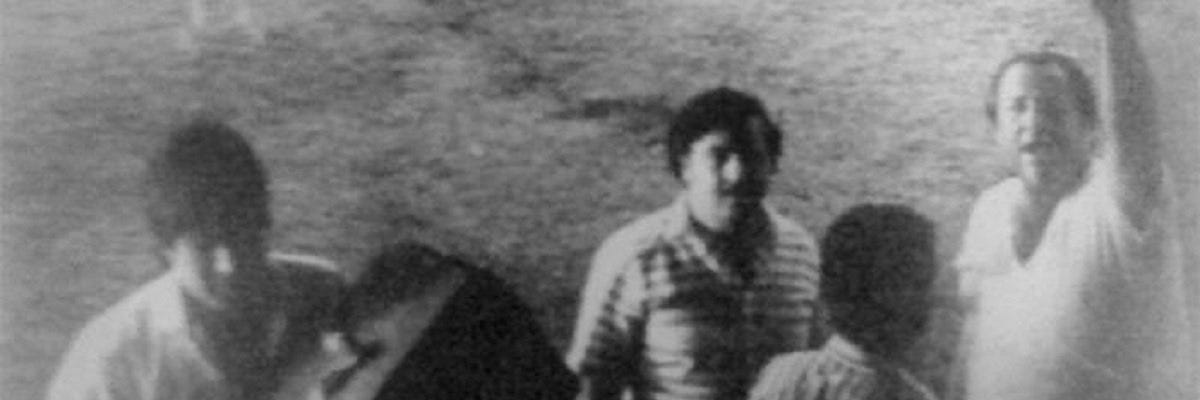
Seal’s most significant contribution to the Iran-Contra narrative was a staged operation to implicate the Sandinistas in drug trafficking. In June 1984, he flew a C-123K cargo plane—equipped with hidden cameras installed by CIA technicians—to Los Brasiles airstrip near Managua, Nicaragua. Accompanied by co-pilot Emile Camp and mechanic Peter Everson, Seal claimed to have loaded 1,200 pounds of cocaine onto the plane under the supervision of Frederico Vaughn, a Nicaraguan official allegedly linked to Interior Minister Tomás Borge. The grainy photographs taken during this flight were later presented by President Reagan in a March 1986 televised address as proof of Sandinista drug complicity.
However, subsequent investigations revealed inconsistencies in Seal’s account. The Los Brasiles airstrip was primarily used for agricultural purposes, not military operations. Vaughn’s identity remains disputed; some sources suggest he was a CIA asset, given that his purported Managua phone number matched a line used by U.S. intelligence from 1981 to 1986. Moreover, DEA agents Ernst Jacobsen and Robert Joura, who managed Seal’s informant activities, acknowledged that the Nicaragua mission was designed to generate propaganda for the Contra aid debate, not to gather actionable intelligence. As DEA official Ron Caffery noted, Oliver North and CIA operative Duane Clarridge were already familiar with Seal’s photos before their official briefing, indicating prior coordination between the NSC and CIA.
Institutional Responses and Obstruction
The CIA’s Internal Memo: Managing the Fallout
A declassified CIA memo dated August 1995, addressed to Acting Director of Central Intelligence (DCI), reveals the agency’s concern over media coverage of Mena. The memo references an article in The American Spectator alleging that a CIA front company used Mena as a staging point for Contra arms shipments and narcotics trafficking, with payments funneled to Clinton associates L.D. Brown and Dan Lasater. The memo states:
“At present, although there is no reason to believe any of the allegations, we are declining to comment publicly, pending exhaustive searches of DO files… we hope to have a crisp statement that distances us from the allegations.”
This cautious approach reflected the CIA’s broader strategy of non-engagement. Despite mounting evidence of its involvement including contracts with SAT and oversight of Seal’s operations; the agency maintained that Mena was a “rogue DEA operation” until 1996, when Inspector General Frederick Hitz’s report acknowledged “authorized and legal activities” at the airport, including “routine aviation-related services” and a “joint training operation with another federal agency” (likely the NSC).
Congressional Investigations and Suppressed Evidence
Multiple congressional inquiries examined Mena’s role in Iran-Contra, but none resulted in criminal indictments. In 1989, IRS agent Bill Duncan and Arkansas State Police investigator Russell Welch compiled a 3,000-page file documenting money laundering, drug trafficking, and arms smuggling linked to Mena. Duncan prepared 35 indictments for the U.S. Attorney’s Office, but they were never filed. By 1988, the Arkansas State Police had begun shredding Mena-related documents, including records connecting Oliver North to Seal and Terry Reed, a former Air America pilot who trained Contras at a nearby facility in Nella, Arkansas.
Duncan’s testimony before the House Judiciary Committee in 1989 highlighted systemic obstruction. He alleged that U.S. Attorney General Ed Meese received a payoff from Mena suspects, though he was instructed by IRS counsel to deny this claim. Shortly after refusing to comply, Duncan was transferred to the House Judiciary Subcommittee on Crime, where his investigation was stymied by bureaucratic delays. Similarly, Welch was removed from the case by Arkansas superiors and survived a suspected assassination attempt in 1991.
Alleged Connections to Bill Clinton
L.D. Brown’s Testimony
Arkansas State Trooper L.D. Brown, a member of Clinton’s security detail from 1983 to 1985, provided the most direct link between Clinton and Mena. In a 1995 deposition, Brown testified that Clinton encouraged him to apply for a CIA position in 1984, assisting with an essay titled “Marxist Influence in Central America” and suggesting he study Russian. Brown claimed he was contacted by the CIA in October 1984 and instructed to meet Barry Seal at Cajun’s Wharf in Little Rock.
According to Brown, he accompanied Seal on three flights from Mena to Honduras between October and December 1984. On these missions, Seal’s C-123K transported M-16 rifles to Contra camps and returned with duffel bags containing cocaine. After his second flight, Brown confronted Clinton about the operation. Brown recalled Clinton responding, “That’s Lasater’s deal,” referring to Dan Lasater, a prominent Clinton donor convicted of cocaine distribution in 1986. Brown also stated that Clinton knew of his involvement, greeting him after his first flight with, “You having any fun yet?”
Dan Lasater and the Arkansas Development Finance Authority
Dan Lasater’s role in the Mena narrative extends beyond his alleged drug trafficking. As a bond dealer and close Clinton associate, Lasater contributed to Clinton’s gubernatorial campaigns and provided access to private aircraft. His firm, Lasater & Co., was censured in 1982 for securities violations and later implicated in money laundering through the Arkansas Development Finance Authority (ADFA), a state agency created by Clinton in 1985 to issue tax-exempt bonds for industrial projects.
IRS agent Bill Duncan theorized that ADFA could be exploited to launder drug profits: a company would receive a loan via ADFA bonds, repay it with illicit funds, and effectively “clean” the money through legitimate financial channels. POM Inc., a Russellville-based parking meter manufacturer and ADFA’s first loan recipient ($2.75 million in 1985), was alleged by computer expert Michael Riconosciuto to have produced drop tanks for C-130 planes and chemical munitions for the Contras. POM’s ties to Clinton’s inner circle—its founder was the father-in-law of Clinton aide Webster Hubbell fueled speculation about ADFA’s misuse, though no direct evidence of Clinton’s involvement has been substantiated.
Official Denials and Unanswered Questions
Bill Clinton consistently denied knowledge of Mena’s illicit activities. At a 1994 press conference, he stated, “The state really had next to nothing to do with it. We had nothing—zero—to do with it.” However, records show that Clinton was aware of investigations into Mena as early as 1988, when Deputy Prosecutor Charles Black requested state funding to probe “illegal activities” at the airport. Clinton’s offer of $25,000 was reportedly rejected by prosecutor Joe Hardagree, though Hardagree later denied receiving the offer.
Additional testimonies complicate Clinton’s denials. Trooper Bobby Walker claimed to have accompanied Clinton to Mena in the mid-1980s, where they observed a “huge dark-green military plane.” Larry Patterson, another trooper, stated in a 1994 deposition that he overheard Clinton discussing “large quantities of drugs” and “guns” at Mena. Mechanic John Bender reported seeing Clinton at the airport three times in 1985, accompanied by security chief Buddy Young. Young, who later joined FEMA, allegedly inquired in 1992 whether Clinton’s name had surfaced in Mena investigations—a question that suggests prior awareness.
Media Suppression and Historical Legacy
The Role of Major News Outlets
Despite compelling evidence, the Mena story received limited mainstream coverage. In April 1992, Time magazine published a dismissive article titled “Anatomy of a Smear,” portraying allegations as baseless conspiracy theories. Investigative reporters Roger Morris and Sally Denton faced similar resistance: their 1995 exposé was accepted by The Washington Post’s Outlook section but killed by managing editor Robert Kaiser after leaks to the White House and CIA. The piece eventually appeared in Penthouse, reaching a fraction of its potential audience.
This media reluctance stemmed partly from sourcing challenges. As a Los Angeles Times executive admitted, “Nobody in authority would confirm it.” The CIA and DEA maintained strict silence, while key witnesses like Seal (assassinated in 1986) and Camp (killed in a 1985 plane crash) were unavailable for corroboration.
Conclusion: Unresolved Threads
The Mena operation exemplifies the blurred lines between covert warfare, criminal enterprise, and institutional accountability. Declassified documents confirm the CIA’s presence at the airport and Seal’s dual role as trafficker and informant. However, the extent of Clinton’s involvement remains unproven, relying on circumstantial evidence and contested testimonies. What is clear is that Mena served as a critical node in the Iran-Contra network, facilitating arms shipments, drug trafficking, and money laundering under the guise of legitimate aviation services. The suppression of investigations and media coverage underscores the challenges of scrutinizing power—especially when national security narratives collide with criminal impunity.
As historian Alan A. Block noted, “Mena was not an anomaly but a symptom of a system where covert action trumps legal accountability.” Until classified records are fully released and surviving participants provide testimony, the full scope of Mena’s legacy will remain obscured by the fog of secrecy.