


Scope Overview
This investigation targets credible, document-forward sources on U.S. surveillance and monitoring across intelligence, military-adjacent, federal/state/local law enforcement, and corporate data ecosystems. The emphasis is on what can be proven from primary artifacts: court opinions, inspector general audits, FOIA releases, procurement records, and regulator enforcement packages plus whistleblower document sets when the underlying files are available.
Primary U.S. government targets (high-frequency in the sources below): United States federal intelligence and law enforcement actors such as National Security Agency, Federal Bureau of Investigation, Department of Homeland Security (components repeatedly implicated include U.S. Customs and Border Protection, U.S. Immigration and Customs Enforcement, United States Secret Service, and Transportation Security Administration), plus oversight and disclosure nodes like Privacy and Civil Liberties Oversight Board and Office of the Director of National Intelligence. Key judicial choke points include Foreign Intelligence Surveillance Court and Supreme Court of the United States.
Primary private-sector/contractor targets (recurring vendors and data intermediaries): Palantir Technologies, Babel Street, Venntel (subsidiary relationship and enforcement actions tie it to Gravy Analytics), Dataminr, IDEMIA National Security Solutions, NEC Corporation of America, Ring LLC and Axon Enterprise (RTCC tooling), as well as major ad-tech and platform data dependencies reflected in SEC filings for Meta Platforms, Alphabet, Amazon, and Microsoft.
Timeframe: heavy focus on the post‑2013 transparency wave triggered by leaked FISA materials and bulk collection disclosures, with continuity threads into 2024–2026 (commercial data purchases, RTB/ad-ID sourcing, AI monitoring procurement, and updated statutory oversight for Section 702).
Source Mapping
Official narrative (what agencies say in “transparency” frameworks) tends to appear as PIAs, SORNs, annual compliance reports, and carefully scoped watchdog summaries that often concede problems in the language of “noncompliance incidents,” “policy gaps,” or “procedural deficiencies.” These documents are still valuable because they establish admissions, program boundaries, and data flows—often more clearly than PR statements.
Leaked/alternative narrative (what wasn’t meant to be public) is best handled only when the underlying documents are available for inspection (slides, memos, court orders). The key is not “who reported it,” but whether the artifact can be traced, compared, and cross-referenced against later official releases or audits. Snowden-era NSA artifacts and the Verizon FISC order are prime examples: the documents exist, and later official reporting reacts to or contextualizes them.
International parallels matter only when they intersect U.S. operations or U.S. companies. The most relevant foreign material here is not generic “surveillance abroad,” but legal and regulatory decisions explicitly citing U.S. surveillance regimes as a driver of cross-border data transfer restrictions (e.g., Schrems II) and “Five Eyes” style bulk interception litigation that maps onto U.S. collection models.


Primary Sources (U.S.)
Source name: PCLOB — “Report on the Surveillance Program Operated Pursuant to Section 702 …” (Unclassified, 2026)
Archive link (Wayback index): https://web.archive.org/web/*/https://documents.pclob.gov/prod/Documents/OversightReport/315fe19c-07f3-4cc6-986a-ff199ce5b616/Unclassified%20PCLOB%20702%20Report%202026.pdf
Summary: This is a short, recent oversight snapshot of Section 702 post‑RISAA changes, explicitly framing 702 as targeted at non‑U.S. persons abroad while acknowledging persistent compliance history problems—especially around FBI querying—followed by claimed improvements and oversight mechanisms. It is useful because it ties the current legal/oversight state to recent reforms and references companion watchdog material (including DOJ OIG) rather than relying purely on executive-branch self-attestation. Expect redaction constraints and the usual limits of unclassified reporting; it flags that a classified version exists with “significant additional information.”
Why it matters: It’s a current, official accountability document that points directly to where the bodies are buried (querying, compliance, remedies) without pretending everything is fine.
Credibility rating: High (statutory oversight body; primary document; but incomplete due to classification).
Source name: FISC Presiding Judge Bates — October 2011 Opinion and Order (Section 702 / upstream problems)
Original link: https://www.intel.gov/assets/documents/702-documents/fisa/October%202011%20Bates%20Opinion%20and%20Order%2020140716.pdf
Archive link (Wayback index): https://web.archive.org/web/*/https://www.intel.gov/assets/documents/702-documents/fisa/October%202011%20Bates%20Opinion%20and%20Order%2020140716.pdf
Summary: This declassified FISC material is one of the most concrete windows into how “upstream” collection and minimization procedures collided with constitutional and statutory constraints—i.e., what actually happens when collection systems vacuum up communications beyond what the government claimed. It matters because it documents the court forcing changes and describing systemic compliance failures, not just isolated mistakes. Redactions remain, and the opinion is a partial view of a larger classified ecosystem; but as a court-authored primary artifact, it’s extremely hard to hand-wave away.
Why it matters: A rare, court-level internal critique that shows surveillance errors aren’t hypothetical; they are operational realities requiring judicial intervention.
Credibility rating: High (primary FISC document; authored by the court; redactions are the main limitation).
Source name: FISC — Memorandum Opinion and Order (Nov 6, 2015) on Section 702 certifications
Original link: https://www.intelligence.gov/assets/documents/702-documents/oversight/20151106-702Mem_Opinion_Order_for_Public_Release.pdf
Archive link (Wayback index): https://web.archive.org/web/*/https://www.intelligence.gov/assets/documents/702-documents/oversight/20151106-702Mem_Opinion_Order_for_Public_Release.pdf
Summary: This is another core public-release FISC artifact describing how the court assesses legality and reasonableness of 702 collection, including discussion of targeting, minimization, and constitutional framing. It functions as a reality check against vague “trust us” narratives by showing what the court was willing to approve, how it justified approvals, and where it drew boundaries. Like all released FISC material, it’s curated for public release, meaning it’s necessarily incomplete and strategically redacted.
Why it matters: It’s part of the paper trail that connects statutory language to actual implementation and judicial reasoning.
Credibility rating: High (primary court document; completeness limited by redactions).
Source name: PCLOB — “Report on the Telephone Records Program … Section 215 … and on the Operations of the FISC” (2014)
Archive link (Wayback index): https://web.archive.org/web/*/https://documents.pclob.gov/prod/Documents/OversightReport/ec542143-1079-424a-84b3-acc354698560/215-Report_on_the_Telephone_Records_Program.pdf
Summary: This report is the canonical, unclassified, post‑disclosure deep dive into the bulk telephony metadata program and how the FISC functioned around it. It contains detailed descriptions of scope, legal interpretations, compliance events, and oversight weaknesses—often in the dry language of governance, which is precisely why it’s useful. It is still limited by classification and by the political context of the era, but it remains one of the strongest single sources for mapping how “bulk” was normalized administratively.
Why it matters: Bulk collection didn’t happen because everyone “misunderstood” the law; it happened because institutions built workflows that treated bulk as routine. This document shows the workflow.
Credibility rating: High (statutory oversight body; extensive primary review; classification limits remain).
Source name: Verizon “Secondary Order” — FISC (Apr 25, 2013) bulk telephony metadata production
Original link: https://nsarchive2.gwu.edu/NSAEBB/NSAEBB436/docs/EBB-059.pdf
Archive link (Wayback index): https://web.archive.org/web/*/https://nsarchive2.gwu.edu/NSAEBB/NSAEBB436/docs/EBB-059.pdf
Summary: This is the now-famous, document-level proof of daily bulk telephony metadata production demands under FISA business records authority—showing what “bulk” meant operationally (call detail records, routing identifiers, time/duration, and more). It is not a think piece; it’s a court order. The limitation is that it’s a slice of one docket period and doesn’t, by itself, map the full program architecture; but it is the anchor artifact for the bulk metadata era.
Why it matters: Institutions can argue about “interpretations.” A signed court order is harder to spin: it shows scope and compulsion.
Credibility rating: High (primary court order; narrow temporal window).
Source name: U.S. Court of Appeals (Second Circuit) — ACLU v. Clapper opinion (May 7, 2015)
Original link: https://www.aclu.org/wp-content/uploads/legal-documents/clapper-ca2-opinion.pdf
Archive link (Wayback index): https://web.archive.org/web/*/https://www.aclu.org/wp-content/uploads/legal-documents/clapper-ca2-opinion.pdf
Summary: This appellate opinion is a key judicial check on bulk collection claims under Section 215, addressing statutory authority arguments and the government’s reading of “relevance.” It’s useful as a legal boundary marker: how a real court parsed the statute when forced to confront bulk logic. The limitation is that it’s not an intelligence oversight report; it doesn’t expose everything about operations, but it does establish that “bulk” interpretations faced serious legal vulnerability.
Why it matters: Courts are one of the few places where the government’s surveillance theories are forced into explicit argument—and sometimes lose.
Credibility rating: High (published federal appellate decision).
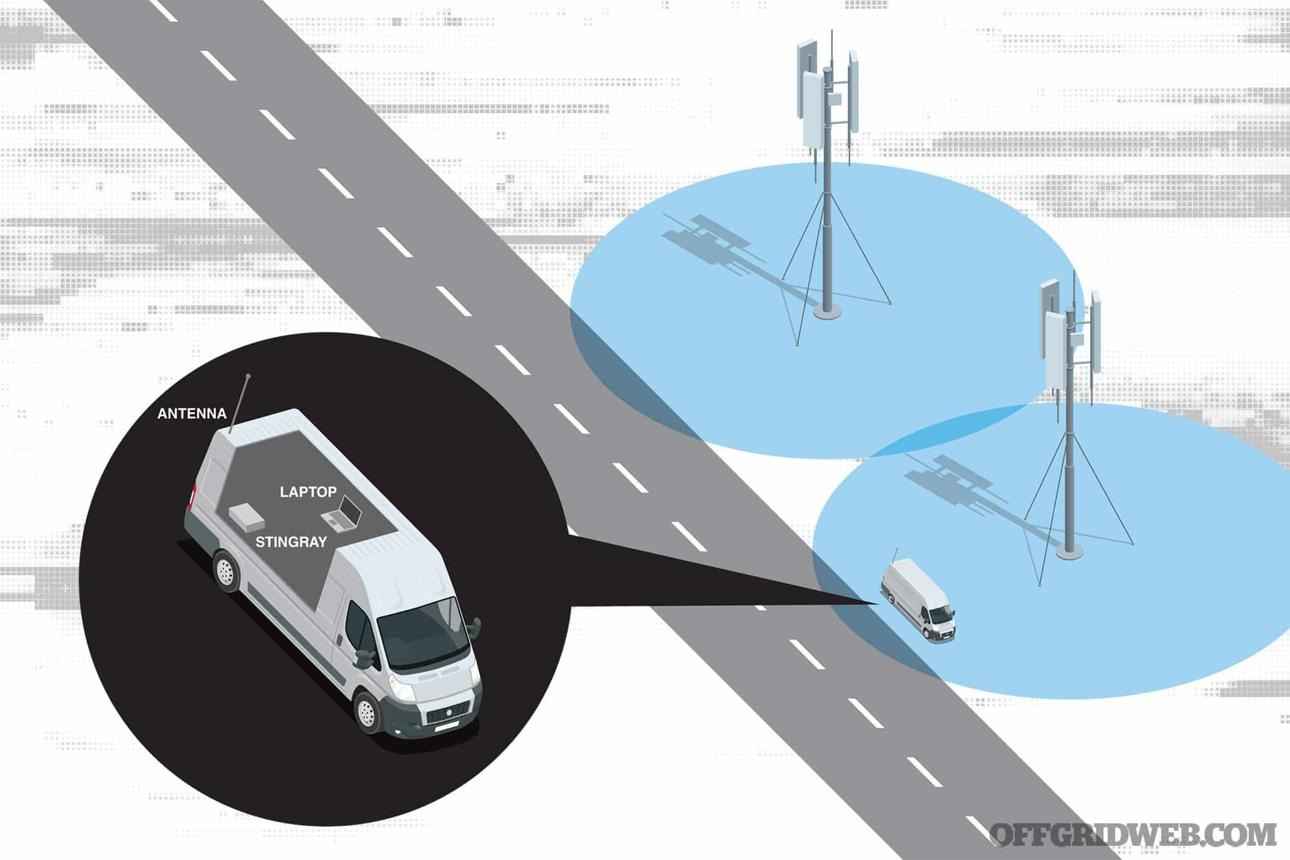
Source name: DOJ — Policy Guidance: “Use of Cell-Site Simulator Technology” (Sep 3, 2015)
Original link: https://www.justice.gov/d9/press-releases/attachments/2015/09/03/doj_cell-site_simulator_policy_9-3-15.pdf
Archive link (Wayback index): https://web.archive.org/web/*/https://www.justice.gov/d9/press-releases/attachments/2015/09/03/doj_cell-site_simulator_policy_9-3-15.pdf
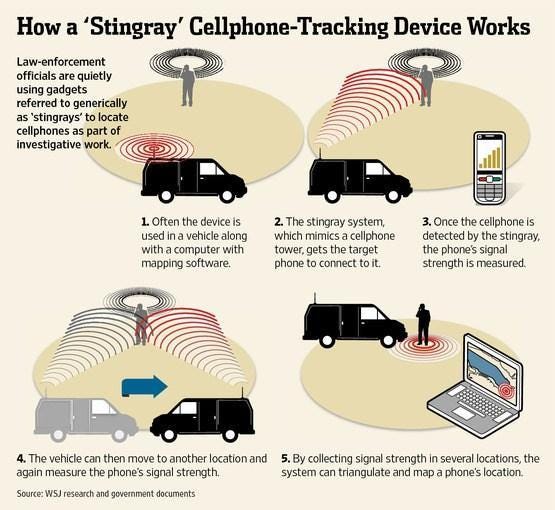
Summary: DOJ’s cell-site simulator policy is an official admission that the technology is powerful enough to require standardized internal controls: legal process expectations, minimization, retention, and operational handling. It’s not “all transparency,” but it shows the government understood the privacy stakes and set rules because uncontrolled use was indefensible. Limitations: it’s policy, not an audit; agencies can violate policy, and it doesn’t cover all non-DOJ users (state/local, intelligence).
Why it matters: When DOJ writes a cross-component policy, it is usually because the status quo created legal/PR/operational risk. This is that paper trail.
Credibility rating: High (official policy document; not proof of compliance).
Source name: FCC — Order (FCC 16‑131) involving Harris Stingray manual confidentiality / FOIA context
Original link: https://docs.fcc.gov/public/attachments/FCC-16-131A1.pdf
Archive link (Wayback index): https://web.archive.org/web/*/https://docs.fcc.gov/public/attachments/FCC-16-131A1.pdf
Summary: This FCC order is a window into how vendors invoked confidentiality to keep technical capabilities and manuals out of public view even under FOIA pressure, and how regulators handled those claims. It matters because secrecy around surveillance tech is not only “government classification”—it’s also procurement-era confidentiality and vendor-controlled information gating. Limitation: it’s a regulatory document focused on a specific dispute context; it won’t map full operational deployment.
Why it matters: Surveillance secrecy often rides on commercial confidentiality just as much as on national security labels.
Credibility rating: High (official regulator document; scope is narrow).
Source name: DOJ OIG — “A Review of the FBI’s Use of National Security Letters” (2007; PDF)
Original link: https://oig.justice.gov/sites/default/files/reports/o1601b.pdf
Archive link (Wayback index): https://web.archive.org/web/*/https://oig.justice.gov/sites/default/files/reports/o1601b.pdf
Summary: This is one of the most explicit watchdog accounts of NSL misuse and internal control failures—documenting systemic process errors rather than isolated “bad apples.” It matters because NSLs are a core surveillance-adjacent authority used to extract third-party records without traditional warrant standards. Limitation: it’s dated; still, the historical record matters because many institutional patterns persist even when forms and labels change.
Why it matters: If you want to understand “why the FBI keeps getting caught,” start with an IG report that shows the machinery breaking in predictable ways.
Credibility rating: High (Inspector General audit/report).
Source name: DOJ OIG — “A Review of the FBI’s Use of Section 215 Orders …” (Report No. 16‑04; statutory business records)
Original link: https://www.oversight.gov/sites/default/files/documents/reports/2017-07/o1604.pdf
Archive link (Wayback index): https://web.archive.org/web/*/https://www.oversight.gov/sites/default/files/documents/reports/2017-07/o1604.pdf
Summary: This report summarizes DOJ OIG’s review of the FBI’s use of Section 215 business records authority for a later period, including “noteworthy facts or circumstances” and compliance issues, mandated in the post‑USA Freedom Act environment. It matters as a bridge document: how authorities evolved after the bulk telephony era, and what “reformed” oversight still found. Limitation: as always, the most operationally interesting details may be classified or summarized.
Why it matters: This is oversight after the scandal—showing what didn’t magically fix itself once the headlines moved on.
Credibility rating: High (Inspector General report; classification limits).
Source name: DOJ OIG — “Review of the FBI’s Querying Practices Under Section 702” (Report No. 26‑002; Oct 2025)
Original link: https://oig.justice.gov/sites/default/files/reports/26-002_0.pdf
Archive link (Wayback index): https://web.archive.org/web/*/https://oig.justice.gov/sites/default/files/reports/26-002_0.pdf
Summary: This is a modern oversight artifact focused on the most politically radioactive part of Section 702: how the FBI searches (“queries”) 702-acquired information, including with U.S.-person query terms. It matters because it documents safeguards, failure modes, and reforms in a way that PCLOB’s summaries alone can’t replace. Limitation: it’s still constrained by what can be made public; but it is a strong source for “how the FBI says it fixed querying.”
Why it matters: If you’re tracking “backdoor search” controversies, this report is the spine of the post‑2020 accountability record.
Credibility rating: High (Inspector General report; may omit classified detail).
Source name: FBI Vault — Domestic Investigations and Operations Guide (DIOG), 2024 version (Part 01)
Summary: The DIOG is the FBI’s internal operating rulebook for domestic investigations—what techniques are allowed, under what standards, and how “assessments” and other lower-threshold activities work. It matters because the surveillance debate often fixates on NSA/FISA while the FBI’s domestic authorities and operational rules drive a lot of real-world collection and monitoring. Limitation: DIOG releases can be partial/redacted; still, it’s the closest thing to an “operator manual” the public gets.
Why it matters: If you want to understand domestic intelligence behavior, don’t start with speeches; start with the internal guide.
Credibility rating: High (primary FBI policy; redactions are expected).
Source name: FBI — NGI Privacy Impact Assessment (biometrics; example: Latent Services update)
Original link: https://www.fbi.gov/file-repository/pias/pia-next-generation-identification-latent-services.pdf
Archive link (Wayback index): https://web.archive.org/web/*/https://www.fbi.gov/file-repository/pias/pia-next-generation-identification-latent-services.pdf
Summary: FBI’s NGI PIAs describe what biometric data is collected, how it is searched and shared, and what partner agencies can do with it—officially. It matters because biometric surveillance is not only “border tech”; it’s integrated into domestic law enforcement identification pipelines and shared systems. Limitation: PIAs can be sanitized and won’t capture misuse; they define the “allowed” world, not necessarily the world that exists.
Why it matters: This is where biometric surveillance becomes infrastructure: shared, persistent, and difficult to unwind.
Credibility rating: High (official PIA; self-report limits).
Source name: DHS OIG — OIG‑23‑61: Commercial Geolocation Data purchased/used by CBP, ICE, Secret Service (Sep 2023)
Original link: https://www.oig.dhs.gov/sites/default/files/assets/2023-09/OIG-23-61-Sep23-Redacted.pdf
Archive link (Wayback index): https://web.archive.org/web/*/https://www.oig.dhs.gov/sites/default/files/assets/2023-09/OIG-23-61-Sep23-Redacted.pdf
Summary: This DHS Inspector General report is one of the clearest official admissions that DHS law enforcement components bought and used commercially sourced location data without adequate policies, and in some cases outside their own privacy rules. It matters because it documents failures before any court forced disclosure—meaning the oversight came internally, not because the public “asked nicely.” Limitations: redactions; and it focuses on policy adherence and governance, not necessarily on the full operational impact of the surveillance.
Why it matters: “Data broker loophole” talk is abstract until an Inspector General says: yes, components did this, and governance was deficient.
Credibility rating: High (Inspector General report; redacted).
Source name: CBP — Privacy Impact Assessment: Commercial Telemetry Data Evaluation (ad IDs / historic location)
Original link: https://www.dhs.gov/sites/default/files/2024-08/24_0812_priv_pia-cbp-080-commercial-telemetry.pdf
Archive link (Wayback index): https://web.archive.org/web/*/https://www.dhs.gov/sites/default/files/2024-08/24_0812_priv_pia-cbp-080-commercial-telemetry.pdf
Summary: This CBP PIA is an official description of a program category many agencies try to talk around: purchasing/applying commercially sourced location data tied to advertising identifiers (“ad IDs”). It matters because it documents the claimed “mitigations” and defines the official justification for using ad-tech surveillance data, including how data is queried and retained. Limitation: PIAs can be written to reduce institutional liability; treat it as a boundary statement, then compare it to contracts, PTAs, and OIG findings.
Why it matters: It’s the government admitting—on the record—that ad-tech identifiers and location streams are usable as enforcement intelligence inputs.
Credibility rating: High (official PIA; self-report limits).
Source name: CBP — Privacy Threshold Analysis (FOIA production) referencing SDK and RTB sourcing for ad-ID location data
Original link: https://assets.aclu.org/live/uploads/2022/07/2023-10-06-CBPs-Additional-Production.pdf
Archive link (Wayback index): https://web.archive.org/web/*/https://assets.aclu.org/live/uploads/2022/07/2023-10-06-CBPs-Additional-Production.pdf
Summary: This PTA is (rare) direct language about how the sausage is made: it describes ad-ID location data sourced via SDKs embedded in apps and via real-time bidding (RTB) events “when an advertisement is served,” with extra detail about hashing identifiers and filtering data. PTAs often precede fuller PIAs and can be more candid because they’re operational intake documents, not polished public-facing narratives. Limitations: it’s labeled sensitive (FOUO/LES), contains redactions, and reflects a specific pilot context; still, it’s primary evidence of ad-tech surveillance plumbing.
Why it matters: This is explicit acknowledgment that the ad auction ecosystem can feed government location tracking—without touching a carrier.
Credibility rating: High (FOIA-released internal DHS/CBP privacy compliance document; redacted).
Source name: FTC — “Data Brokers: A Call for Transparency and Accountability” (2014)
Archive link (Wayback index): https://web.archive.org/web/*/https://www.ftc.gov/system/files/documents/reports/data-brokers-call-transparency-accountability-report-federal-trade-commission-may-2014/140527databrokerreport.pdf
Summary: This FTC report is foundational: it documents how data brokers collect, aggregate, and resell personal data, often without consumer visibility or meaningful control. It is not a “surveillance program” document per se, but it describes the commercial substrate that government agencies later exploit via purchases. Limitation: it predates the recent RTB/mobile location enforcement wave; still, it’s a primary regulator account of the industry’s structure.
Why it matters: Government surveillance increasingly runs through private data markets. This report explains the market.
Credibility rating: High (FTC report; somewhat dated).
Source name: FTC — Gravy Analytics/Venntel Complaint (Dec 2024) and Decision/Order (Jan 2025)
Original link (Complaint): https://www.ftc.gov/system/files/ftc_gov/pdf/2123035gravyanalyticscomplaint.pdf
Original link (Order): https://www.ftc.gov/system/files/ftc_gov/pdf/2123035gravyanalyticsorder.pdf
Archive link (Wayback index): https://web.archive.org/web/*/https://www.ftc.gov/system/files/ftc_gov/pdf/2123035gravyanalyticscomplaint.pdf
Summary: The FTC complaint is unusually direct about alleged conduct: acquisition and sale of precise consumer location data, sale/use without verifiable consent (including for government uses), and the resulting sensitive-location exposure. The Decision/Order is the operative enforcement outcome, imposing restrictions and compliance obligations. Limitation: consent orders usually avoid admissions; they show regulator conclusions and negotiated remedies, not full discovery.
Why it matters: This is regulator-level documentation that the commercial pipelines feeding government location tools were alleged to be unlawfully built and operated.
Credibility rating: High (FTC complaint + final order; no-admission settlement limits apply).
Source name: FBI Vault — Contract with Venntel (portal access / commercially sourced location data tooling)
Original link: https://vault.fbi.gov/contract-with-venntel/Contract%20with%20Venntel%20Part%2001%20%28Final%29/at_download/file
Archive link (Wayback index): https://web.archive.org/web/*/https://vault.fbi.gov/contract-with-venntel/Contract%20with%20Venntel%20Part%2001%20%28Final%29/at_download/file
Summary: This is procurement-level evidence that the FBI contracted for access to a Venntel online portal—i.e., operational adoption of a commercial data product rather than hypothetical interest. Contracts like this matter because they specify access models, objectives, and (sometimes) constraints that talky oversight summaries gloss over. Limitations: scope details and operational outcomes aren’t fully visible; but the existence of the contract is a hard fact.
Why it matters: It’s the difference between “the FBI might do this” and “the FBI bought it.”
Credibility rating: High (FOIA-vault primary contract; redactions likely).
Source name: FTC v. Kochava — Amended Complaint (Jun 2023) and Court Opinion on MTD (Feb 2024)
Original link (Amended Complaint): https://www.ftc.gov/system/files/ftc_gov/pdf/26AmendedComplaint%28unsealed%29.pdf
Original link (Opinion): https://www.ftc.gov/system/files/ftc_gov/pdf/71-OpiniononMTD.pdf
Archive link (Wayback index): https://web.archive.org/web/*/https://www.ftc.gov/system/files/ftc_gov/pdf/26AmendedComplaint%28unsealed%29.pdf
Summary: These filings provide unusually concrete allegations and judicial discussion about the sale of precise location data products and the risk of re-identification and sensitive-location inference. The complaint is the regulator’s factual theory; the court opinion shows what survived early legal challenge and how the judge framed plausibility and harms. Limitation: litigation posture matters—allegations are not verdicts—so treat this as “strong evidence under adversarial testing,” not as a final adjudication of every claim.
Why it matters: This is a regulator trying to choke a major location-data sales model in court, with a paper trail that can be cited without relying on journalism summaries.
Credibility rating: High (court + FTC filings; still pending context dependent).
Source name: DHS/CBP — Automated Targeting System (ATS) PIA update (May 2021)
Original link: https://www.dhs.gov/sites/default/files/publications/privacy-pia-cbp006-ats-may2021.pdf
Archive link (Wayback index): https://web.archive.org/web/*/https://www.dhs.gov/sites/default/files/publications/privacy-pia-cbp006-ats-may2021.pdf
Summary: ATS is a core CBP “decision support” and risk-scoring ecosystem that pulls from broad travel/cargo datasets and watchlist-related inputs; the PIA describes how CBP frames use, sharing, and retention. It matters because ATS embodies algorithmic targeting logic at the border: an institutionalized intake and scoring pipeline for people and shipments. Limitation: PIAs do not reveal targeting rules or weights; they reveal governance framing and data categories.
Why it matters: If you’re looking for “AI monitoring tools” in government form, ATS is the mature, long-running template: data fusion + risk rules + enforcement action triggers.
Credibility rating: High (official PIA; self-report limits).
Source name: Federal Register — DHS/CBP‑006 ATS System of Records Notice (SORN) (May 2012)
Archive link (Wayback index): https://web.archive.org/web/*/https://www.federalregister.gov/documents/2012/05/22/2012-12396/privacy-act-of-1974-us-customs-and-border-protection-dhscbp-006-automated-targeting-system-system-of
Summary: SORNs are legal infrastructure: they define categories of individuals/records, routine uses (sharing), and system purpose in an official, legally consequential format. The ATS SORN matters because it’s one of the more explicit published descriptions of a system that ingests, correlates, and retains broad travel-related data for targeting. Limitation: SORNs are written for compliance, not for operational clarity; still, they lock agencies into an official description you can use against them when reality diverges.
Why it matters: This is where “data fusion” becomes normalized with a legal wrapper and an officially sanctioned sharing regime.
Credibility rating: High (official Federal Register notice).
Source name: GAO — “CBP Traveler Identity Verification … Facial Recognition” (2022 testimony)
Original link: https://www.gao.gov/products/gao-22-106154
Archive link (Wayback index): https://web.archive.org/web/*/https://www.gao.gov/products/gao-22-106154
Summary: GAO’s testimony is useful because it surfaces deployment facts (where and how widely CBP rolled out facial recognition) and critiques governance basics like privacy notice practices. It’s not a leak; it’s an oversight body stating in plain language that implementation governance was inconsistent. Limitation: testimony is higher level than a full audit report and often compresses detail; still, the headline facts tend to be well-entered in the record.
Why it matters: Facial recognition at borders is often framed as narrow and consensual; GAO documents when execution doesn’t match the script.
Credibility rating: High (GAO oversight).
Source name: DHS/CBP — Traveler Verification Service (TVS) PIA (Feb 2021)
Original link: https://www.dhs.gov/sites/default/files/publications/privacy-pia-cbp056-tvs-february2021.pdf
Archive link (Wayback index): https://web.archive.org/web/*/https://www.dhs.gov/sites/default/files/publications/privacy-pia-cbp056-tvs-february2021.pdf
Summary: This PIA describes CBP’s operational facial recognition identity verification system, including data handling, sharing, and intended scope. It matters as a primary description of how biometric identity verification is “productized” into routine travel processing infrastructure. Limitation: as with other PIAs, “what’s intended” and “what’s done” can diverge; use it alongside audits and procurement materials.
Why it matters: Once facial recognition becomes routine processing infrastructure, opt-out friction and mission creep risks increase—even if policy language claims guardrails.
Credibility rating: High (official PIA; self-report limits).
Source name: PCLOB — “Use of Facial Recognition Technology by TSA” (May 2025)
Archive link (Wayback index): https://web.archive.org/web/*/https://documents.pclob.gov/prod/Documents/OversightReport/90964138-44eb-483d-990e-057ce4c31db7/Use%20of%20FRT%20by%20TSA%2C%20PCLOB%20Report%20%285-12-25%29%2C%20Completed%20508%2C%20May%2019%2C%202025.pdf
Summary: This PCLOB report focuses on a domestic-facing biometric deployment environment (air travel security) and describes how TSA uses facial recognition, what documentation exists, and how privacy/civil liberties considerations are handled. It matters because TSA operates a massive “soft checkpoint” surveillance context where compliance and opt-out messaging can be extremely consequential. Limitation: PCLOB reports are constrained by access and classification; but they are still among the best official oversight narratives that attempt to map operations.
Why it matters: Biometric normalization is not only a border issue; it’s also an internal travel infrastructure issue.
Credibility rating: High (oversight report; may be constrained).
Source name: ICE FOIA Library — Palantir contract (HSCETC‑15‑C‑00001)
Original link: https://www.ice.gov/doclib/foia/contracts/palantirTechHSCETC15C00001.pdf
Archive link (Wayback index): https://web.archive.org/web/*/https://www.ice.gov/doclib/foia/contracts/palantirTechHSCETC15C00001.pdf
Summary: This is direct procurement evidence of a DHS/ICE software licensing and services relationship with Palantir, a repeat contractor in enforcement analytics contexts. It matters because “public-private surveillance partnerships” are often less about formal “partnership announcements” and more about embedded, long-term software systems that fuse datasets and operationalize targeting. Limitation: contracts can be heavily redacted; and they don’t show downstream use outcomes—but they prove acquisition and terms.
Why it matters: Surveillance at scale is built on software platforms. Contracts show which platforms and under what terms.
Credibility rating: High (government-hosted FOIA contract).
Source name: ACLU-hosted FOIA production — Babel Street contract materials (Locate X / services)
Original link: https://www.aclu.org/sites/default/files/field_document/production_5_reprocessed_jan._22_0.pdf
Archive link (Wayback index): https://web.archive.org/web/*/https://www.aclu.org/sites/default/files/field_document/production_5_reprocessed_jan._22_0.pdf
Summary: This FOIA production provides contract-level detail about Babel Street’s provision of services that include location intelligence (Locate X context) and/or related tooling. It matters because it grounds the “ICE uses data brokers and OSINT vendors” claim in actual contracting language and terms, not just narrative reporting. Limitation: FOIA productions can be incomplete and redacted; treat it as evidence of procurement and scope, then triangulate with other procurement and audit artifacts.
Why it matters: Vendors like Babel Street function as bridges between ad-tech data markets and enforcement use cases. Contracts show the bridge design.
Credibility rating: High (primary contract evidence via FOIA production; redactions expected).
Source name: DHS Data Mining Report (2020–2021; mandated reporting)
Original link: https://www.dhs.gov/sites/default/files/2023-08/23_0831_priv_dhs-data-mining-report.pdf
Archive link (Wayback index): https://web.archive.org/web/*/https://www.dhs.gov/sites/default/files/2023-08/23_0831_priv_dhs-data-mining-report.pdf
Summary: DHS’s “Data Mining Report” series is a structured, official admission that the department uses data mining activities and is required to report on them. It matters because it can identify programs, purposes, and oversight structures that otherwise remain diffuse across components. Limitation: annexes may be classified or restricted; the most sensitive details can be abstracted.
Why it matters: It’s the government acknowledging, in a recurring statutory format, that “data mining” is a normal mode of operation—not an exception.
Credibility rating: High (official DHS report; completeness varies).
Source name: NCTC — White paper on data access under 2012 AG guidelines (as of March 2014)
Archive link (Wayback index): https://web.archive.org/web/*/https://www.dni.gov/files/NCTC/documents/news_documents/NCTC_White_Paper-Overview_of_NCTC_Data_Accesses_under_its_2012_AG_Guidelines_as_of_March_2014.pdf
Summary: This is an executive-branch explanation of NCTC’s expanded ability (under updated AG guidelines) to access and use datasets that include non-terrorism information, including descriptions of access and governance structures. It matters because it shows data sharing and retention logic inside a national counterterrorism center—an institutional node designed for fusion. Limitation: it’s a self-described framework; you still need audits and compliance reports to see deviations.
Why it matters: It documents how counterterrorism authorities can become broad data access authorities.
Credibility rating: High (official white paper; self-report limits).
Source name: PCLOB — FY2024 report on NCTC (Dec 2024)
Archive link (Wayback index): https://web.archive.org/web/*/https://documents.pclob.gov/prod/Documents/OversightReport/72b3b35c-3595-47e2-a97f-142f350f14da/PCLOB%20FY2024%20NCTC%20REPORT-12.10.2024-FINAL.pdf
Summary: This oversight report addresses NCTC authorities and data handling under the 2012-era guidelines and later harmonization efforts, providing a structured window into how a national intelligence center handles U.S.-person information governance. It matters because NCTC sits at the intersection of intelligence sharing and domestic-facing threat pipelines. Limitation: oversight reporting still faces classification constraints; it may describe structures more than operational edge cases.
Why it matters: NCTC is a “hub.” Hub oversight is where you find systemic risk.
Credibility rating: High (PCLOB oversight report; classification constraints persist).
Source name: GAO — “DHS Is Assessing Fusion Center Capabilities …” (GAO‑15‑155; 2014)
Original link: https://www.gao.gov/assets/gao-15-155.pdf
Archive link (Wayback index): https://web.archive.org/web/*/https://www.gao.gov/assets/gao-15-155.pdf
Summary: This GAO report describes DHS engagement with fusion centers, expectation setting, deployed personnel roles, and accountability for funding and support. It matters because fusion centers are the domestic intelligence model normalized through grants, deployments, and “information sharing” infrastructure rather than through a single statute called “domestic surveillance law.” Limitation: GAO can be constrained by access and relies on agency-provided information, but GAO’s oversight lens is typically more critical than agency self-reporting.
Why it matters: If you want the connective tissue between federal intelligence and local police, fusion centers are the tissue. GAO maps how they’re fed.
Credibility rating: High (GAO oversight).
Source name: DOJ/BJA — “Baseline Capabilities for State and Major Urban Area Fusion Centers” (2010)
Archive link (Wayback index): https://web.archive.org/web/*/https://bja.ojp.gov/sites/g/files/xyckuh186/files/media/document/baseline_capabilities_for_state_and_major_urban_area_fusion_centers.pdf
Summary: This is guidance infrastructure: how “baseline capabilities” were defined for fusion centers, including information sharing, analytic workflows, and governance expectations. It matters because it shows formal federalization of a domestic intelligence architecture without calling it that in neon lights. Limitation: it’s an aspirational framework, not an audit; use it as a blueprint to compare against real-world fusion center behavior and oversight findings.
Why it matters: Blueprints reveal design intent. If the system later behaves badly, you can trace the intent back to the blueprint.
Credibility rating: High (official guidance document; not proof of compliance).
Source name: Local government primary docs — Ring “Neighbors Portal” law enforcement MOUs (example: West Orange PD, 2019)
Original link: https://www.westorange.org/AgendaCenter/ViewFile/Item/3282?fileID=8502
Archive link (Wayback index): https://web.archive.org/web/*/https://www.westorange.org/AgendaCenter/ViewFile/Item/3282?fileID=8502
Summary: This municipal document is exactly what public-private surveillance looks like at ground level: a signed agreement giving a police department access to a platform portal connecting police to a consumer camera network community. It matters because it bypasses abstract debate—showing the mechanism of integration and communication between police and a private surveillance platform. Limitation: one MOU is anecdotal; the value is as an example of a widely replicated template.
Why it matters: “Partnership” isn’t a press release. It’s paperwork that turns neighborhoods into sensor grids.
Credibility rating: High (signed local-government primary document).
Source name: Local government primary docs — Ring MOU example (Surfside, FL, 2019)
Archive link (Wayback index): https://web.archive.org/web/*/https://www.townofsurfsidefl.gov/docs/default-source/default-document-library/town-clerk-documents/commission-resolutions/2019-commission-resolutions/resolution-no-2019-2593-ring-llc-memorandum-of-understanding.pdf?sfvrsn=ecad2794_2
Summary: Another local-government anchor that shows the same pattern: formalizing a police department’s participation in a private platform ecosystem for community video requests and engagement. The repetition across jurisdictions is the point; these are franchised surveillance relationships. Limitation: again, local MOUs don’t show operational outcomes; they show the enabling mechanism.
Why it matters: The consumer camera ecosystem becomes a police-adjacent intelligence layer through contracts, not warrants.
Credibility rating: High (municipal primary document).
Source name: City council/agenda attachment — Axon Fusus / real-time crime center platform procurement example (Evanston, 2025)
Archive link (Wayback index): https://web.archive.org/web/*/https://cityofevanston.civicweb.net/document/430217/Approval%20of%20Contract%20with%20Axon%20Enterprise%20Inc.%20.pdf?handle=953E2261D1184986BC2B5AC15C0D9EA0
Summary: This is local surveillance modernization in procurement form: integrating a platform associated with “real-time crime center” capabilities into police operations. It matters because these systems represent the operational endpoint of data fusion: video feeds, analytics, and alerting integrated into dispatch and situational awareness. Limitation: city documents are not standardized and may be high-level; but they establish adoption, vendor, and intended integration points.
Why it matters: Surveillance stops being “collection” and becomes “live operations” when RTCC stacks are procured and integrated.
Credibility rating: High (municipal procurement documentation).
Source name: SEC — Meta Platforms, Form 10‑K for fiscal year 2025 (filed 2026)
Original link: https://www.sec.gov/Archives/edgar/data/1326801/000162828026003942/meta-20251231.htm
Archive link (Wayback index): https://web.archive.org/web/*/https://www.sec.gov/Archives/edgar/data/1326801/000162828026003942/meta-20251231.htm
Summary: SEC filings are not privacy disclosures, but they are legally consequential narratives about data-driven business models, risk factors, compliance exposure, and monetization dependency. For big tech data harvesting, 10‑Ks matter because they describe the revenue engine: targeted advertising and the data processing that makes it possible, plus the regulatory and litigation risk around it. Limitation: it’s still corporate framing; it won’t admit “misconduct” unless forced by enforcement actions or material risk disclosure requirements.
Why it matters: When companies tell investors what they really depend on, you get closer to the truth than in consumer-facing “privacy” language.
Credibility rating: High (SEC primary filing; corporate spin is the limitation).
Source name: SEC — Alphabet, Form 10‑K for fiscal year 2025 (filed 2026)
Original link: https://www.sec.gov/Archives/edgar/data/1652044/000165204426000018/goog-20251231.htm
Archive link (Wayback index): https://web.archive.org/web/*/https://www.sec.gov/Archives/edgar/data/1652044/000165204426000018/goog-20251231.htm
Summary: Alphabet’s 10‑K provides a primary corporate description of its advertising-driven operations and the compliance and regulatory pressure points that exist precisely because large-scale data processing is central to the model. This is relevant to surveillance research because commercial behavioral targeting ecosystems are repeatedly repurposed by government through purchases (direct or via vendors) and through compelled access. Limitation: corporate filings won’t expose everything; they expose what must be disclosed to investors.
Why it matters: Ad-tech scale is the raw material that makes RTB/SDK location markets possible, which then surfaces in government PTAs and PIAs.
Credibility rating: High (SEC primary filing; incomplete by design).
Source name: SEC — Amazon, Form 10‑K for fiscal year 2025 (filed 2026)
Original link: https://www.sec.gov/Archives/edgar/data/1018724/000101872426000004/amzn-20251231.htm
Archive link (Wayback index): https://web.archive.org/web/*/https://www.sec.gov/Archives/edgar/data/1018724/000101872426000004/amzn-20251231.htm
Summary: Amazon’s 10‑K matters here less as “privacy confession” and more as corporate infrastructure disclosure: cloud scale (AWS), device ecosystems, and service integration that shape how data is collected and how government can interact with platforms. It is adjacent to public-private surveillance concerns because Amazon’s consumer surveillance products (e.g., Ring ecosystem) operate in the same corporate universe as major cloud services used by government. Limitation: the 10‑K is broad and not a direct map of surveillance partnerships; treat it as corporate infrastructure context.
Why it matters: Surveillance at scale depends on platform infrastructure. The biggest platforms disclose their infrastructure and risk posture to investors.
Credibility rating: High (SEC primary filing; indirect relevance).
Source name: SEC — Microsoft, Form 10‑K (FY ended June 30, 2025)
Original link: https://www.sec.gov/Archives/edgar/data/789019/000095017025100235/msft-20250630.htm
Archive link (Wayback index): https://web.archive.org/web/*/https://www.sec.gov/Archives/edgar/data/789019/000095017025100235/msft-20250630.htm
Summary: Microsoft’s SEC filing provides primary disclosure of scale, cloud, and product ecosystem risk factors—including cybersecurity and regulatory risks tied to data processing and enterprise/government customers. For surveillance research, this helps contextualize where analytics, AI, and cloud infrastructure are financially central and how regulatory pressure appears as material investor risk. Limitation: it’s an indirect lens; pair it with procurement and agency-specific AI platform sourcing to map actual government adoption.
Why it matters: Much of “surveillance” is actually stored, processed, and analyzed in outsourced cloud environments; SEC filings reveal the corporate gravitational wells.
Credibility rating: High (SEC filing; indirect relevance).
Secondary Sources (International)
Source name: CJEU — Schrems II judgment (Case C‑311/18) (PDF copy)
Original link: https://noyb.eu/files/CJEU/judgment.pdf
Archive link (Wayback index): https://web.archive.org/web/*/https://noyb.eu/files/CJEU/judgment.pdf
Summary: This judgment is a primary legal driver behind cross-border data transfer restrictions, explicitly grounded in concerns about U.S. surveillance access regimes. It is relevant here because it shows foreign courts treating U.S. surveillance realities as a material privacy risk that affects U.S.-company data flows. Limitation: this is an externally hosted PDF copy; still, it is the text of the judgment and widely cross-referenced.
Why it matters: Foreign legal systems have sometimes been more explicit than U.S. institutions in stating that U.S. surveillance undermines privacy guarantees for transferred data.
Credibility rating: High (court judgment text; hosting is the minor limitation).
Source name: ECHR — Big Brother Watch v. UK (Grand Chamber judgment PDF, 2021)
Archive link (Wayback index): https://web.archive.org/web/*/https://hudoc.echr.coe.int/app/conversion/pdf/?filename=Grand+Chamber+judgment+Big+Brother+Watch+and+Others+v.+the+United+Kingdom+-+UK+surveillance+regime%3A+some+aspects+contrary+to+the+Convention+.pdf&id=003-7028496-9484349&library=ECHR
Summary: This judgment is relevant because it analyzes bulk interception safeguards and oversight failures in a close U.S. intelligence partner environment, with implications for Five Eyes-style intelligence sharing and parallel surveillance architectures. It helps triangulate how bulk collection regimes tend to fail: authorization, selection, oversight, and abuse guardrails. Limitation: it’s UK-focused; relevance is through the shared model and alliance context.
Why it matters: The “bulk + oversight” contradictions show up across allied systems; the UK case provides a rigorous judicial analysis of those contradictions.
Credibility rating: High (international court judgment).
Source name: Irish Data Protection Commission — Meta decision (Redacted) (Sep 2024)
Original link: https://www.dataprotection.ie/sites/default/files/uploads/2024-12/Meta-Final-Decision-IN-19-4-1-Redacted.pdf
Archive link (Wayback index): https://web.archive.org/web/*/https://www.dataprotection.ie/sites/default/files/uploads/2024-12/Meta-Final-Decision-IN-19-4-1-Redacted.pdf
Summary: This is a regulator decision document addressing GDPR compliance issues for a major U.S. platform’s European operations. It’s relevant here not as “U.S. government surveillance,” but as a rigorous, document-based description of platform processing and regulatory findings that interact with international data transfer and surveillance risk narratives. Limitation: it’s redacted and EU-scoped; relevance is via U.S. company practices and cross-border implications.
Why it matters: International regulators sometimes force disclosures and findings about platform data practices that U.S. regulators do not.
Credibility rating: High (regulator decision; redactions limit detail).
Observed Patterns
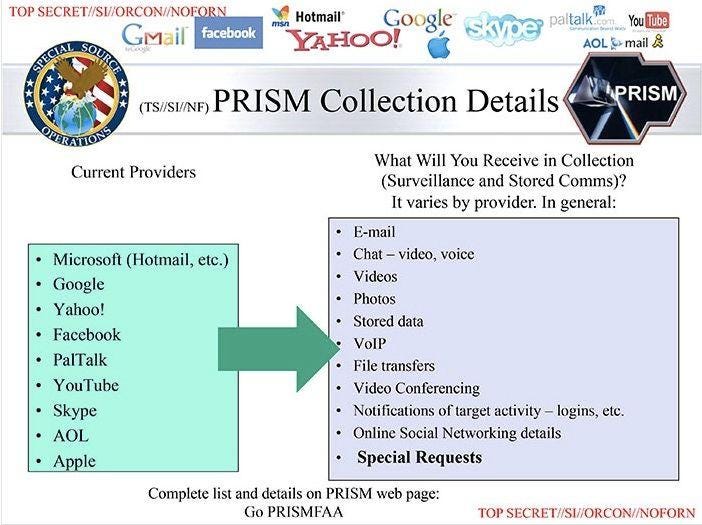
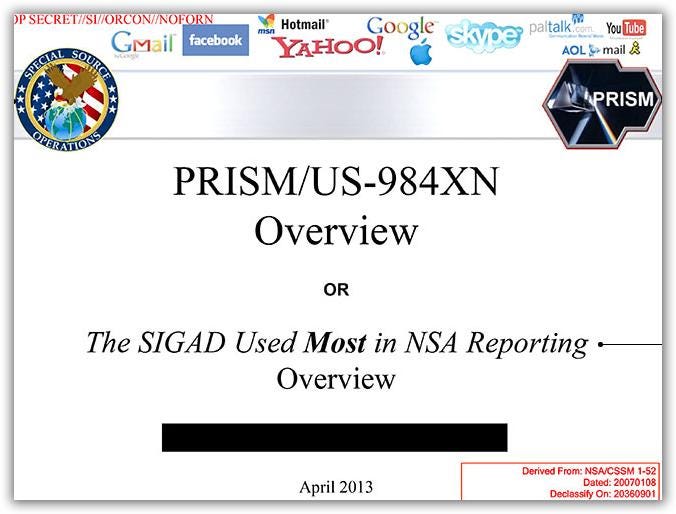
Across the strongest sources here, one recurring pattern is that surveillance capability increasingly migrates from direct “collection” (wiretaps, PRISM/702 upstream, bulk metadata) into acquired commercial data and vendor platforms—because purchasing or licensing data/tools can bypass the friction of warrants and statutory collection limits. That migration is visible in DHS OIG findings on commercial geolocation data governance failures, CBP’s own privacy documentation describing ad-ID/RTB and SDK data sourcing, and FTC enforcement packages showing that the pipeline’s “consent” claims are often contested at the regulator level.
A second pattern is platformization: agencies do not merely “get data,” they buy systems designed to integrate many data streams into operational workflows. Palantir contracting through ICE FOIA and ATS/TVS PIAs show how data fusion becomes routine decision support; local police MOUs and procurement documents show the same platform logic at municipal scale (consumer camera networks and RTCC tooling).
A third pattern is governance after the fact. Oversight bodies and courts often appear not at program birth but after persistence, expansion, or exposure—seen in the sequence from leaked or contested bulk authorities to PCLOB/DOJ OIG querying focus and reforms. The system tends to deploy first, then argue legality, then patch compliance, then reauthorize.
Open Questions / Gaps
One unresolved gap is the true operational scale of the “commercial telemetry / ad-tech data” pipeline inside federal agencies. The CBP PTA and PIA provide evidence and framing, and DHS OIG confirms governance failures—but the full scope of querying, retention, dissemination, and downstream enforcement outcomes remains partially opaque due to redactions and limited public reporting.
Another gap is cross-agency reuse and sharing of vendor-derived datasets (e.g., whether a commercial location dataset purchased by one component effectively becomes available to others through shared platforms, case management systems, or fusion center sharing). Procurement artifacts establish acquisition, but without comprehensive disclosure of integration pathways, “mission creep” can’t be measured precisely—only inferred from architecture patterns and partial documents.
Finally, international legal pressure (Schrems II and Allied Bulk Interception litigation) shows that foreign courts and regulators treat U.S. surveillance access as a structural risk. The U.S. transparency/oversight ecosystem still leaves major holes, especially where classification prevents meaningful public adversarial testing. These gaps are not accidents; they are structural features of the regime.
Margin of the Law publishes constitutional analysis, civic research, and legal education for people who want to understand the system they actually live in. Read the Full Constitutional Analysis Library at marginofthelaw.com.
© 2026 – MK3 Law Group
For republication or citation, please credit this article with link attribution to marginofthelaw.com.