


Two million Americans drink water containing arsenic at levels that threaten their health. This is not speculation—this is documented contamination spread across 25 states, with the worst concentrations in regions where people assume their water is clean. The arsenic enters groundwater through natural geological processes, industrial contamination, and decades of agricultural chemicals seeping into aquifers. Once there, it stays.
The numbers reveal the scope: 7 percent of sampled drinking water wells exceed the EPA’s maximum contaminant level of 10 micrograms per liter. In the Southwest, that figure jumps to 16 percent. These are not isolated rural wells—these are community water systems serving millions of people who have no idea what they are consuming daily.
The Geographic Reality of Contamination
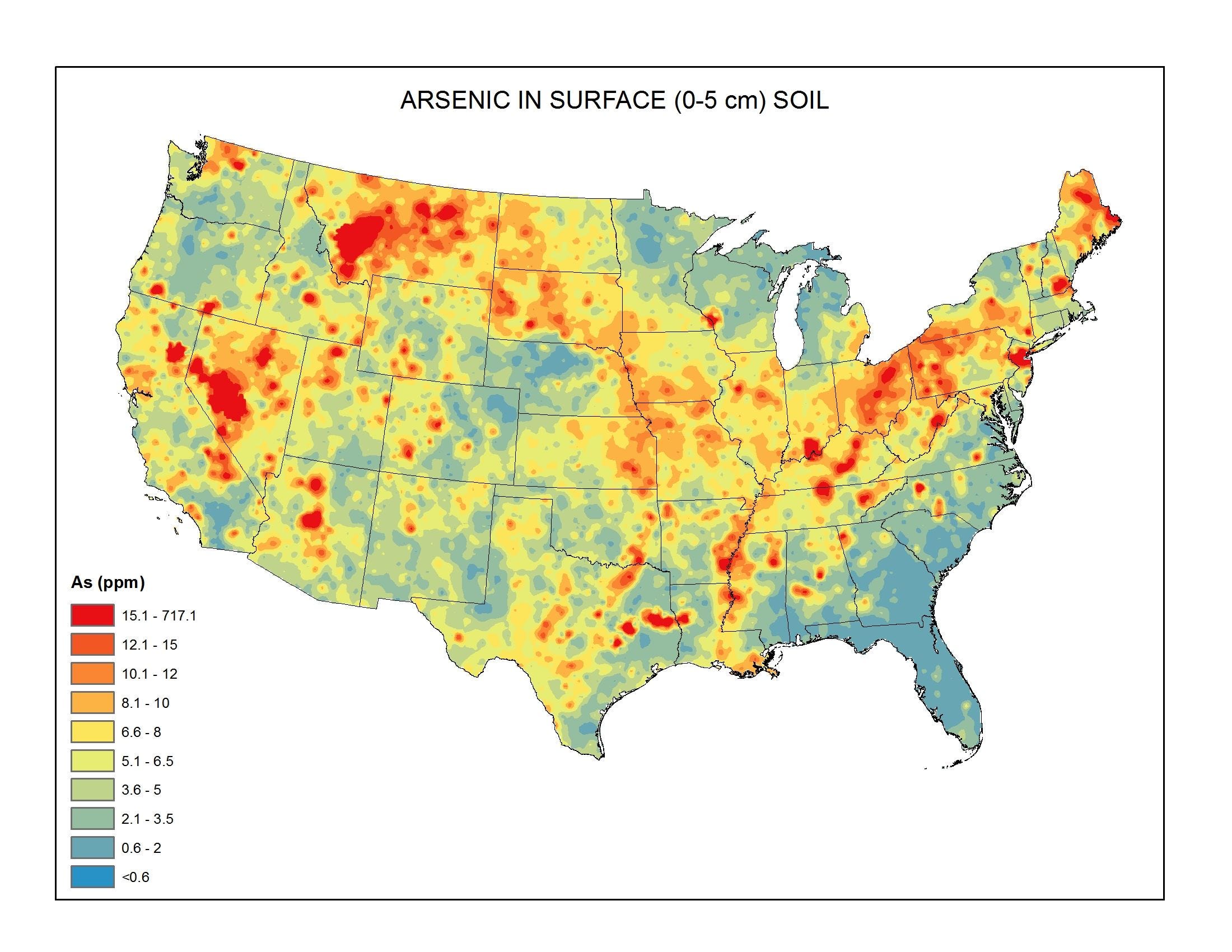
Arsenic contamination follows predictable patterns tied to geology and human activity. The worst affected states cluster in the West and Southwest, where volcanic and granitic bedrock naturally contains arsenic that leaches into groundwater over time. Arizona, California, Nevada, New Mexico, and Utah show the highest concentrations, with some areas measuring arsenic levels five times above the EPA limit.
The glacial aquifer system spanning the northern United States presents a different contamination profile. This system supplies water to 30 million people across Minnesota, Wisconsin, Michigan, and surrounding states. Here, arsenic concentrations vary based on redox conditions and pH levels in the groundwater. The USGS has developed 3D models showing where high arsenic concentrations are most likely to occur, revealing that contamination is not random but follows specific geochemical patterns.
Eastern states show lower but still concerning levels. Parts of Pennsylvania, New York, and Michigan contain pockets of elevated arsenic, particularly in areas with crystalline rock formations. The Mississippi River Valley and southeastern coastal regions also show contamination, though generally at lower levels than western states.
Natural Sources Meet Human Activity
Arsenic enters drinking water through both natural processes and human contamination. The natural component comes from weathering of arsenic-bearing minerals in rock and sediment. Over geological time, this arsenic dissolves into groundwater, creating background levels that vary by location.
Human activities compound the problem. Historical use of arsenic-based pesticides and herbicides left residues in agricultural soils that continue leaching into groundwater decades later. Mining operations, particularly copper and gold mining, exposed arsenic-bearing ore to oxidation and water flow. Wood preservation using chromated copper arsenate treated millions of structures with arsenic compounds that eventually enter soil and water systems.
The chemical form of arsenic determines its mobility and toxicity. Inorganic arsenic—the form found in drinking water—is highly toxic and readily absorbed by the human body. Organic arsenic compounds found in some seafood are less toxic and more easily eliminated. This distinction matters because it means arsenic in drinking water poses a more direct health threat than arsenic from most food sources.
Health Consequences Beyond Cancer
The EPA reduced the arsenic limit from 50 to 10 micrograms per liter in 2001 based on cancer research, but arsenic’s health effects extend far beyond cancer. Long-term exposure causes skin lesions, cardiovascular disease, diabetes, and neurological problems. Recent research links arsenic exposure to cognitive decline and neurodegenerative diseases including Alzheimer’s and Parkinson’s.
Arsenic disrupts cellular energy production by interfering with mitochondrial function. It generates reactive oxygen species that damage DNA and proteins. In the nervous system, arsenic disrupts neurotransmitter production and creates chronic inflammation that contributes to neurodegeneration over time.
Children face particular vulnerability. Arsenic exposure during development can impair cognitive function, reduce IQ scores, and create learning disabilities that persist into adulthood. Pregnant women exposed to arsenic show increased rates of pregnancy complications and birth defects.
The dose-response relationship for arsenic shows no clear threshold below which exposure is completely safe. Even levels below the current EPA standard of 10 micrograms per liter show measurable health effects in population studies. Some researchers advocate for lowering the standard to 5 or even 3 micrograms per liter based on this evidence.
Detection and Treatment Challenges
Most people have no idea whether their water contains arsenic because it is colorless, odorless, and tasteless. Public water systems must test for arsenic and notify customers if levels exceed EPA limits, but private well owners—roughly 15 percent of the US population—bear responsibility for testing their own water.
Testing costs range from 20to20to150 depending on the laboratory and testing method. The EPA recommends testing private wells annually, but compliance is voluntary and sporadic. Many well owners test only when selling property or when health problems emerge.
Treatment options exist but come with significant costs and maintenance requirements. Reverse osmosis systems effectively remove arsenic but cost 1,000to1,000to5,000 installed and require regular filter replacement. Activated alumina and iron-based filtration systems also work but need professional maintenance to remain effective.
For public water systems, treatment costs vary dramatically by system size. The EPA estimated that large systems serving more than 10,000 people face costs of 0.86to0.86to32 per household annually to reduce arsenic below the maximum contaminant level. Small systems serving 25 to 500 people face costs of 165to165to327 per household—a burden that can double or triple water bills in rural communities.
Rural and Low-Income Communities Bear the Greatest Burden
Arsenic contamination disproportionately affects rural and low-income populations who rely on private wells or small community water systems. These communities often lack resources for comprehensive water testing and treatment, creating situations where families unknowingly consume contaminated water for years.
Small water systems face particular challenges. They lack economies of scale that make treatment affordable for larger systems. They often operate with minimal technical expertise and limited budgets for equipment upgrades. When arsenic contamination is discovered, these systems may struggle to comply with EPA requirements while keeping water affordable for customers.
Native American communities show some of the highest arsenic exposure rates in the country. Many tribal lands contain naturally occurring arsenic in groundwater, and historical lack of investment in water infrastructure compounds the problem. The Navajo Nation, for example, has identified arsenic contamination in numerous community wells, with some exceeding EPA limits by factors of five or ten.
Regulatory Response and Enforcement
The EPA’s reduction of the arsenic standard from 50 to 10 micrograms per liter in 2001 represented the most significant change in drinking water regulation in decades. The decision faced intense industry opposition due to treatment costs, but health evidence supporting the lower standard was overwhelming.
Enforcement of the current standard remains inconsistent. Public water systems must test regularly and notify customers of violations, but penalties for non-compliance are often minimal. Private wells remain completely unregulated, creating a two-tiered system where water quality depends on whether you are connected to a public system.
Some states have moved beyond federal requirements. New Jersey adopted an arsenic standard of 5 micrograms per liter—half the federal limit—based on updated health research. California requires more frequent testing and faster notification of violations than federal rules mandate.
Scientific Advances in Understanding and Prediction
USGS research has advanced understanding of where arsenic contamination is most likely to occur. The agency’s National Water Quality Program combines geological surveys, geochemical modeling, and statistical analysis to predict arsenic concentrations in unmonitored areas.
Three-dimensional models of arsenic distribution in major aquifer systems help water managers identify high-risk areas before drilling new wells. These models consider factors including rock type, groundwater residence time, pH levels, and redox conditions that control arsenic mobility.
The research reveals that arsenic contamination is not randomly distributed but follows predictable patterns based on hydrogeology. Areas with alkaline groundwater, long residence times, and certain rock types consistently show higher arsenic levels. This knowledge allows water utilities to avoid high-contamination areas when siting new wells and helps regulators target monitoring efforts.
Economic Impact and Cost-Benefit Analysis
The economic impact of arsenic in drinking water extends beyond treatment costs to include healthcare expenses from arsenic-related diseases. Cancer treatment, cardiovascular disease management, and developmental disability services generate costs that dwarf water treatment investments.
A comprehensive cost-benefit analysis by the EPA estimated that the health benefits of the 10 microgram per liter standard exceed treatment costs by a factor of three to one. This calculation includes reduced cancer rates, fewer cardiovascular events, and improved cognitive outcomes in children.
However, cost distribution remains uneven. Large water systems can spread treatment costs across thousands of customers, making per-household impacts minimal. Small rural systems face costs that can make water unaffordable for low-income residents, creating pressure to delay treatment or seek variance from EPA requirements.
Future Challenges and Solutions
Climate change may worsen arsenic contamination by altering groundwater flow patterns and increasing mineral weathering rates. Drought conditions concentrate contaminants in remaining groundwater, while extreme precipitation events can mobilize arsenic from soil and sediment into water supplies.
Technological advances offer hope for more affordable treatment options. New filtration materials and treatment processes under development could reduce costs for small water systems. Point-of-use treatment devices are becoming more effective and less expensive, providing options for individual households.
Improved testing methods are making arsenic detection faster and cheaper. Field test kits now available for under $50 can provide immediate results, though laboratory confirmation remains necessary for regulatory compliance.
Taking Action on Arsenic
The arsenic crisis in American drinking water demands immediate action across multiple fronts. Water utilities must invest in treatment systems despite cost challenges. Regulators must strengthen enforcement and consider lowering the arsenic standard based on current health evidence. Individuals must take responsibility for testing private wells and installing treatment systems when necessary.
This is not a problem that will resolve itself through neglect or delay. Every day of inaction means continued exposure for millions of Americans to a known carcinogen and neurotoxin. The technology exists to remove arsenic from drinking water. The health evidence supporting action is overwhelming. What remains is the will to implement solutions that protect public health over short-term cost considerations.
The choice is clear: address arsenic contamination now with planned investments and systematic solutions, or continue allowing millions of Americans to unknowingly consume contaminated water until health consequences force more expensive emergency responses later.
Resources:
https://www.usgs.gov/mission-areas/water-resources/science/arsenic-and-drinking-water
https://www.sciencedirect.com/science/chapter/edited-volume/pii/B9780128181720000207
https://biologicalsciences.uchicago.edu/news/lowering-arsenic-levels-groundwater
https://www.usgs.gov/mission-areas/water-resources/news/elevated-geogenic-contaminants-common-drinking-water-aquifers