

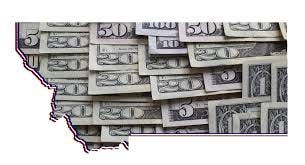
You are being ripped off…not in a hidden, obscure way, but systematically, legally, and continuously. The instrument of that rip-off is fiat paper money: currency issued by government decree, unbacked by any tangible asset, and sustained solely by legal mandate and public compliance. This is not speculation. It is a documented historical reality one that was diagnosed with surgical precision over 270 years ago by Roger Sherman, one of America’s most consequential Founding Fathers.
Sherman did not treat paper money as a neutral tool of commerce. He treated it as a weapon; unjust, immoral, and corrosive to liberty, justice, and economic integrity. His 1752 pamphlet A Caveat Against Injustice stands as one of the earliest, clearest, and most rigorous American critiques of fiat currency. It predates the Constitution. It informed the Constitution. And its warnings remain urgently relevant not because history repeats, but because the underlying mechanism remains unchanged.
This piece presents Sherman’s analysis not as antiquarian curiosity, but as living constitutional logic: a framework for understanding why today’s monetary system operates as it does and why its structure, by design, transfers wealth from producers to institutions, from citizens to creditors, and from the many to the few.
The Constitutional Anchor: Article I, Section 10
The U.S. Constitution begins its constraints on state power with a direct prohibition on monetary manipulation. Article I, Section 10 reads:
“No State shall… coin Money; emit Bills of Credit; make any Thing but gold and silver Coin a Tender in Payment of Debts.”
This clause was not incidental. It was deliberate, debated, and fiercely defended. Roger Sherman; Connecticut delegate, signer of the Declaration of Independence, the Articles of Confederation, and the Constitution was its principal architect. James Wilson of Pennsylvania provided critical support, but Sherman drove the language, the intent, and the urgency.
The records of the Philadelphia Convention confirm this. On August 16, 1787, Wilson and Sherman jointly moved to insert the full prohibition: “nor emit bills of credit, nor make anything but gold & silver coin a tender in payment of debts.” Their goal was to render the ban absolute not conditional upon congressional approval, as earlier drafts had suggested.
Nathaniel Gorham of Massachusetts raised an objection not to the principle, but to its scope. Sherman responded without ambiguity: “Mr. Sherman thought this a favorable crisis for crushing paper money.”
That phrase “crushing paper money” is not rhetorical flourish. It is operational instruction. Sherman understood that paper currency, when issued by states without real backing, inevitably becomes a vehicle for inflation, injustice, and institutional overreach. He knew that if Congress retained authority to permit paper emissions even rarely the political incentives would guarantee their return. As he warned: “If the consent of the Legislature could authorise emissions of it, the friends of paper money would make every exertion to get into the Legislature in order to licence it.”
He was not wrong. Within a generation, state-chartered banks began issuing notes redeemable only in promises not specie. By the 1830s, “wildcat banking” flooded markets with irredeemable paper. In the 1860s, Congress created the first national fiat currency the greenback explicitly unbacked and declared legal tender by statute alone. Each step followed the path Sherman sought to block at the founding.
His constitutional language was designed to prevent that path not to guide it.
The Moral Foundation: Intrinsic Value and Just Exchange
Sherman’s opposition to paper money was not rooted in technical preference or nostalgic attachment to metal. It was grounded in moral philosophy and economic realism.
In A Caveat Against Injustice, he opens with a foundational proposition: “For Money ought to be something of certain Value, it being that whereby other Things are to be valued.” This is not a statement about convenience. It is a statement about justice. A medium of exchange must possess stable, objective value or it cannot serve its purpose without deception.
He identified colonial “bills of credit” as the precursor to modern fiat currency: “For the most part, bills of credit were fiat money.” They were issued by governments, circulated by legal compulsion, and redeemed only at the discretion of treasury officials if at all. Ron Michener of the Economic History Association confirms this: colonial bills carried no enforceable right to redemption in gold or silver. Holders had no legal claim. Treasurers routinely refused exchanges. Not out of malice, but because reserves did not exist.
That absence of obligation was decisive. Without a binding promise of convertibility, the bill was not money in the classical sense. It was a debt instrument masquerading as currency a claim on future value, issued without collateral, enforced by statute.
Sherman saw this as a violation of natural law. He wrote: “If what is us’d as a Medium of Exchange is fluctuating in its Value it is no better than unjust Weights and Measures, both which are condemn’d by the Laws of GOD and Man…” The comparison is exact. A merchant who sells cloth by a shortened yardstick steals by measurement. A government that pays debts or requires debts to be paid in depreciating paper steals by valuation.
And because the value was unstable, Sherman concluded it was illegitimate to compel acceptance: “Such Bills of Credit are of no intrinsick Value, and their Extriniscal Value is fluctuating and very uncertain, and therefore it would be unjust that any Person should be obliged to receive them in Payment as Money…”
This is not theory. It is applied ethics. When money loses fixed reference, contracts erode. Savings vanish. Wages fall in real terms. The predictable relationship between labor, production, and reward dissolves. That dissolution is not neutral. It redistributes quietly, cumulatively, and without consent.
The Historical Mechanism: How Mercantilism Created the Shortage
Sherman did not blame colonists for adopting paper money. He blamed the system that made it necessary.
The chronic shortage of gold and silver in the American colonies was not accidental. It was engineered by British mercantile policy.
Mercantilism treated colonies as captive markets and resource extraction zones. Its core principle: maximize exports, minimize imports, and hoard precious metals. England exported manufactured goods to the colonies while restricting colonial manufacturing. Colonies exported raw materials tobacco, timber, rice but received little in return except English-made goods priced to extract surplus.
Historian Thomas Ladenburg documents the arithmetic: colonists consistently imported more than they exported. The difference, the “balance of trade”; was settled in specie. Since colonies produced no significant gold or silver, they paid the deficit in existing coin. And British law forbade exporting English coin, ensuring the drain was one-way.
Economist Owen Humpage summarizes the result: “The mercantile policies of England kept the American colonies perpetually short of specie…” Bob Ruppert of the Journal of the American Revolution adds context: “During the first half of the eighteenth century, there was a limited amount of specie… in the American colonies.”
This scarcity was structural, not cyclical. It was policy, not accident.
Colonists responded pragmatically. Lewis Timothy of South Carolina acknowledged the trap in 1732: “Now this Overplus… the Trader… will carry away in our Money, this would soon drain us of all our Money, unless we had Mines…” He saw the outflow but misidentified the cause not lack of mines, but imperial design.
Sherman saw both. He understood that paper money did not solve the problem it obscured it. It allowed governments to spend without revenue, to defer reckoning, and to shift the burden onto those least able to resist: wage earners, savers, creditors, and small merchants.
The Consequence: Depreciation as Policy
When paper replaces specie, depreciation is not a risk it is the operating condition.
Rhode Island became the textbook case. Between 1743 and 1751, its legislature repeatedly revalued its paper currency downward against silver. In 1743, 27 shillings Old-Tenor equaled one ounce of silver. By March 1751, it took 54 shillings. By June, 64. By August, the assembly authorized courts to adjust judgments in real time as bills continued to lose value admitting, in effect, that depreciation was permanent and accelerating.
Sherman, writing as “Phileunomos” (lover of good law), documented the mechanism plainly: “Those Governments having issued much largers sums of Bills than were necessary… and not having supplied their Treasuries with any Fund for the maintaining the Credit of such Bills; they have therefore been continually depreciating…”
Depreciation was not market failure. It was fiscal policy. More paper meant less value per unit. No reserve, no restraint, no accountability only escalation.
Sherman contrasted this with coin debasement; the practice of clipping or filing silver coins. Even clipped coins retained intrinsic value: “what is left of those Coins is of intrinsick Value.” Paper held none. “The State of Rhode Island Bills of Credit is much worse than that of Coins that are clipp’d…”
That distinction is essential. Debasement reduces value incrementally. Fiat creation destroys value exponentially because each new issuance dilutes all prior units, with no physical limit.
The Legal Fiction: Legal Tender as Coerced Fraud
Legal tender laws do not establish value. They enforce transfer. They compel acceptance of something the law declares valuable even when its market value collapses.
Sherman called this “a legalized protection racket for fraud.” His reasoning was precise: “No Government has Right to impose on its Subjects any foreign Currency to be received in Payments as Money which is not of intrinsick Value.”
He grounded this in contract morality: “a Debtor ought not to pay any Debts with less Value than was contracted for, without the Consent or against the Will of the Creditor.” To require payment in depreciating paper violates the agreement’s original terms. It substitutes legal fiction for economic fact.
Worse, it shifts risk from issuer to user. When government issues unbacked notes, it places the burden of valuation on citizens who must now guess whether tomorrow’s dollar will buy today’s loaf of bread. Sherman recognized this uncertainty as inherently unjust: “Because in so doing they would oblige Men to part with their Estates for that which is worth nothing in it self…”
And he identified the fatal fragility: “since the Value of The Bills of Credit depend wholly on the Rate at which they are stated and on the Credit of the Government… when the Publick Faith and Credit of such Government is violated, then the Reason upon which such Bill obtained their Currency ceases…”
That is not prophecy. It is description. Every hyperinflation in history from Weimar Germany to Zimbabwe to Venezuela follows this script. Confidence evaporates. Velocity spikes. The currency collapses not because people stop believing, but because belief was never the foundation. The foundation was coercion. When coercion fails, the system fails.
The Civic Responsibility: Complicity and Consent
Sherman did not absolve citizens. He implicated them.
“But so long as we part with our most valuable Commodities for such Bills of Credit as are no Profit; but rather a Cheat, Vexation and Snare to us, and become a Medium whereby we are continually cheating and wronging one another in our Dealings and Commerce…”
This is the hardest truth: fiat systems persist not because they are invisible, but because they are tolerated. Not because they are efficient, but because they are convenient until they are not. Not because they are just, but because resistance is costly, fragmented, and socially discouraged.
Sherman understood that participation sustains the system. Accepting paper in exchange for labor or goods is not passive. It is active validation. It signals willingness to bear the cost of instability so others may benefit from liquidity, leverage, or political favor.
That dynamic remains intact. Today’s payroll deposits, digital bank balances, and credit card limits are functionally identical to Rhode Island’s bills—denominated in dollars, convertible only at the discretion of institutions, backed by nothing but collective habit and regulatory enforcement.
The Remedy: Production, Not Permission
Sherman did not propose reform through regulation or central banking. He proposed restoration through production.
His remedy was direct: “Whereas if these Things were reformed, the Provisions and other Commodities which we might have to export yearly… would procure us Gold and Silver abundantly sufficient for a Medium of Trade.”
He saw self-sufficiency; not monetary tinkering as the path to stability. Increase domestic output. Expand trade beyond imperial constraints. Accumulate specie through real exchange; not paper promises.
This is not isolationism. It is sovereignty. It is the recognition that sound money follows sound economics. Not the reverse.
Modern parallels exist, not in gold standards alone, but in decentralized, asset-backed alternatives emerging outside state control: commodity-backed stablecoins, peer-to-peer trade networks, and cross-border barter systems that bypass fiat intermediaries. These are not nostalgic revivals. They are functional adaptations to the same structural flaw Sherman identified: the danger of entrusting value to institutions that profit from its erosion.
The Verdict: Not Error. Iniquity
Sherman closed A Caveat Against Injustice with moral clarity: “I believe that every honest Man of Common Sense, upon mature Consideration of the Circumstances of the Case, will think that this is an Iniquity not to be countenanced, but rather to be punished by the Judges.”
He did not call paper money mistaken. He called it iniquitous; a violation of justice so severe it warranted criminal sanction.
That judgment rests on three pillars:
Moral: It violates the principle of just exchange by substituting fluctuating claims for stable value.
Constitutional: It contradicts the explicit prohibitions embedded in the nation’s founding document.
Practical: It enables systemic fraud, accelerates inequality, and undermines civic trust.
None of these pillars has weakened. If anything, they have strengthened. Today’s monetary system operates on a scale Sherman could not have imagined but its mechanics are identical. The Federal Reserve issues unbacked currency. Congress mandates its use. Banks multiply it through fractional-reserve lending. Consumers accept it, not because they trust it, but because they have no viable alternative.
That is not stability. It is suspended disbelief.
Conclusion: Truth Does Not Require Permission
Roger Sherman did not write to persuade. He wrote to expose. He did not seek consensus. He stated principles that required no validation from authority, academia, or media.
His voice remains instructive not because it offers easy answers, but because it refuses to soften hard truths. He treated money not as a technical subject, but as a moral one. Not as a matter of policy, but of justice. Not as a question of efficiency, but of legitimacy.
Today’s financial architecture its debt ceilings, its interest rate manipulations, its quantitative easing, its digital currency experiments does not resolve Sherman’s objections. It compounds them. Each layer of abstraction distances value further from substance. Each expansion of credit widens the gap between promise and performance.
The MK3 voice does not shout. It documents. It does not hedge. It analyzes. It does not ask permission. It states.
You are being ripped off. Not occasionally. Not accidentally. Systematically. Legally. Continuously.
The evidence is historical. The mechanism is transparent. The remedy is clear; not in new institutions, but in restored discipline: of language, of law, and of conscience.
Sherman’s warning was not about paper. It was about power. About who controls value, and who bears its cost.
That question has not changed. Only the scale has.
And the answer remains the same: Crush it.